Updated November 11, 2026 · Plus+Ultra Editorial
Quick answer: Saffron and ashwagandha are different botanicals used in mood, stress and sleep formulas. Saffron extracts are often characterized by compounds such as crocin; ashwagandha extracts by withanolides. Compare the extract, amount and full formula. A bigger milligram number does not automatically mean the preparation is stronger or better studied.
Saffron supplements compared: extract, whole stigma or mood blend?
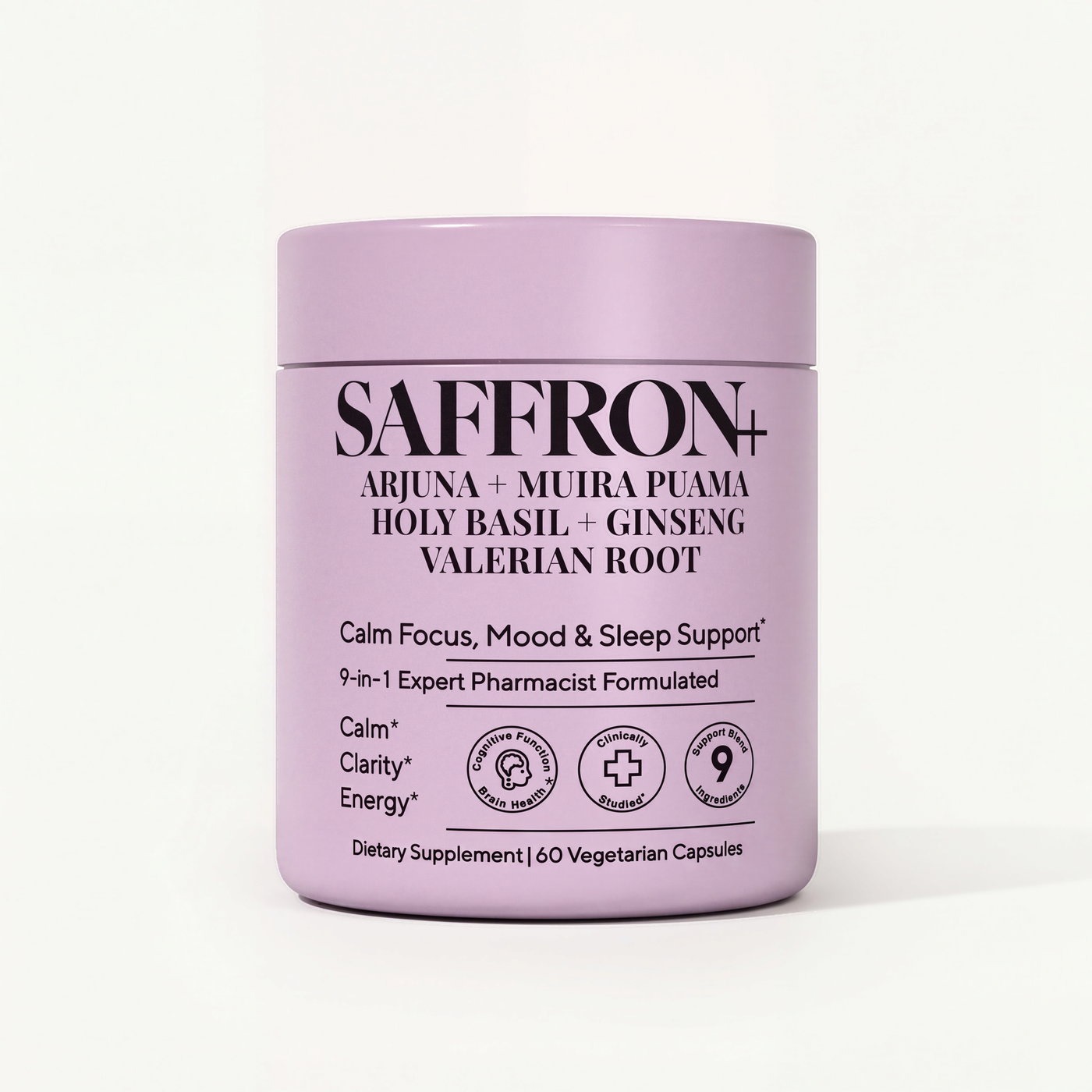
Choose the format first. A focused saffron product keeps the ingredient list simple. A multi-ingredient blend puts saffron, magnesium and complementary botanicals into one daily routine. SAFFRON+ takes the second approach: nine ingredients in two capsules, for people who want broader mood and calm support.*
This comparison is published by Plus+Ultra, the maker of SAFFRON+. Specifications and displayed one-time prices were checked against the manufacturers on November 11, 2026. These products have different preparations and positioning; this is a label comparison, not a head-to-head clinical trial.
| Product | Formula and daily routine | Price and practical fit |
|---|---|---|
| Plus+Ultra SAFFRON+ 9-in-1 | 100 mg saffron extract (0.3% crocin), 150 mg magnesium as glycinate, 100 mg ashwagandha (5% withanolides), plus six botanicals. Two capsules daily; 60 capsules / 30 servings. | $29.99 per bottle; about $1.00/day. A broader mood-and-calm routine in one bottle. Full formula and label. |
| Life Extension Optimized Saffron | 78 mg Satiereal saffron extract per capsule, standardized to 0.34% safranal. One capsule twice daily: 156 mg/day; 60 capsules / 30 days. | $27.00 per bottle; $0.90/day. A focused saffron extract positioned for weight management. Manufacturer details. |
| NOW Saffron 50 mg | Whole saffron stigma powder, not an extract; minimum 10% total crocins. One capsule twice daily: 100 mg/day; 60 capsules / 30 days. | Displayed sale price $25.49; about $0.85/day. A focused whole-stigma option. Listed out of stock when checked. Manufacturer details. |
Daily costs use the stated directions, rounded to the nearest cent. Prices exclude shipping, tax, subscriptions and other promotions; availability and sale prices can change.
Which approach fits your goal?
- One ingredient to add to an existing routine: compare focused saffron products by plant part, preparation and standardization. Life Extension and NOW illustrate two different formats.
- A more complete mood-and-calm routine: SAFFRON+ brings saffron together with magnesium glycinate, holy basil, ashwagandha and other botanicals. Its value is the combination and convenience; it is not a dose-equivalent replacement for every separate extract.
- Ashwagandha already in your stack: review your total intake before adding a blend. SAFFRON+ already includes it.
Why the percentages differ: crocin, total crocins and safranal are different specifications. A larger percentage or milligram number does not, by itself, establish better results across these preparations.
What each ingredient brings
Saffron comes from Crocus sativus. Ashwagandha is Withania somnifera. Their common appearance in calm-focused products does not make them chemically equivalent or mean one can replace the other at the same dose.
A 28-day randomized saffron study in 120 adults with unsatisfactory sleep tested a particular standardized extract at 14 mg or 28 mg. The NCCIH ashwagandha overview describes evidence for some preparations in stress and insomnia, alongside important limits. These findings concern the studied extracts, not every product carrying the plant name.
Read standardization before comparing milligrams
An extract ratio such as 10:1 describes a source-material relationship. Standardization describes a measured constituent. Those are different kinds of information.
SAFFRON+ lists 100 mg saffron extract standardized to 0.3% crocin, alongside 100 mg ashwagandha extract standardized to 5% withanolides. These specifications help identify the ingredients. They do not establish equivalence to an unrelated extract used at a different dose in a study.
Compare plant part, extract specifications and serving size together. Avoid comparing one product’s two-capsule amount with another product’s per-capsule number.
Inside SAFFRON+ 9-in-1
SAFFRON+ is a broader mood-and-calm formula. Per two capsules, it lists:
- Magnesium, as glycinate: 150 mg.
- Muira puama: 200 mg; holy basil 10:1 extract: 200 mg.
- Saffron extract: 100 mg; ashwagandha extract: 100 mg.
- Panax ginseng, valerian, neem and Terminalia arjuna extracts: 50 mg each.
Thirty servings per bottle. The formula is designed for daily mood and relaxation support.* It contains more than saffron, so check all nine ingredients when assessing fit or combining supplements.
SAFFRON+ or a bedtime formula?
If you want a mood-and-calm routine, start by reviewing SAFFRON+. If your main interest is a melatonin-free bedtime blend, MAGPLUS+ 7-in-1 combines magnesium L-threonate, L-theanine, apigenin, chamomile and valerian. Read the melatonin-free ingredient guide for that comparison.
Do not automatically stack the two. Both contain magnesium and valerian, so using both changes your total intake. A clear goal and one starting formula make it easier to see what suits you.
When to review suitability
Ask a clinician or pharmacist before use during pregnancy or breastfeeding, with thyroid or autoimmune conditions, or alongside medicines. NCCIH advises avoiding ashwagandha in pregnancy and notes possible medication interactions and rare liver injury reports. Mood supplements should not replace treatment for persistent depression, anxiety or other diagnosed conditions.
*These statements have not been evaluated by the Food and Drug Administration. This product is not intended to diagnose, treat, cure, or prevent any disease.
Common questions
Can saffron and ashwagandha be taken together?
They are combined in SAFFRON+, but suitability depends on the complete formula and your health and medicines. Combining ingredients is not proof that taking additional separate extracts is better.
Is SAFFRON+ just saffron?
No. It contains nine listed ingredients, including magnesium glycinate, holy basil, ashwagandha and valerian.
Does a higher saffron dose mean better results?
Not necessarily. Extract composition and standardization matter, so milligrams from different extracts are not a direct measure of comparative effectiveness.
Does SAFFRON+ contain melatonin?
Melatonin is not listed in the current formula. The absence of melatonin does not guarantee that a formula cannot make you drowsy.
How long should I try a mood supplement?
Follow the bottle directions and assess tolerability. Published ingredient trials do not establish an exact response time for SAFFRON+. Persistent symptoms warrant professional assessment.
Educational information, not individualized medical advice. Research cited here concerns the specific ingredients and preparations studied; it is not a clinical trial of the finished Plus+Ultra formula.

