Quick Answer: Waking up at 3am is usually caused by an early cortisol spike from a dysregulated HPA axis — not insomnia. Cortisol naturally surges in the early morning to prepare your body for waking, but in people under chronic stress or with aging-related hormonal changes, this spike fires too early. A secondary cause is nocturnal blood sugar drops, which trigger an adrenal cortisol response. Magnesium deficiency worsens both mechanisms by reducing your brain's ability to regulate the HPA axis. Addressing magnesium status, evening blood sugar stability, and light exposure before bed can meaningfully reduce 3am waking.

You fall asleep fine. Maybe even quickly. You're out by 10:30pm and you feel reasonably okay about it.
Then 3am arrives, and something pulls you out of sleep — not a noise, not your phone, not anything you can point to. You just... wake up. And your mind, which thirty minutes ago was mercifully quiet, is suddenly running at full speed. A loop of thoughts. Things you forgot to do. Something someone said. A vague but heavy sense of dread that has no specific address.
You lie there. You check the time. You close your eyes. An hour passes. Maybe more. By the time you finally drift back off, your alarm is two hours away.
This has been happening for months. Maybe years. You've tried melatonin (didn't help with the 3am part). You've tried cutting caffeine. You've tried white noise, a sleep mask, not looking at your phone. You've read about sleep hygiene until you could recite it from memory. None of it touched the 3am problem.
Here's what you probably haven't heard: this isn't insomnia. At least not in the classic sense. It's a cortisol problem. And once you understand the mechanism, the path forward becomes a lot clearer.
The Cortisol Awakening Response — and What Happens When It Misfires
Under normal circumstances, cortisol follows a precise daily rhythm. It's lowest in the middle of the night — around 2am to 3am — and then begins rising rapidly in the hours before you wake up. This rise, called the cortisol awakening response (CAR), typically peaks within 20 to 30 minutes after you open your eyes. It's one of the primary signals that activates your brain, mobilizes glucose, and gets your body ready for the demands of the day.
This is a healthy, necessary process. Cortisol isn't a villain. The problem is what happens when the timing gets off.
In people with a dysregulated hypothalamic-pituitary-adrenal (HPA) axis — which is the central stress-response system in your body — this cortisol surge can misfire. Instead of rising gradually in the hour before your intended wake time, it spikes too early. Sometimes by two or three hours. When that spike is large enough, it crosses a threshold that rouses you from sleep.
That's the 3am wake-up. You're not imagining it. It's not random. It's your cortisol arriving early.
The HPA axis gets dysregulated through a well-documented set of pathways: chronic psychological stress, poor sleep history compounding over time, high alcohol intake, disrupted light exposure, and aging. The longer the dysregulation has been in place, the more entrenched the early-morning cortisol pattern becomes — which is one reason that once the 3am waking starts, it tends to persist even when your life circumstances improve.
Why It Gets Worse With Age
If you're in your 40s or 50s and this problem has appeared in the last few years, the biology explains it.
Several age-related changes converge on the 3am problem simultaneously:
Melatonin production declines. The pineal gland produces less melatonin as you age, partly due to gradual calcification. Melatonin doesn't just make you sleepy — it also acts as a buffer against premature cortisol signals. Lower melatonin means less protection from that early cortisol spike.
Sleep architecture becomes lighter. Slow-wave sleep — the deepest, most physically restorative stage — drops from roughly 20-25% of total sleep time in young adults to 5-10% or less by your sixties. Deep sleep is physically harder to rouse from. When you're spending more time in lighter sleep stages, even a modest cortisol signal is enough to bring you fully awake.
HPA axis sensitivity changes. Research shows that aging affects glucocorticoid receptor sensitivity, which means the feedback loops that normally regulate cortisol clearance become less efficient. Cortisol hangs around longer at night than it should, and the morning surge is less precisely timed.
The result is a narrower margin for error. Young adults can absorb a mild cortisol perturbation at 3am and stay asleep through it. As you age, that cushion disappears.
The Blood Sugar Angle Nobody Talks About
There's a second mechanism that operates entirely separately from the HPA axis — and it can trigger the same 3am wake-up.
When blood glucose drops significantly during the night (which can happen if you've eaten dinner early, had alcohol, or have any degree of insulin sensitivity impairment), your adrenal glands respond by releasing cortisol and adrenaline as counter-regulatory hormones. Their job is to signal the liver to release stored glucose and bring your blood sugar back up.
This is a survival mechanism. It works. But the cortisol and adrenaline involved in that process also wake you up.
Several patterns can accelerate nocturnal blood sugar drops:
- Alcohol. Ethanol interferes with gluconeogenesis — your liver's ability to produce glucose overnight — while also being metabolized into by-products that disrupt sleep architecture around 3-4 hours after consumption.
- High-carbohydrate dinners followed by a long fast. The bigger the carbohydrate-driven insulin spike at dinner, the sharper the potential valley later.
- Skipping protein in the evening. Protein slows gastric emptying and provides amino acids that support stable overnight glucose. Without it, blood sugar is more volatile.
The practical implication: a small amount of protein or fat before bed — a handful of nuts, a bit of cheese, a tablespoon of almond butter — can reduce nocturnal blood glucose swings and, for some people, meaningfully reduce 3am waking. This isn't a universal fix, but for those in whom the blood sugar pathway is dominant, it can be transformative.
Why You Can't Get Back to Sleep Once You're Up
This is arguably the most frustrating part of the 3am scenario, and it also has a clean physiological explanation.
Sleep pressure is regulated in part by adenosine, a molecule that accumulates in the brain the longer you're awake and drives increasing sleepiness throughout the day. When you've slept for five or six hours, you've cleared a meaningful portion of that adenosine buildup. The sleep drive that pushed you to sleep at 10:30pm is partly spent.
When cortisol spikes at 3am, it doesn't just wake you — it also activates your sympathetic nervous system, suppresses the parasympathetic (rest-and-digest) system, and elevates heart rate and mental arousal. By the time you're lying there looking at the ceiling, you have:
- Elevated cortisol (alerting signal)
- Reduced remaining adenosine (reduced sleep pressure)
- Active sympathetic nervous system engagement (fight-or-flight mode, not rest mode)
Getting back to sleep requires reversing all three of those simultaneously. Which is why lying still with your eyes closed and trying to "relax" often doesn't work. The biology isn't cooperating.

The Magnesium-Cortisol Connection
Magnesium sits at a critical node in HPA axis regulation — one that most people, and frankly most clinicians, have never been told about.
Magnesium acts as a natural brake on the HPA axis. It modulates the release of adrenocorticotropic hormone (ACTH) from the pituitary, which controls adrenal cortisol production. When magnesium levels are adequate, this regulatory system functions properly. When magnesium is deficient — which studies suggest is the case for a large portion of adults, particularly as dietary patterns have shifted away from magnesium-rich whole foods — the HPA axis loses some of its regulation and baseline cortisol tends to rise.
The research on this is substantial.
A 2017 review by Boyle, Lawton, and Dye, published in Nutrients, systematically examined the relationship between magnesium status and subjective anxiety and stress. The review concluded that magnesium supplementation had a clear and consistent benefit in reducing subjective stress and anxiety measures, with the effect most pronounced in individuals with baseline magnesium deficiency. The proposed mechanism: magnesium's regulatory role in the HPA axis and its direct modulation of the NMDA receptor, which is involved in stress responses.
An earlier study by Lindberg, Å., Andersson, N., and colleagues (2001) examined urinary cortisol excretion and magnesium status and found meaningful correlations between lower magnesium and elevated cortisol — a relationship that was bidirectional, since elevated cortisol itself increases urinary magnesium excretion, creating a depletion loop under chronic stress.
The practical implication: chronic stress depletes magnesium, and magnesium deficiency amplifies the stress response. The 3am cortisol spike becomes more likely and more intense.
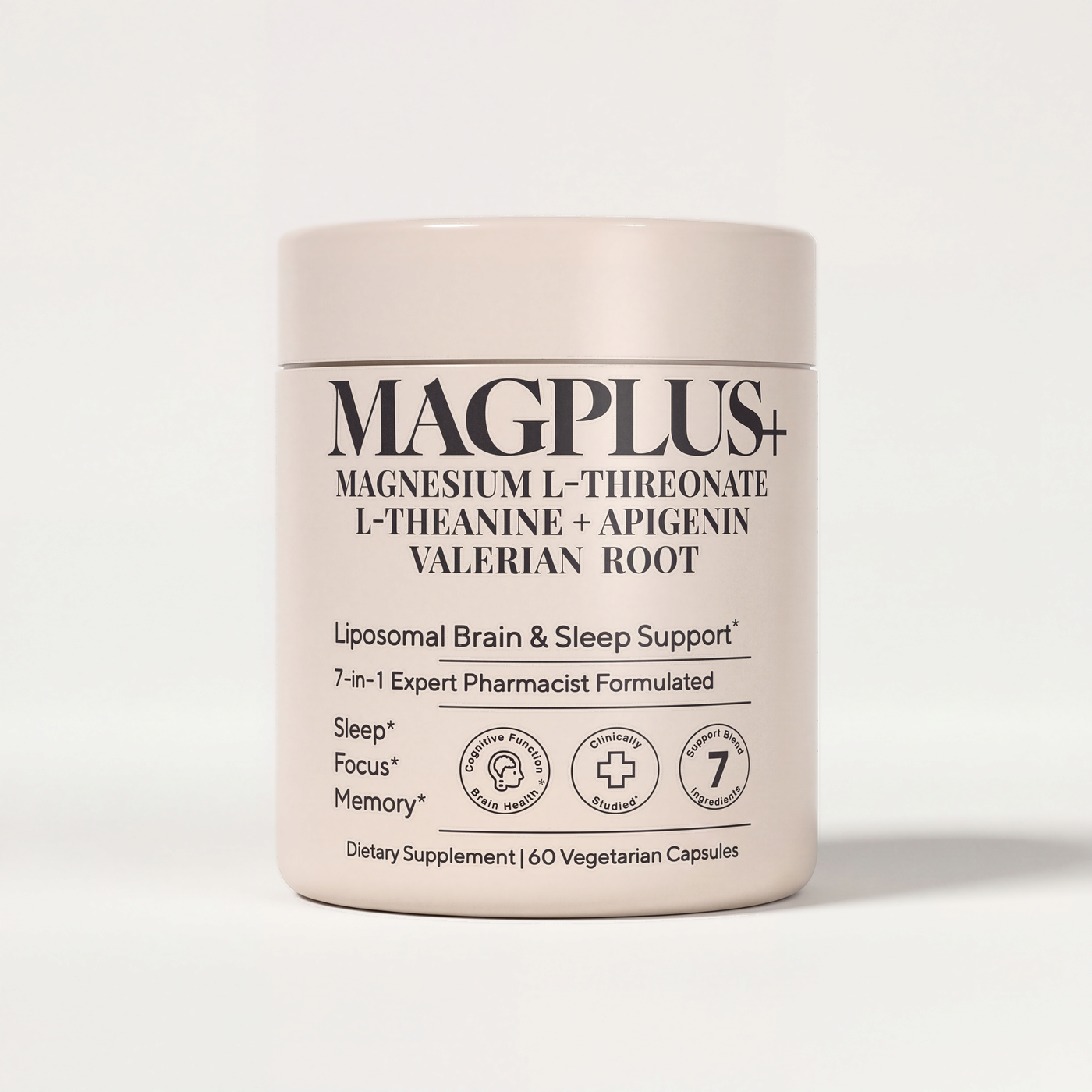
Magnesium glycinate is particularly well-positioned to address this. The glycinate chelate binds magnesium to the amino acid glycine, which itself modulates NMDA receptor activity and GABA pathways — adding a second calming influence alongside magnesium's HPA axis effects. Taking magnesium glycinate in the evening (200-400mg elemental magnesium, 30-60 minutes before bed) targets the cortisol regulation problem during the hours when it matters most.
L-Theanine and the Nighttime Anxiety Loop
For people whose 3am waking is accompanied by a racing mind or anxious thought spiral, there's additional support worth understanding.
L-theanine, an amino acid found naturally in green tea, promotes the production of alpha brain waves — the relaxed, alert state associated with calm wakefulness that also functions as a transition state toward sleep. It does this without sedation, meaning it doesn't blunt cognitive function.
Critically, L-theanine reduces sympathetic nervous system activation. The fight-or-flight response that's keeping you awake at 3am has a measurable biochemical signature — elevated norepinephrine, increased heart rate, reduced parasympathetic tone. L-theanine works against that.
Kimura et al. (2007), published in Biological Psychology, demonstrated that L-theanine (200mg) significantly increased alpha-wave activity in human subjects and reduced physiological and psychological responses to stress. Hidese et al. (2019), in Nutrients, examined L-theanine supplementation in a randomized, double-blind, placebo-controlled trial and found significant improvements in sleep quality, sleep latency, and sleep efficiency, with subjects reporting reduced stress and anxiety.
These effects aren't heavily sedating — L-theanine won't knock you unconscious. What it does is reduce the hyperarousal that prevents return to sleep after a 3am waking. Combined with magnesium, the two compounds address complementary targets: magnesium working on the HPA axis and cortisol regulation, L-theanine working on sympathetic tone and alpha-wave promotion.
Practical Steps That Actually Address the Mechanism
Generic sleep hygiene advice — don't look at screens, keep a consistent schedule, don't drink caffeine after noon — is not wrong. But it doesn't specifically target the cortisol-driven 3am wake-up. Here's what does:
Evening magnesium. 200-400mg elemental magnesium glycinate, 30-60 minutes before sleep. Not magnesium oxide (4% absorption rate — essentially useless for this purpose). Glycinate or threonate forms. Consistent nightly use matters more than the dose — the HPA axis regulation effects build over time.
Protein or fat before bed if blood sugar volatility is a factor. A small protein-containing snack (10-15g) an hour before sleep. This isn't about eating more — it's about blunting the nocturnal glucose valley. This approach has the most evidence for people who drink alcohol in the evening or who eat dinner early.
Light control in the two hours before bed. Bright overhead light, particularly blue-spectrum light, suppresses melatonin and can advance the HPA axis timing signal. Dim, warm light after 8pm reduces the melatonin suppression that otherwise leaves you more vulnerable to the early cortisol spike.
A consistent wake time — even on weekends. Cortisol timing anchors to your circadian rhythm, which is strongly driven by consistent wake time. Varying your wake time by 90 minutes or more between weekday and weekend (social jet lag) destabilizes the cortisol curve, making mistimed spikes more likely.
L-theanine (100-200mg) alongside magnesium. Particularly useful if the 3am wake-up is accompanied by anxious rumination or inability to quiet the mind.
Limit or eliminate alcohol within four hours of sleep. The blood sugar disruption and REM suppression from alcohol are two of the most direct causes of 3am waking for people who drink regularly.
FAQ
Why do I wake up at exactly 3am?
The consistency is the clue that this is a physiological pattern, not random arousal. Your cortisol surge — or blood sugar correction signal — is firing on a reliable schedule tied to your sleep timing. The body's HPA axis and glucose regulation systems are highly time-dependent. Once a pattern is established (you wake up, stress hormones activate, you lie there anxious, which reinforces the stress signal), it tends to lock in at the same clock time. It's not mystical. It's your biology being very regular about a maladaptive pattern.
Is waking at 3am a sign of anxiety?
It can be, in the sense that chronic anxiety dysregulates the HPA axis and raises baseline cortisol, which makes the early-morning cortisol surge more likely to overshoot and wake you. But the causality works in both directions — the 3am waking itself creates anxiety (you start dreading bedtime), which compounds the HPA dysregulation. Most people with 3am waking have some version of both. Addressing the physiological substrate (magnesium, cortisol regulation) often reduces the psychological anxiety component as well.
Can magnesium help me stay asleep through the night?
Yes, with caveats. Magnesium addresses the HPA axis dysregulation component of 3am waking — it doesn't directly sedate you, it reduces the mechanism that's waking you. For people whose 3am waking is primarily cortisol-driven (which is the majority), this can make a meaningful difference. The effect builds over consistent use — expect 2-4 weeks of nightly use before assessing the full benefit. If your waking is primarily blood sugar-driven, magnesium alone will be less helpful; pairing it with a pre-bed protein snack addresses that mechanism more directly.
Does low blood sugar cause 3am waking?
It can, and the physiological pathway is well-documented. When blood glucose falls below a threshold during sleep, the adrenal glands release cortisol (and epinephrine in more significant drops) as counter-regulatory hormones. This signal is enough to rouse you from lighter sleep stages. The clearest indicators that blood sugar is your primary driver: your waking is accompanied by feeling hungry, shaky, or sweaty; you drink alcohol regularly in the evenings; or you eat dinner very early and have a long overnight fast.
Is cortisol making me wake up at night?
Almost certainly contributing to it. Cortisol naturally spikes in the early morning as part of the cortisol awakening response — this is normal. The problem is when that spike is exaggerated (high baseline cortisol from chronic stress), poorly timed (firing at 3am instead of 5-6am), or unmitigated by adequate melatonin (which declines with age). The result is a cortisol signal strong enough to cross the arousal threshold and pull you out of sleep.
How long does magnesium take to help sleep?
Acute effects — from glycine's action on NMDA and GABA receptors — can be noticed within 1-3 nights. The deeper HPA axis regulation effects from magnesium repletion build over 2-4 weeks of consistent nightly use, as tissue magnesium levels normalize. If you're significantly deficient, the first week or two may feel subtle. Don't assess efficacy at night one — give it a full four weeks of consistent use before drawing conclusions.