Not all magnesium supplements are the same. Walk into any supplement aisle — or scroll through Amazon for ten minutes — and you'll find a dozen different forms on the label, each with a different compound name and, frankly, a different job to do. The form determines where magnesium goes in your body, how well it absorbs, and what it actually does once it gets there. Choosing the wrong form isn't dangerous, but it might mean you're supplementing for sleep and getting laxative effects instead. This guide breaks down all 13 clinically recognized forms so you can make an informed decision.
Why the Form Matters
Magnesium doesn't travel through your body on its own. In supplement form, it's always bound to another compound — an amino acid, an acid, a salt — and that binding molecule determines bioavailability (how much actually makes it into your bloodstream) and tissue specificity (where it tends to go once absorbed). A form with 60% bioavailability reaching muscle tissue is a fundamentally different product than a form with 4% bioavailability sitting in your gut. Beyond absorption, the carrier molecule often has its own biological activity. Glycine is calming. Malic acid supports cellular energy. Threonic acid crosses the blood-brain barrier. The compound you're swallowing is doing more than just delivering magnesium.

The 13 Forms of Magnesium
Magnesium Glycinate
Bound to the amino acid glycine, magnesium glycinate is one of the most widely used forms for daily supplementation — and for good reason. It has high bioavailability, is exceptionally gentle on the GI tract, and glycine itself has well-documented calming properties through its activity at GABA and NMDA receptors. Best suited for anxiety support, sleep quality, and muscle relaxation. If you're only going to take one form and your primary goals are stress and sleep, this is the baseline choice.
Magnesium L-Threonate
This is the brain form. Magnesium L-Threonate is bound to threonic acid, a metabolite of Vitamin C, and was developed at MIT specifically for its ability to cross the blood-brain barrier and raise magnesium concentrations in brain tissue — something other forms do not reliably do. The branded version (Magtein®) has been studied for cognitive support, working memory, and sleep architecture.* Elemental magnesium content per dose is lower than other forms, but the brain bioavailability is what makes it clinically interesting. Best for cognitive support, memory, brain aging, and sleep quality improvement.
Magnesium Malate
Bound to malic acid, a compound that plays a direct role in the Krebs cycle — your cells' primary energy production pathway. Magnesium malate has good absorption and is notably less sedating than glycinate, making it a better fit for daytime use. Studies have examined it for muscle pain and fibromyalgia-related fatigue.* If your primary goals are energy production and muscle recovery without the drowsiness, malate is worth prioritizing.
Magnesium Citrate
One of the most common forms on the market, and for most people, a solid general-purpose choice. Bound to citric acid, it has good bioavailability and is affordable at scale. The mild osmotic laxative effect is worth noting — it draws water into the intestines, which makes it helpful for constipation and digestive regularity but can be a problem at higher doses for people with sensitive GI systems. Best for general supplementation, digestive support, and everyday magnesium maintenance.
Magnesium Oxide
Bound to oxygen rather than an organic compound, magnesium oxide has a high percentage of elemental magnesium by weight — which sounds impressive until you look at the absorption data. Bioavailability sits around 4%, meaning the vast majority passes through your system without being absorbed. It functions well as an antacid or osmotic laxative, which is its primary medical use. For anyone trying to actually raise serum or tissue magnesium levels, oxide is not the right tool.
Magnesium Taurate
Bound to taurine, an amino acid with documented roles in cardiovascular function and GABA receptor activity. Both magnesium and taurine independently support healthy blood pressure and heart rhythm, and in combination they may provide synergistic cardiovascular benefit.* Taurate also has mild calming properties through the GABA pathway. Best for cardiovascular health support and people who want a gentle, non-sedating relaxation effect alongside heart health goals.
Magnesium Aspartate
Bound to aspartic acid, an amino acid involved in the urea cycle and energy metabolism. Bioavailability is good, and it has been studied for energy and muscle function. One point of consideration: aspartate is an excitatory amino acid, and there is some theoretical concern about excitatory load at high doses — though this is not a documented issue at standard supplementation levels. Best for energy and muscular performance when used within normal dosing ranges.
Magnesium Orotate
Bound to orotic acid, which has a role in mitochondrial energy synthesis. Magnesium orotate is the most expensive form on this list and remains relatively rare in consumer supplements. The most notable research has been in cardiac performance contexts, including studies examining exercise tolerance.* Best for cardiovascular performance and mitochondrial energy support — if you can find a quality source and the cost is manageable.
Magnesium Chloride
An ionic form with high oral bioavailability. When taken by mouth, magnesium chloride absorbs efficiently and is a solid general-purpose option. You'll also see it in topical applications — magnesium flakes for baths, sprays, and lotions — where the claim is transdermal absorption. The evidence for meaningful transdermal uptake is genuinely mixed, and the effect size appears smaller than oral dosing. For anyone focused on oral supplementation and wanting rapid uptake, chloride is a legitimate choice.
Magnesium Lactate
Bound to lactic acid, magnesium lactate is well absorbed and notably gentle on the GI tract. It's commonly used in food fortification contexts more than standalone consumer supplements, but it appears in multi-form formulas precisely because of its tolerability. A good option for people with sensitive stomachs who have had GI issues with citrate or oxide-containing products.

Magnesium Sulfate
This is Epsom salt. In bath form, magnesium sulfate is widely used for post-workout muscle recovery and relaxation — and while transdermal evidence is limited, the practice is deeply established and well-tolerated. Oral bioavailability is poor, making it unsuitable for daily supplementation. The exception is IV magnesium sulfate, which is used medically in acute settings for eclampsia and severe asthma — a very different context than the supplement aisle.
Magnesium Carbonate
When magnesium carbonate meets stomach acid, it converts to magnesium chloride and carbon dioxide. It has antacid properties, which is its primary use case, and bioavailability is lower than chelated forms. It shows up in antacid products more than in dedicated magnesium supplements. Not a top-tier choice for anyone supplementing for magnesium status rather than acid reflux.
Magnesium Bisglycinate
A chelated form of glycinate in which magnesium is bound to two glycine molecules rather than one. The double-chelated structure is associated with higher bioavailability and an even lower likelihood of GI side effects compared to standard glycinate. It's considered a premium form and appears in high-quality formulas precisely because it delivers more elemental magnesium per dose with less digestive disruption. Benefits mirror glycinate — calm, sleep, muscle relaxation — but with a better absorption profile.
Which Form Is Right for You?
The honest answer is: it depends on what you're trying to do.
Sleep and brain health — Magnesium L-Threonate is the primary driver here, supported by glycinate or bisglycinate for the calming effect. This is a brain-first stack.
Muscle recovery and athletic performance — Glycinate plus malate covers the bases: malate for the daytime energy and Krebs cycle support, glycinate for the overnight recovery and muscle relaxation.
Gut health and regularity — Citrate, used in measured doses. The osmotic effect is real and useful when that's the goal.
Anxiety and stress — Glycinate or bisglycinate. High bioavailability, calming glycine, no stimulating effects.
Bone and structural support — Malate and citrate both support bone-related pathways and absorb well.
Laxative need — Oxide or citrate in higher doses. But oxide is not a supplementation strategy for raising magnesium levels.
Daily general coverage — A multi-form approach gives you tissue-level coverage that no single form provides on its own.
Two Products. Two Different Goals.
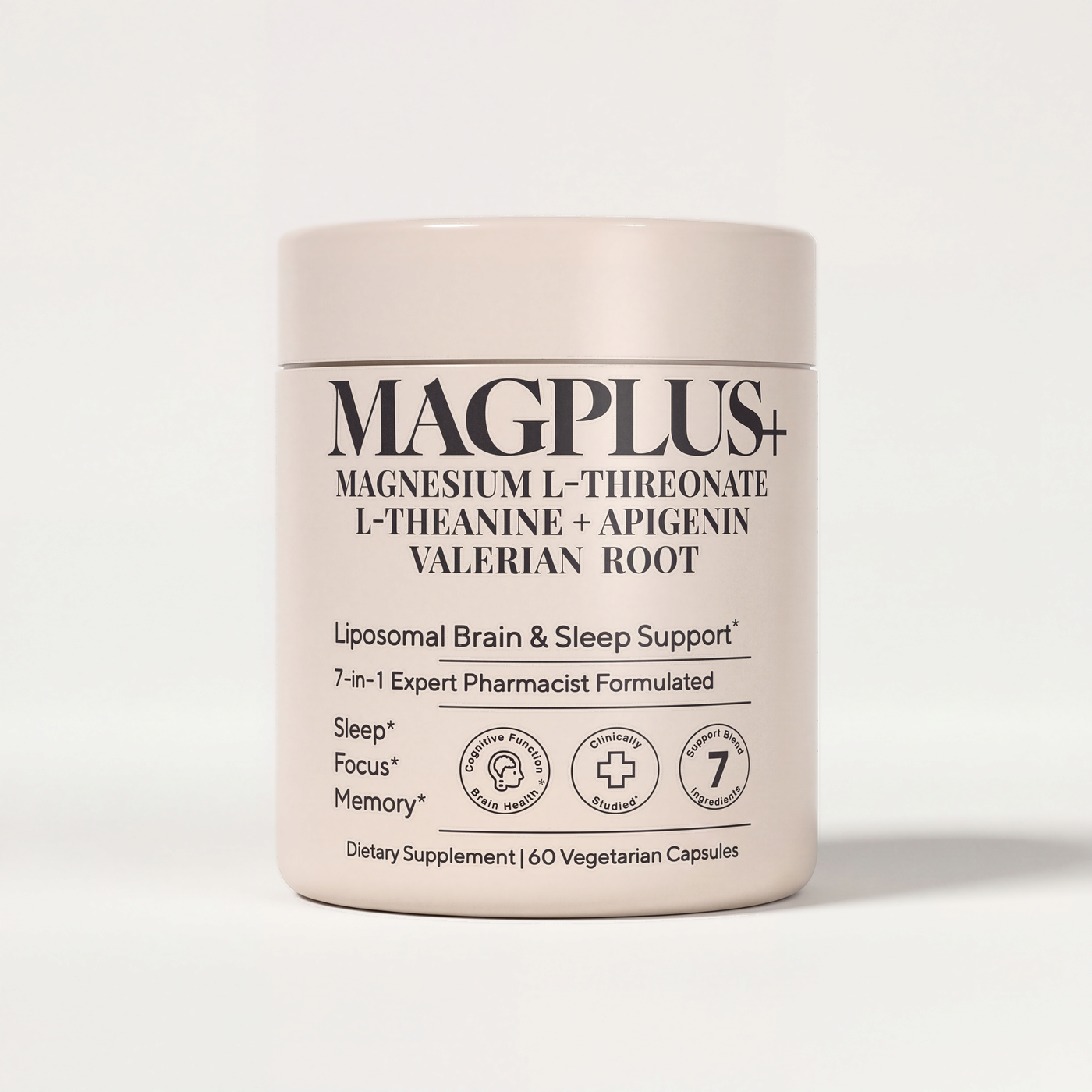
For your evening wind-down: MAGPLUS+ 7-in-1 combines magnesium L-threonate in a 1,050 mg liposomal complex with 200 mg L-theanine, 50 mg apigenin, chamomile and valerian. A melatonin-free formula for relaxation and restful sleep.*
For everyday magnesium support: MAGPLUS+ 14-in-1 brings 13 forms of magnesium plus sunflower phosphatidylserine into one formula for muscle, nerve and energy support.* Its two complexes total 900 mg; this is the weight of the complexes, not the elemental magnesium amount.
Choose around your routine: the 7-in-1 for bedtime, or the 14-in-1 for a broader magnesium foundation. Check the ingredients and serving directions before combining supplements.
These statements have not been evaluated by the Food and Drug Administration. These products are not intended to diagnose, treat, cure, or prevent any disease.