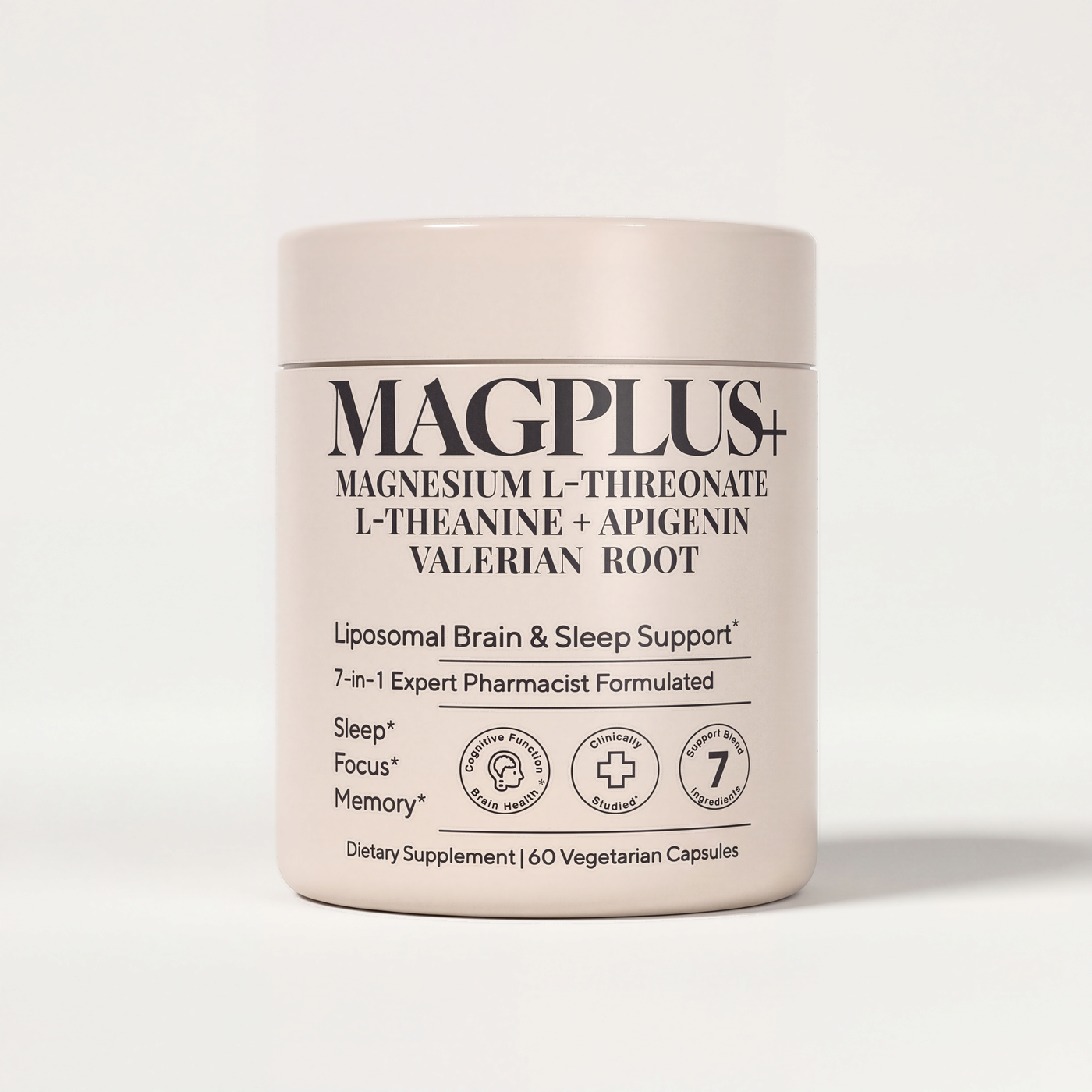
Quick Answer: The best magnesium for sleep depends on your specific problem. Magnesium glycinate is best for racing mind, anxiety, and cortisol-driven sleep disruption — it combines magnesium's HPA axis regulation with glycine's calming effect on GABA and NMDA receptors. Magnesium L-threonate is best for fragmented, non-restorative sleep and deep sleep deficits — it's the only form that reliably crosses the blood-brain barrier and raises brain magnesium levels, which directly supports deep sleep architecture. Many people benefit from both, as they address different tissue targets: glycinate for whole-body and stress-axis repletion, threonate for neurological sleep quality.

You've probably seen the advice a hundred times: "Take magnesium for sleep." Maybe you've tried it. Maybe it helped — a little, sometimes, but not consistently. Maybe it did nothing. Maybe you bought the $9 bottle from the grocery store and wondered what the fuss was about.
Here's what nobody in those generic articles bothered to explain: magnesium is not one thing. The form it comes in determines where it goes in your body, how much of it you absorb, and what sleep problem — specifically — it addresses. Taking the wrong form for your sleep problem is like bringing a hammer to fix a leaky pipe. Not wrong, exactly. Just not matched to the job.
This article maps every magnesium form to the sleep problem it's actually built to solve. By the end of it, you should know exactly which form (or combination) applies to you — and why.
Why Form Matters: The Delivery Problem
Magnesium doesn't float freely through your body doing general good. It has to get into specific tissues — muscle cells, nervous system tissue, the brain itself — to exert its effects. Different forms of magnesium are absorbed differently in the gut, travel differently through the bloodstream, and cross different biological barriers.
The mineral itself (Mg2+) is always the same. What changes is the molecule it's bound to — the "chelate" or anion — and that binding molecule does several things simultaneously:
- It determines how much magnesium you actually absorb (bioavailability)
- It influences which tissues the magnesium preferentially enters
- The companion molecule itself often has biological activity of its own
This last point is crucial and almost always overlooked. When you take magnesium glycinate, you're not just getting magnesium — you're getting glycine, which has its own well-documented effects on the nervous system and sleep. When you take magnesium threonate, the threonate carrier is specifically engineered to cross the blood-brain barrier. The form is not a minor detail. It's the whole story.
The Form-to-Sleep-Problem Map
Problem 1: You Can't Fall Asleep — Racing Mind, Anxiety, Hyperarousal
The right form: Magnesium glycinate
If you lie in bed with your mind running at full speed — replaying conversations, planning tomorrow, cycling through worries — the issue is sympathetic nervous system hyperarousal and insufficient GABAergic dampening in the brain. Magnesium glycinate addresses both.
The glycine component is not passive. Glycine is an inhibitory neurotransmitter and a co-agonist at NMDA (N-methyl-D-aspartate) receptors, which are involved in excitatory signaling in the brain. When NMDA receptors are overactivated — as they are in anxious, hyperaroused states — sleep onset becomes physiologically difficult. Glycine modulates this excitatory drive, helping to quiet the nervous system.
Bannai et al. (2012), published in Sleep and Biological Rhythms, conducted a randomized crossover trial giving subjects 3g of glycine before sleep. The result was significant improvement in sleep quality scores, reduced daytime sleepiness, and improved sleep efficiency — without sedation. The proposed mechanism: glycine lowers core body temperature by causing peripheral vasodilation (a key trigger for sleep onset) and modulates NMDA receptor activity.
Magnesium adds its own layer. It's a natural NMDA receptor antagonist — it blocks the receptor channel from the inside, reducing excessive excitatory activity. The combination of magnesium and glycine produces a dual calming effect through the same receptor pathway, which is why magnesium glycinate is meaningfully more effective for anxiety-driven sleep problems than magnesium alone.
Dose and timing: 200-400mg elemental magnesium as glycinate, 30-60 minutes before bed. Note that supplement labels typically list the compound weight (e.g., 400mg magnesium glycinate), which contains a fraction of that as elemental magnesium — check the label for elemental amount.
Problem 2: You Can't Stay Asleep — Fragmented, Light, or Non-Restorative Sleep
The right form: Magnesium L-threonate
If you fall asleep without much difficulty but wake up repeatedly during the night, or wake up feeling like you barely slept despite being in bed for seven or eight hours, the problem is likely in your sleep architecture — specifically, insufficient deep sleep (slow-wave sleep, N3) and possibly disrupted sleep cycling.
Magnesium L-threonate is the only form of magnesium with research demonstrating it crosses the blood-brain barrier and measurably raises magnesium concentration in the brain — not just in the blood or peripheral tissues.
This distinction matters because brain magnesium levels are what directly influence the synaptic activity that underlies sleep architecture. Magnesium regulates the efficiency of GABA-A receptors, which are the brain's primary inhibitory receptors and the central mechanism through which the brain quiets neural activity for deep sleep. Low brain magnesium = less efficient GABAergic inhibition = lighter, more fragmented sleep.
The foundational research here comes from Slutsky et al. (2010), published in Neuron, which demonstrated that magnesium L-threonate (developed at MIT) elevated brain magnesium in animal models, enhanced synaptic plasticity, and improved long-term memory — effects not seen with other forms of magnesium. The key finding: threonate's carrier molecule enables transport across the blood-brain barrier, something other magnesium chelates cannot replicate.
Subsequent research has connected brain magnesium status to sleep quality. A 2022 analysis by Zhang et al. examining the relationship between magnesium status and sleep quality in older adults found that higher magnesium intake was associated with better sleep efficiency, reduced nighttime awakenings, and improved slow-wave sleep duration — the effects most plausibly mediated by brain magnesium levels.
Dose and timing: Magnesium L-threonate is typically dosed at 1,500-2,000mg of the compound per day (the threonate adds significant molecular weight, so the elemental magnesium content is lower than glycinate at the same compound dose — approximately 144mg elemental per 2,000mg compound). Take in the evening or at bedtime. Effects on deep sleep architecture are cumulative — expect 4-6 weeks of consistent use for meaningful changes in how rested you feel.
Problem 3: Muscle Cramps or Restless Legs Waking You
The right form: Magnesium glycinate or citrate
Muscle cramps and restless leg syndrome (RLS) that disrupt sleep are often driven by whole-body magnesium depletion — particularly in muscle tissue. This is a peripheral repletion problem more than a brain problem, which makes threonate's blood-brain-barrier specialization less central here.
Magnesium glycinate works well because of its high bioavailability and good tolerability (unlike citrate, which can cause loose stools at higher doses in some people). Magnesium malate is also worth considering for muscle-related sleep disruption — malate supports mitochondrial energy production in muscle cells, which may reduce the metabolic stress that contributes to cramping.
For restless legs specifically, the evidence is mixed but directionally positive. A small study by Hornyak et al. (1998), published in Sleep, found that oral magnesium supplementation improved RLS symptoms and sleep efficiency in subjects with RLS associated with periodic limb movements. The proposed mechanism involves magnesium's regulation of NMDA-mediated excitability in peripheral nerve tissue.
Problem 4: Stress-Driven Sleep Disruption and Early-Morning Cortisol Waking
The right form: Magnesium glycinate
If your sleep problems are clearly tied to stress — you sleep worse during high-stress periods, you wake up in the early hours with your mind already running, or you notice your sleep quality tracks with your stress levels — the mechanism is HPA axis dysregulation. The adrenal cortisol signal is arriving too early or too intensely.
Magnesium is a direct modulator of HPA axis activity. It regulates ACTH (adrenocorticotropic hormone) release from the pituitary, which in turn controls adrenal cortisol production. Boyle, Lawton, and Dye (2017), in their systematic review in Nutrients, concluded that magnesium supplementation consistently reduced subjective stress and anxiety measures across multiple trials, with the mechanistic basis being magnesium's regulatory action on the HPA axis.
The glycinate form is preferred here (over threonate) because whole-body magnesium status drives the HPA axis regulation — and glycinate delivers higher elemental magnesium per dose with better peripheral tissue uptake. The glycine component also reduces sympathetic nervous system tone, addressing the hyperarousal that comes with cortisol-driven waking.
Problem 5: Non-Restorative Sleep — Exhausted After a Full Night
The right form: Glycinate + threonate combination
If you regularly sleep seven to nine hours and wake up feeling like you barely rested, you're likely dealing with two overlapping problems: insufficient deep (slow-wave) sleep and whole-body magnesium depletion affecting daytime energy and stress resilience.
Neither form alone fully addresses this. Glycinate restores peripheral and systemic magnesium and reduces the HPA axis dysregulation that degrades sleep quality. Threonate specifically targets brain magnesium and slow-wave sleep architecture — the stage most responsible for physical restoration and feeling genuinely rested. Together, they address different tissue targets without redundancy.
This is not a marketing claim — it's a logical extension of where these forms go and what they do. They are not interchangeable; they are complementary.
The Bioavailability Hierarchy (Why Not All Magnesium is Created Equal)
This matters because a supplement you can't absorb is a supplement you can't use.
-
Magnesium oxide: Approximately 4% bioavailability. The cheapest and most commonly used form in mass-market supplements. At this absorption rate, almost all of it passes through the gut unabsorbed. Some laxative effect. Essentially useless for addressing sleep-related magnesium deficiency.
-
Magnesium citrate: Moderate bioavailability (around 25-30%). Better than oxide. Can cause loose stools at higher doses. Reasonable choice for general magnesium repletion but not the first choice for sleep.
-
Magnesium glycinate: High bioavailability (roughly 30-40%), excellent GI tolerability. The chelate bond stabilizes the magnesium and supports absorption. Well-studied, gentle on digestion, appropriate for nightly use. The premium standard for whole-body magnesium repletion and HPA axis effects.
-
Magnesium L-threonate: High bioavailability in the brain — this is its specific advantage. Total elemental magnesium delivered per dose is lower than glycinate, but the brain uptake is superior. It is the only form with peer-reviewed evidence of measurably raising cerebrospinal magnesium levels. Premium tier, higher cost, neurologically targeted.
If budget requires a choice, glycinate is the more broadly applicable starting point. Threonate adds a layer that specifically matters for deep sleep quality, cognitive function, and neurological sleep architecture — it's the upgrade for people whose core problem is feeling unrested despite adequate sleep duration.

L-Theanine as a Companion Compound
No article about magnesium and sleep is complete without addressing L-theanine, because the two compounds work through complementary and partially overlapping mechanisms that make the combination meaningfully more effective than either alone.
L-theanine is an amino acid found in green tea leaves. At a dose of 100-200mg, it promotes alpha-wave brain activity — the calm, relaxed mental state that precedes sleep and characterizes light meditation — without causing sedation or cognitive impairment.
Kimura et al. (2007), in Biological Psychology, demonstrated that 200mg L-theanine produced significant increases in alpha-wave activity and reduced physiological and psychological stress responses in human subjects. Hidese et al. (2019), in Nutrients, found in a randomized, double-blind, placebo-controlled trial that L-theanine supplementation significantly improved sleep latency, sleep efficiency, and sleep quality scores, alongside reductions in anxiety and stress measures.
The practical effect: L-theanine reduces the mental "noise" and sympathetic nervous system activation that makes it difficult to fall asleep or return to sleep after 3am waking. It's not a sedative — it's a nervous system calming agent that makes the transition to sleep easier.
Paired with magnesium: - Magnesium works on the HPA axis, cortisol regulation, NMDA receptor activity, and body-wide mineral repletion - L-theanine works on alpha-wave promotion and acute sympathetic nervous system downregulation
They address sleep from different angles simultaneously. For people dealing with racing mind and anxiety-driven sleep disruption, this combination is often where results finally begin to show up.
Dose, Timing, and Realistic Expectations
Magnesium glycinate: 200-400mg elemental magnesium, 30-60 minutes before bed. Start at 200mg if you're new to magnesium supplementation, as some people experience loose stools initially. Take away from calcium (calcium competes for absorption in high doses). Consistent nightly use is more important than the exact dose.
Magnesium L-threonate: 1,500-2,000mg of the compound per day (follow label dosing, as the compound weight varies by product). Evening dosing preferred. Can be taken with or without food. Takes longer to show full effect — brain magnesium repletion is cumulative.
L-theanine: 100-200mg, 30-60 minutes before bed. Can be taken with magnesium. Well-tolerated, no known dependency, no morning grogginess.
What to expect realistically:
Glycine's effects on NMDA receptors and core body temperature reduction can be noticed within 1-3 nights — this is the fastest-acting piece of the stack. The HPA axis regulation benefits of magnesium are more cumulative: 2-3 weeks of consistent use for meaningful changes in cortisol-driven waking. Threonate's deep sleep architecture effects are the slowest to appear — 4-6 weeks is a reasonable assessment window. Do not judge threonate at day five.
The common mistake: trying magnesium for a week, noticing mild or no change, and concluding it doesn't work. The most meaningful effects from this category of intervention are cumulative. Set a 30-day assessment window and track your sleep quality consistently across it.
FAQ
What is the best magnesium for deep sleep?
Magnesium L-threonate is the most specifically targeted form for deep sleep architecture. It crosses the blood-brain barrier and raises brain magnesium levels, which supports GABA-A receptor efficiency and slow-wave sleep depth. No other form has the same peer-reviewed evidence for this specific mechanism. That said, glycinate is also beneficial for sleep quality broadly — it's the whole-body repletion and HPA axis regulation that supports overall sleep integrity.
Does magnesium glycinate work immediately for sleep?
Some people notice effects within the first few nights, primarily from glycine's influence on NMDA receptors and core body temperature. The broader benefit from magnesium repletion and HPA axis regulation builds over 2-4 weeks of consistent nightly use. If you try it once and notice nothing, that's not the full story — give it a consistent month.
How much magnesium L-threonate for sleep?
Most research and product formulations use 1,500-2,000mg of the magnesium L-threonate compound per day, which delivers approximately 144mg of elemental magnesium at 2,000mg compound weight. Because the threonate molecule adds significant mass, elemental magnesium per dose is lower than glycinate — this is expected and not a deficiency of the form. Evening dosing (or split morning/evening dosing) is typical.
Is magnesium safe to take every night?
Yes, for most healthy adults. The tolerable upper intake level for supplemental magnesium is 350mg elemental per day (not compound weight) according to the National Institutes of Health, above which gastrointestinal effects (loose stools) can occur. Glycinate is well-tolerated even at higher doses by most people because the chelate form is absorbed more gently than oxide or citrate. People with kidney disease should consult a physician before supplementing, as magnesium clearance depends on renal function.
Can I take magnesium glycinate and threonate together?
Yes, and this is often the most complete approach. They address different tissue targets — glycinate for systemic and HPA axis repletion, threonate for brain-specific magnesium levels and deep sleep architecture. They are not redundant; they cover different ground. Take both in the evening, at the doses indicated on each label.
What's the difference between magnesium glycinate and bisglycinate?
These are the same compound. "Bisglycinate" refers to the fact that each magnesium ion is bound to two glycine molecules (bis = two), making it fully chelated. Some manufacturers label it bisglycinate for specificity, others simply say glycinate. When comparing products, look at the elemental magnesium content per serving — that's the number that matters for dosing, regardless of which label convention the brand uses.