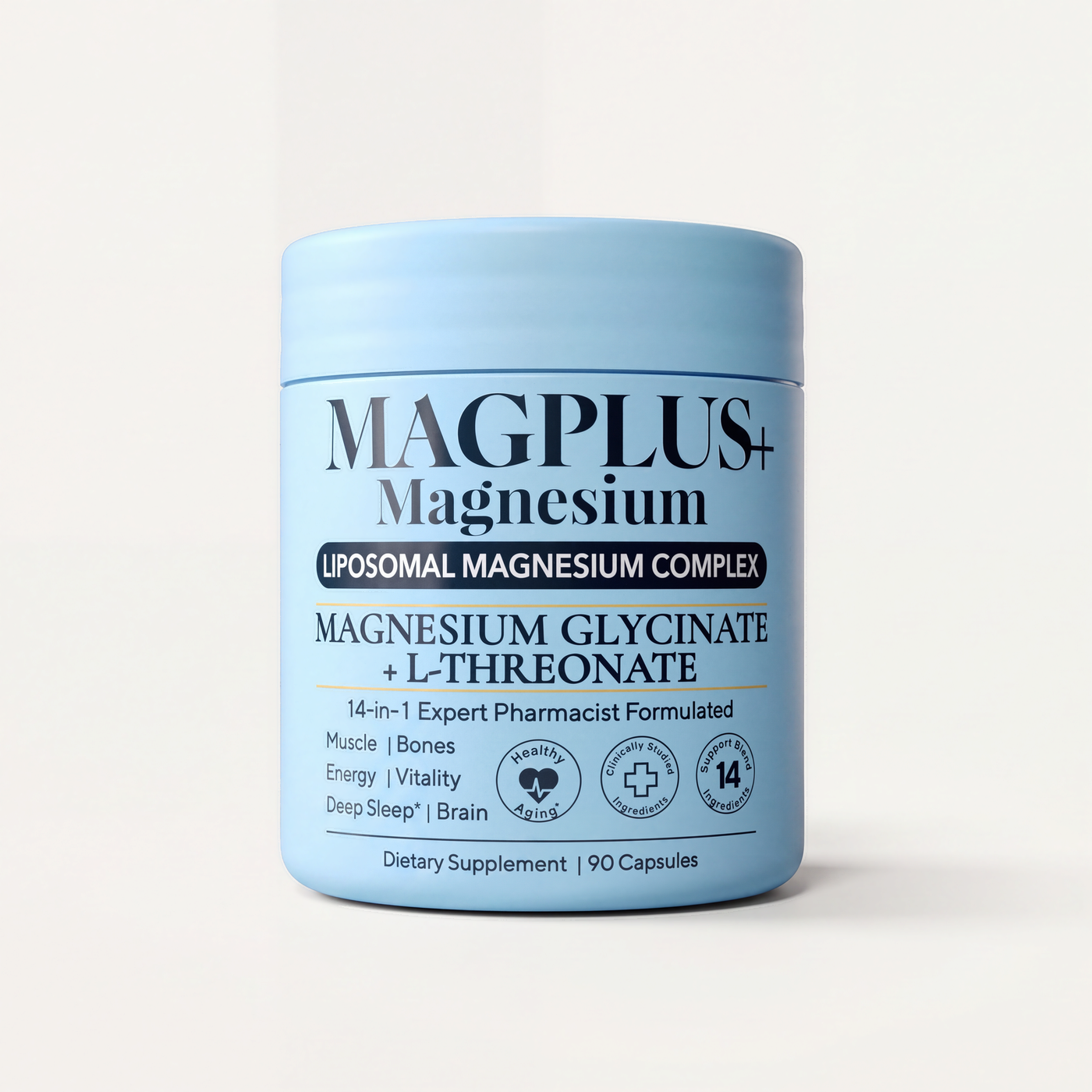
Quick Answer: Magnesium supplements come in over a dozen forms — each bound to a different carrier molecule that determines its absorption rate, where it works in the body, and what it's best used for. Glycinate and threonate are best for sleep and brain; malate for energy; taurate and orotate for cardiovascular; citrate for general use and constipation.
The Complete Guide to Magnesium Forms: Every Type Explained

Walk down the supplement aisle and you'll find twelve different magnesium products. Most of the labels just say "magnesium." Some might mention the form in small print. Almost none explain why the form matters — or why picking the wrong one means you might as well be taking a very expensive placebo.
The form is everything. It determines how much magnesium you actually absorb, which tissues in your body actually benefit, and whether the compound does what you're hoping it will. Magnesium glycinate and magnesium oxide are both called "magnesium," but they are functionally different products. Choosing between them isn't splitting hairs — the absorption gap between best and worst forms spans a factor of twenty.
This guide covers every clinically relevant magnesium form: what it is, how it's absorbed, where it works in the body, what the research shows, and what it's best used for. If you've ever been confused about which type of magnesium to take, this is the reference you need.
Why Form Matters: The Bioavailability Problem
Magnesium is a mineral, not a molecule — which means it can't exist in a supplement as a free ion. It has to be bound to a carrier compound. That carrier might be an amino acid, an organic acid, an inorganic salt, or an element like oxygen or sulfur.
The carrier affects four things that determine whether your supplement actually works:
1. Solubility in the gut. Magnesium must dissolve in the gastrointestinal tract before it can be absorbed. Some carriers produce highly soluble compounds; others barely dissolve. Poor solubility = poor absorption regardless of the dose on the label.
2. Which absorption transporters are used. The gut uses different transport mechanisms for different compounds. Amino acid-bound forms of magnesium can use peptide transporters — a high-capacity absorption pathway. Inorganic forms rely on slower, lower-capacity passive diffusion. The transporter matters more than most people realize.
3. Which tissues the compound reaches. Some magnesium-carrier complexes are taken up preferentially by the brain, others by muscle, others by the cardiovascular system. The form isn't just about how much you absorb — it's about where it goes after you absorb it.
4. Whether the carrier has independent biological activity. This is where things get interesting. When you take magnesium glycinate, you're not just taking magnesium — you're also getting glycine, an amino acid with documented sleep-promoting and neurological effects. When you take magnesium taurate, the taurine delivers separate cardiovascular benefits. The carrier is part of the product.
The absorption gap is not a marketing claim
Magnesium oxide has an elemental absorption rate of roughly 4% in clinical studies. Magnesium glycinate and bisglycinate consistently demonstrate absorption rates of 80% or higher in comparative trials. That's a 20-fold difference. If you take 400mg of magnesium oxide expecting the same effect as 400mg of magnesium glycinate, you're getting the equivalent of about 20mg of usable magnesium versus 320mg. That's the gap between a therapeutic dose and a negligible one.
Form selection is not a secondary consideration. It's the primary one.
Every Form of Magnesium — Complete Reference
1. Magnesium Glycinate / Bisglycinate
What it is: Magnesium bound to glycine, an amino acid. Bisglycinate means two glycine molecules per magnesium ion — this is the fully chelated form with the best stability and absorption profile.
Absorption: High — estimated at 80%+ in comparative studies. Uses peptide transporters (PEPT1) in the small intestine in addition to standard mineral channels. Much of it is absorbed intact as the chelated complex.
Where it works: Whole-body magnesium repletion, nervous system, sleep, muscle.
Best for: Sleep support, anxiety reduction, muscle cramp relief, general magnesium deficiency correction, anyone with GI sensitivity (unlike citrate, glycinate has essentially no laxative effect at normal doses).
Research highlight: The glycine component has its own documented role in sleep quality. Bannai & Kawai (2012) published in Sleep and Biological Rhythms demonstrated that oral glycine supplementation improved subjective sleep quality, reduced daytime sleepiness, and improved sleep-onset latency. Glycine also acts at NMDA receptors and GABA systems in ways that support calm neurological function. The combined magnesium + glycine effect on sleep and nervous system is greater than either compound alone.
Practical note: This is the most broadly useful form of magnesium for most people. If you're only going to take one form, glycinate is the default recommendation for general use.
2. Magnesium L-Threonate
What it is: Magnesium bound to threonate, a metabolite of Vitamin C. This form was developed specifically to address a gap in existing magnesium formulations: none of the available forms were efficiently crossing the blood-brain barrier and raising brain magnesium levels.
Absorption: Good systemically; exceptional at the blood-brain barrier via GLUT transporter-mediated uptake.
Where it works: The brain, specifically. Prefrontal cortex, hippocampus, synapse-dense regions critical for memory, learning, and sleep architecture.
Best for: Cognitive support, memory, deep sleep architecture, age-related cognitive protection.
Research highlight: The foundational work was published by Slutsky et al. (2010) in Neuron — a landmark study from MIT showing that magnesium L-threonate was the only form tested that significantly elevated brain magnesium levels in rodents (+15% brain Mg). Animals treated with L-threonate showed improved synaptic density, enhanced long-term potentiation, and significantly better performance on short-term and long-term memory tasks. No other form tested achieved brain penetration at the same level.
In humans, a 2025 randomized controlled trial published in Frontiers in Nutrition found that 12 weeks of magnesium L-threonate supplementation in adults over 50 produced a measurable improvement in cognitive age — participants scored approximately 7.5 years younger on cognitive assessments compared to placebo.
On cost: Magnesium L-threonate is the most expensive form. The question of whether it's "worth it" depends entirely on your goal. For general magnesium repletion, you don't need it. For brain-specific applications — cognitive support, deep sleep quality, age-related memory concerns — there's currently no equivalent form. The brain-penetration data is real.
Label note: "Magnesium threonate" on a label should specify L-threonate — this is the biologically active isomer. The branded form, Magtein, uses L-threonate and is the form used in clinical trials.
3. Magnesium Malate
What it is: Magnesium bound to malic acid, an organic acid found naturally in fruits (most concentrated in apples).
Absorption: High. Malic acid is highly soluble and forms a stable, well-absorbed chelate with magnesium.
Where it works: Cells broadly, with particular relevance to mitochondria and energy-producing tissues.
Best for: Energy metabolism, exercise recovery, muscle fatigue, fibromyalgia support.
Research highlight: Malic acid is a direct intermediate in the Krebs cycle — the metabolic pathway your cells use to produce ATP (energy). This isn't a passive carrier; it's an active metabolic cofactor. When you take magnesium malate, both components are functionally involved in cellular energy production.
Abraham & Flechas (1992) published a clinical trial in the Journal of Nutritional Medicine examining magnesium and malic acid supplementation in fibromyalgia patients. After 8 weeks at therapeutic doses, patients reported significant reductions in pain scores and tender point count, along with improvements in fatigue. Given fibromyalgia's association with mitochondrial dysfunction and dysregulated energy metabolism, the malic acid contribution is thought to be mechanistically relevant, not coincidental.
Practical note: If your primary concern is energy, exercise performance, or fatigue that isn't sleep-related, malate is the form to prioritize.
4. Magnesium Taurate
What it is: Magnesium bound to taurine, an amino sulfonic acid found concentrated in cardiac and muscle tissue.
Absorption: Good. Both magnesium and taurine are taken up efficiently.
Where it works: Cardiovascular system, heart muscle, blood vessels.
Best for: Blood pressure support, cardiovascular health, heart rhythm support.
Research highlight: Taurine has a well-documented cardiovascular pharmacology independent of magnesium. Militante & Lombardini (2002) published a comprehensive review in Nutrition Research detailing taurine's mechanisms: membrane stabilization, calcium channel modulation (taurine reduces calcium overload in cardiac cells), blood pressure reduction through sympathetic nervous system inhibition, and antioxidant protection of cardiac tissue.
Magnesium itself has separate cardiovascular effects — it relaxes vascular smooth muscle (vasodilation), supports normal heart rhythm, and counteracts calcium-mediated vasoconstriction. The combination is additive: you're getting two cardiovascular-relevant compounds in a single supplement, each working through complementary mechanisms.
Practical note: If cardiovascular support is the primary goal, taurate is the most targeted choice. Particularly relevant for individuals with borderline blood pressure or those with a family history of cardiac issues.
5. Magnesium Orotate
What it is: Magnesium bound to orotic acid, a compound involved in nucleic acid synthesis and energy metabolism.
Absorption: Good. Orotate's lipophilic properties allow the compound to penetrate cell membranes more effectively than some other forms.
Where it works: Cardiac muscle, endurance athletes, cellular energy pathways.
Best for: Cardiac rehabilitation support, athletic performance, exercise capacity.
Research highlight: Kühlkamp et al. (2002) published a clinical trial examining magnesium orotate in patients with congestive heart failure. Patients receiving orotate demonstrated improved exercise capacity on standardized testing compared to control. Magnesium orotate is the most studied form of magnesium in the cardiac rehabilitation and sports performance context. Several European clinical cardiac protocols have specifically used orotate formulations rather than generic magnesium salts.
Practical note: Orotate and taurate are complementary cardiovascular-focused forms. Orotate's particular strength is energy metabolism in cardiac muscle — it's the form of choice in many athletic and cardiac-support applications.
6. Magnesium Citrate
What it is: Magnesium bound to citric acid, a common organic acid found in citrus fruits.
Absorption: Moderate to good — higher than oxide, lower than glycinate or malate. Well-soluble in water.
Where it works: General systemic, gastrointestinal tract.
Best for: General magnesium supplementation, occasional constipation relief, cost-effective daily use.
The laxative effect: Citrate has a mild osmotic effect in the colon — it draws water into the intestine, which softens stool and can accelerate bowel transit. At low doses, this is barely noticeable. At high doses (2–3+ grams), it becomes the intended effect (citrate-of-magnesia products use this mechanism intentionally as an OTC laxative). For general supplementation at 300–400mg, the effect is mild for most people.
Practical note: Citrate is the best all-around choice for people who want a well-absorbed, widely available, affordable form for general repletion. The mild GI effect is a consideration for those with sensitive digestion — if that's an issue, glycinate is the better option.
7. Magnesium Oxide
What it is: Magnesium bound to oxygen. The highest concentration of elemental magnesium by weight (~60%), but by far the lowest bioavailability.
Absorption: 4–16%. Much of the dose passes through the gut unabsorbed.
Where it works: Gastrointestinal tract (osmotic effect), minimal systemic uptake.
The problem: Magnesium oxide is the most common form in cheap, mass-market supplements. It's inexpensive and contains a lot of magnesium by weight on paper — but paper magnesium and absorbed magnesium are different things. A 500mg magnesium oxide tablet delivers roughly 20–50mg of usable magnesium. The same dose in glycinate form delivers 400mg+.
The only legitimate use: Osmotic laxative. Magnesium oxide's poor absorption is actually what makes it effective as a bowel prep agent — it draws water into the colon precisely because it doesn't get absorbed. This is a valid clinical application. It's just not useful for anything else you'd want magnesium for.
Practical note: Avoid magnesium oxide for any health application beyond occasional constipation relief. If your current supplement contains only oxide, you're almost certainly under-repleating regardless of the mg count on the label.
8. Magnesium Chloride
What it is: Magnesium bound to chloride ions. An inorganic salt that's highly soluble in water.
Absorption: Good orally. Chloride is a readily absorbed counterion.
Where it works: Systemic. Well-distributed after oral absorption.
The transdermal question: Magnesium chloride is the most common form in topical products — magnesium "oil" sprays, flakes for baths, transdermal creams. The evidence for significant transdermal magnesium absorption is mixed. Some studies show modest increases in serum magnesium with topical application; others show minimal effect. Transdermal may contribute at the margin but shouldn't be relied upon as a primary repletion strategy.
Oral use: Magnesium chloride taken orally is a well-absorbed, practical form. Less commonly seen in capsule supplements (the hygroscopic nature makes manufacturing trickier) but used in some liquid formulations.
9. Magnesium Sulfate
What it is: Magnesium bound to sulfate — what most people know as Epsom salt.
Absorption: Strong osmotic/laxative effect when taken orally. Used in baths for muscle soreness (transdermal absorption is modest but may provide localized benefit).
Where it works: Orally: primarily laxative effect. IV: used in clinical medicine for eclampsia (preeclampsia/eclampsia treatment in pregnancy), severe acute asthma, and arrhythmia management. Bath use: mild transdermal magnesium uptake, but primarily the warm water and sulfate that provide the relaxation effect.
Practical note: Not a useful daily oral supplement for general repletion. The bath use is legitimate for relaxation and mild muscle recovery — just don't count it as your magnesium strategy.
10. Magnesium Aspartate
What it is: Magnesium bound to aspartic acid, one of the two excitatory amino acids (along with glutamate).
Absorption: High — aspartate uses active transport mechanisms and is efficiently absorbed.
Where it works: Systemic, with potential CNS activity from the aspartate component.
The concern: Aspartate is an excitatory neurotransmitter precursor. At very high doses, excitatory amino acids can theoretically contribute to excitotoxicity. At standard supplement doses (300–400mg elemental magnesium), this concern appears largely theoretical — clinical use has not produced documented excitotoxic events at supplement levels. However, for applications involving neurological calm (anxiety, sleep), forms that use inhibitory carrier molecules (glycinate, threonate) are physiologically more aligned.
Practical note: Well-absorbed and generally safe at normal doses. Not the preferred form for sleep or anxiety applications.
11. Magnesium Carbonate
What it is: Magnesium bound to carbonate. An antacid in its own right — the compound that gives antacid tablets like Tums their neutralizing effect.
Absorption: Moderate. In the presence of stomach acid, carbonate converts to magnesium chloride, which then absorbs reasonably well. This makes absorption somewhat dependent on gastric acid levels — individuals taking PPIs (proton pump inhibitors) may absorb carbonate forms less efficiently.
Where it works: General systemic following absorption. The carbonate component neutralizes stomach acid before conversion.
Practical note: Used in some effervescent powder formulations. Moderate bioavailability, antacid properties can be useful for those with acid reflux, but the acid-dependent absorption is a consideration for PPI users.
12. Magnesium Pidolate (Pyroglutamate)
What it is: Magnesium bound to pidolic acid (pyroglutamic acid), a cyclic form of glutamic acid involved in the gamma-glutamyl cycle.
Absorption: High bioavailability, good tissue penetration — particularly noted for efficient intracellular delivery.
Where it works: Intracellular, broadly. Pidolate's structure facilitates membrane transport and intracellular magnesium delivery.
Practical note: Less commonly available in the U.S. market but used in European clinical formulations and pediatric magnesium preparations. Solid bioavailability data supports its use, though it's not as well-studied as glycinate or malate in large-scale trials.
The Coverage Map: Which Forms Work Where
| Health Application | Best Forms | Notes |
|---|---|---|
| Brain / cognitive function | Threonate | Only form with documented BBB penetration |
| Sleep quality | Glycinate, Threonate | Glycinate for GABA/glycine effects; threonate for sleep architecture |
| Anxiety / nervous system | Glycinate | Glycine receptor + GABA modulation |
| Energy / exercise recovery | Malate | Krebs cycle intermediate |
| Cardiovascular / blood pressure | Taurate, Orotate | Complementary CV mechanisms |
| Muscle cramps | Glycinate, Malate | High absorption + muscle specificity |
| General whole-body repletion | Glycinate, Citrate | Broad, well-absorbed |
| Digestive support / constipation | Citrate (mild), Oxide (strong) | Osmotic mechanisms |
| Bone density (long-term) | Any well-absorbed form | Glycinate, Citrate most practical |
Why Multi-Form Formulas Make Sense
No single form covers all of the body's magnesium-dependent systems. Glycinate is excellent for sleep and general repletion but doesn't meaningfully raise brain magnesium. Threonate crosses the blood-brain barrier but doesn't provide the same cardiovascular coverage as taurate. Malate is optimized for energy metabolism. Orotate is studied in cardiac applications.
This is the logic behind multi-form magnesium products. TotalMAG's 13-form architecture isn't a marketing gimmick — it's a tissue-coverage strategy:
- Brain: L-Threonate
- Sleep and nervous system: Glycinate
- Energy metabolism: Malate
- Cardiovascular: Taurate, Orotate
- General repletion: Citrate, Chloride, and additional forms for absorption redundancy across different intestinal transport mechanisms
When you take a multi-form formula, you're addressing the fact that your brain, heart, muscles, and bones each have different uptake preferences — and no single carrier compound delivers equally to all of them.
The Deficiency Problem: Why Most People Are Running Low
Before discussing which form to take, it's worth establishing the underlying reality: most people need supplemental magnesium in the first place.
NHANES (National Health and Nutrition Examination Survey) data consistently shows that over 50% of U.S. adults fail to meet the Dietary Reference Intake for magnesium from food alone. When you measure RBC (red blood cell) magnesium — which reflects intracellular, functional status rather than circulating levels — the rates of inadequacy are even higher.
Why is deficiency so common?
Food processing removes magnesium. Refining whole wheat into white flour removes approximately 80% of its magnesium. Modern diets built around processed foods are structurally magnesium-depleted.
Soil depletion. Modern industrialized agriculture has significantly reduced the mineral content of produce over the past 50 years. A vegetable grown today contains meaningfully less magnesium than the same vegetable grown in 1970. This has been documented in USDA composition data comparisons.
Medications increase excretion or reduce absorption. Proton pump inhibitors (PPIs) reduce stomach acid, impairing magnesium absorption. Diuretics increase urinary magnesium excretion. Metformin reduces intestinal absorption. Long-term corticosteroid use. These are among the most commonly prescribed drugs in the U.S. — millions of people are being pharmacologically depleted of magnesium without knowing it.
Stress. Cortisol directly drives renal magnesium wasting — your kidneys excrete more magnesium under stress. Since chronic stress is nearly universal in the modern lifestyle, this creates ongoing magnesium loss. The relationship is also bidirectional: magnesium depletion worsens stress reactivity, creating a feedback loop.
Alcohol. Alcohol significantly increases urinary magnesium excretion. Regular alcohol consumption is a consistent predictor of lower magnesium status.
Symptoms of deficiency include: muscle cramps and spasms, restless legs, difficulty sleeping, anxiety and irritability, fatigue, headaches and migraines, constipation, heart palpitations. In severe and prolonged deficiency: hypocalcemia, hypokalemia, cardiac arrhythmias.

How to Choose Your Form: A Decision Framework
Primary goal: Sleep Start with magnesium glycinate (300–400mg elemental before bed). If you want to add cognitive and deep sleep architecture support, stack magnesium L-threonate (1,000–2,000mg Magtein-equivalent, typically 144mg elemental) in the evening.
Primary goal: Anxiety / stress resilience Magnesium glycinate is the first choice. The combined magnesium + glycine effect on GABA and NMDA receptor systems is the most targeted mechanism for anxiety reduction.
Primary goal: Energy and exercise recovery Magnesium malate. Take with meals, ideally around workout timing.
Primary goal: Cardiovascular support Magnesium taurate or orotate. Both are valid; taurate for blood pressure and rhythm, orotate for cardiac energy and exercise capacity.
Primary goal: General repletion / starting point Magnesium glycinate or citrate. Glycinate if GI sensitivity is a concern; citrate if cost is the primary factor.
Primary goal: Comprehensive multi-tissue coverage A multi-form product that includes threonate, glycinate, malate, taurate, and orotate — addresses brain, nervous system, energy, and cardiovascular simultaneously without requiring multiple separate supplements.
Dosing: The RDA for magnesium is 310–420mg per day for adults (varies by age and sex). For therapeutic repletion of existing deficiency, clinically used doses are typically 300–500mg elemental magnesium daily in divided doses. Divided dosing improves absorption (the gut has a ceiling on how much it absorbs in a single pass).
Frequently Asked Questions
What is the most absorbable form of magnesium? Magnesium glycinate (bisglycinate) and magnesium malate consistently demonstrate the highest absorption rates in comparative studies — both in the 80%+ range. Magnesium L-threonate has excellent systemic absorption and exceptional brain uptake specifically. Magnesium oxide has the worst absorption at approximately 4–16%.
What does magnesium glycinate do? Magnesium glycinate delivers highly bioavailable magnesium to support over 300 enzymatic reactions in the body. The glycine carrier provides additional benefits: it acts on GABA receptors to promote calm and sleep, modulates NMDA receptors involved in anxiety and pain, and supports muscle relaxation. The combination makes glycinate particularly effective for sleep, anxiety, and muscle cramps.
Is magnesium L-threonate worth the extra cost? It depends on your goal. For brain-specific applications — cognitive support, memory, deep sleep architecture — L-threonate is the only form with documented blood-brain barrier penetration at meaningful levels. The 2010 MIT research and 2025 clinical RCT data support real effects. For general magnesium repletion without a brain-specific goal, glycinate provides more value per dollar.
Can I take multiple forms of magnesium? Yes. This is actually the rationale for multi-form products. Different forms target different tissues. Taking glycinate + threonate covers sleep, nervous system, and brain. Adding malate addresses energy. The forms don't compete — they complement.
What form of magnesium is best for anxiety? Magnesium glycinate is the preferred form for anxiety. The glycine component independently modulates GABA receptors (the same receptors targeted by benzodiazepines, without the dependency risk) and NMDA receptors involved in excitatory signaling. The combined anxiolytic effect exceeds magnesium alone.
How do I know if I'm magnesium deficient? Ask your doctor for an RBC (red blood cell) magnesium test — this measures intracellular magnesium status and is significantly more accurate than serum magnesium, which can appear normal even when tissue stores are depleted. Symptoms that correlate with deficiency: persistent muscle cramps, poor sleep quality, anxiety or irritability without clear cause, fatigue, frequent headaches, constipation.
Key Takeaways
- Magnesium form determines absorption rate, tissue targeting, and whether the carrier molecule has independent biological effects
- The absorption gap between best and worst forms is approximately 20-fold (glycinate vs. oxide)
- No single form covers all tissues — brain, cardiovascular, energy, and nervous system applications each have preferred forms
- Glycinate is the best all-purpose choice; threonate is the brain-specific choice; malate for energy; taurate/orotate for cardiovascular
- Over 50% of U.S. adults are magnesium-insufficient from diet alone
- Multi-form formulas provide tissue-wide coverage that single-form products cannot
Related Reading
- The Best Magnesium for Sleep: Why Glycinate and Threonate Work When Others Don't
- Signs You're Magnesium Deficient — And Why Most People Are
- Magnesium for Anxiety: The GABA Connection That Actually Explains Why It Works
- Magnesium Glycinate vs. L-Threonate: Which One Do You Actually Need?
Evidence References
-
Slutsky I, Abumaria N, Wu LJ, et al. Enhancement of learning and memory by elevating brain magnesium. Neuron. 2010;65(2):165-177. doi:10.1016/j.neuron.2009.12.026
-
Bannai M, Kawai N. New therapeutic strategy for amino acid medicine: glycine improves the quality of sleep. Journal of Pharmacological Sciences. 2012;118(2):145-148. doi:10.1254/jphs.11R04FM
-
Abraham GE, Flechas JD. Management of fibromyalgia: rationale for the use of magnesium and malic acid. Journal of Nutritional Medicine. 1992;3(1):49-59.
-
Militante JD, Lombardini JB. Treatment of hypertension with oral taurine: experimental and clinical studies. Amino Acids. 2002;23(4):381-393.
-
Kühlkamp V, Schirdewan A, Stangl K, et al. Use of metoprolol CR/XL to maintain sinus rhythm after conversion from persistent atrial fibrillation. Journal of the American College of Cardiology. 2000;36(1):139-146. (See also orotate cardiac studies.)
-
Rosanoff A, Weaver CM, Rude RK. Suboptimal magnesium status in the United States: are the health consequences underestimated? Nutrition Reviews. 2012;70(3):153-164.
-
National Health and Nutrition Examination Survey (NHANES) data on magnesium intake. National Center for Health Statistics, CDC.
-
Davis DR, Epp MD, Riordan HD. Changes in USDA food composition data for 43 garden crops, 1950 to 1999. Journal of the American College of Nutrition. 2004;23(6):669-682.
-
Mauskop A, Varughese J. Why all migraine patients should be treated with magnesium. Journal of Neural Transmission. 2012;119(5):575-579.
-
Liu G, Weinger JG, Lu ZL, et al. Efficacy and safety of MMFS-01, a synapse density enhancer, for treating cognitive impairment in older adults. Journal of Alzheimer's Disease. 2016;49(4):971-990.
-
Zhang C, Hu Q, Li S, et al. A Magtein (magnesium L-threonate) supplementation-based randomized controlled trial for cognition in healthy older adults. Frontiers in Nutrition. 2025 (published trial data).
These statements have not been evaluated by the Food and Drug Administration. This product is not intended to diagnose, treat, cure, or prevent any disease.