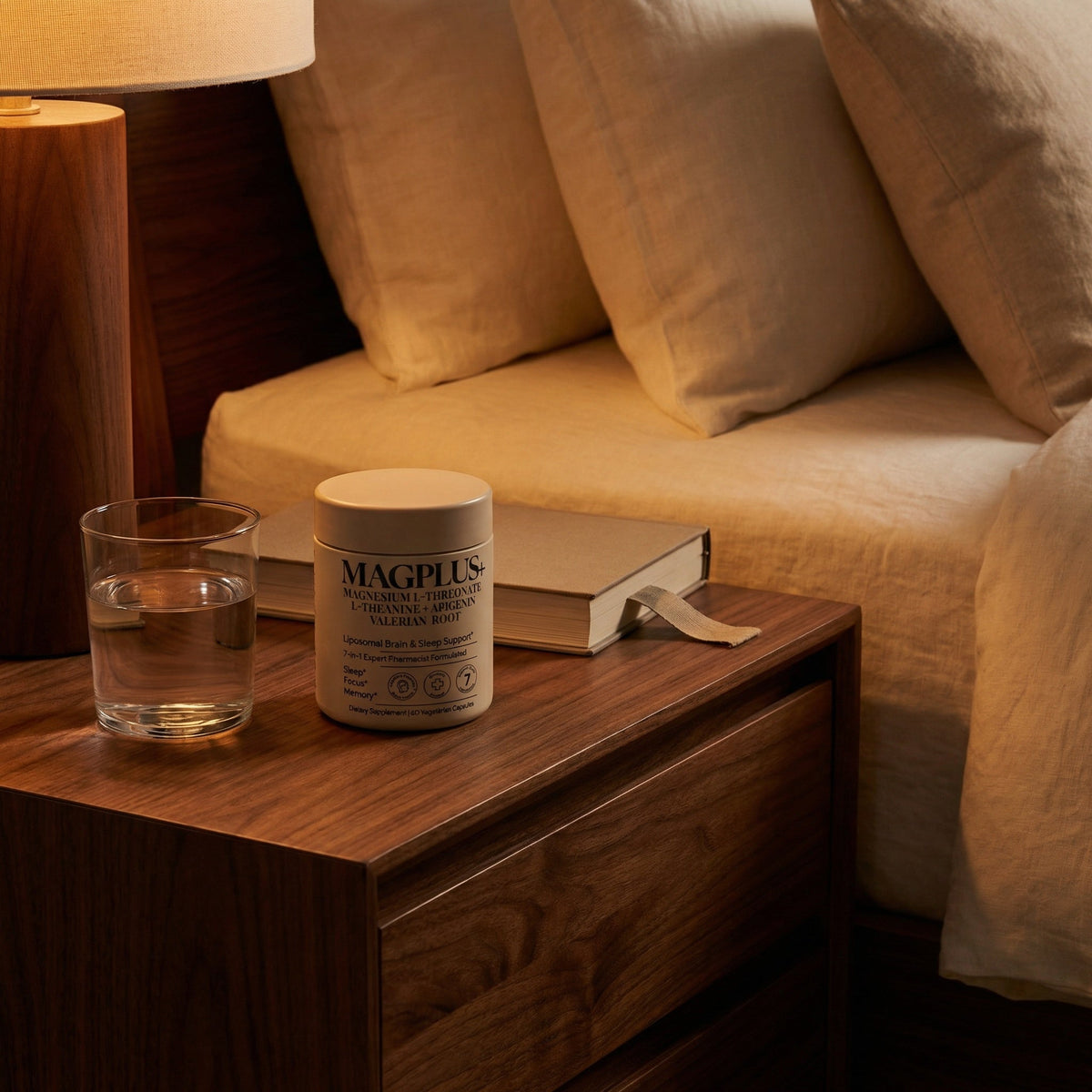
Why You Wake Up at 3am Every Night — And Why It's Not Insomnia
Quick Answer: Waking up at 3am is usually caused by an early cortisol spike from a dysregulated HPA axis — not insomnia. Cortisol naturally surges in the early morning to prepare your body for wak...
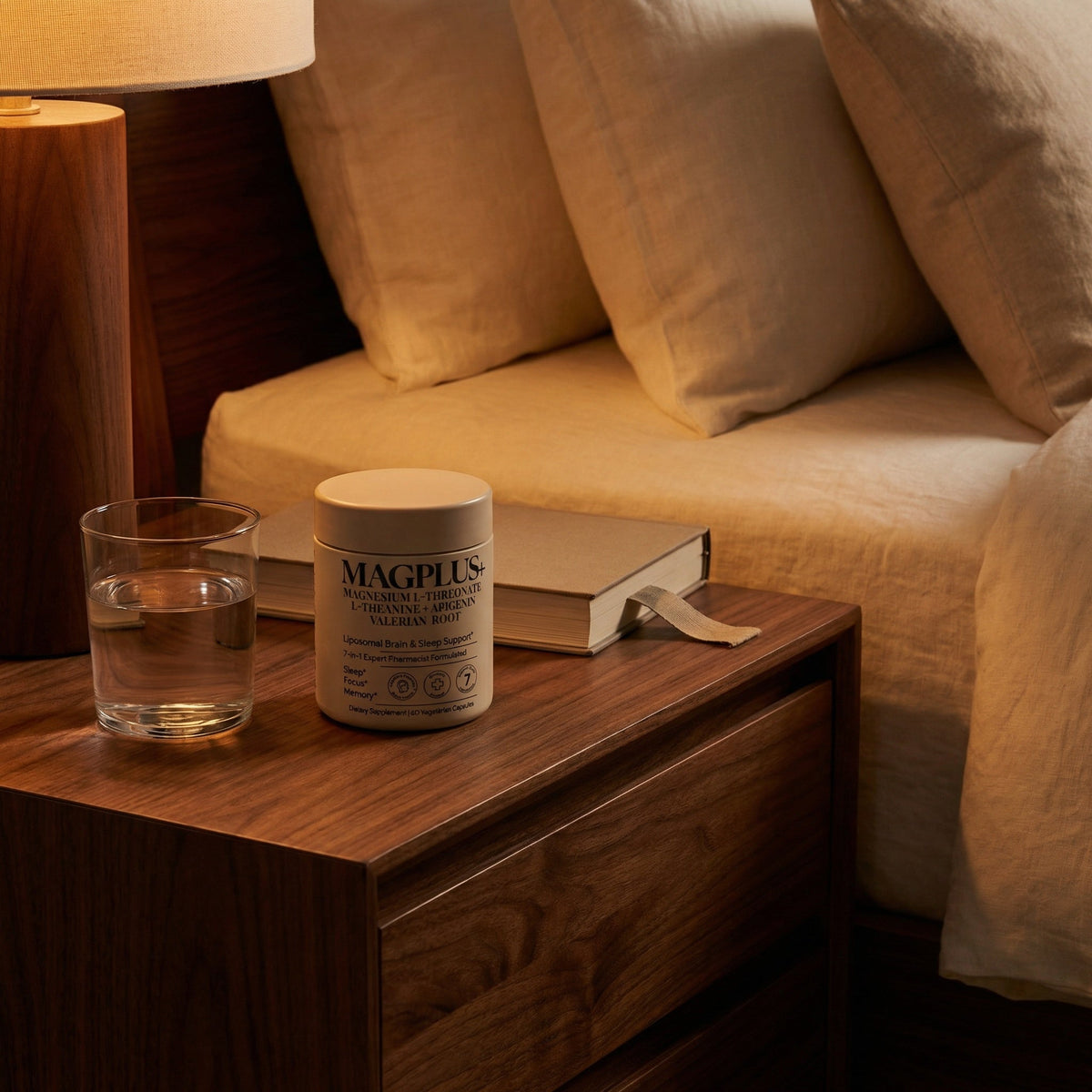
Why Sleep Gets Worse With Age — The Biology Most Sleep Advice Ignores
Quick Answer: Sleep gets worse with age primarily because of structural biological changes — not bad habits. Deep slow-wave sleep drops by up to 80% between your 20s and 70s. Melatonin producti...
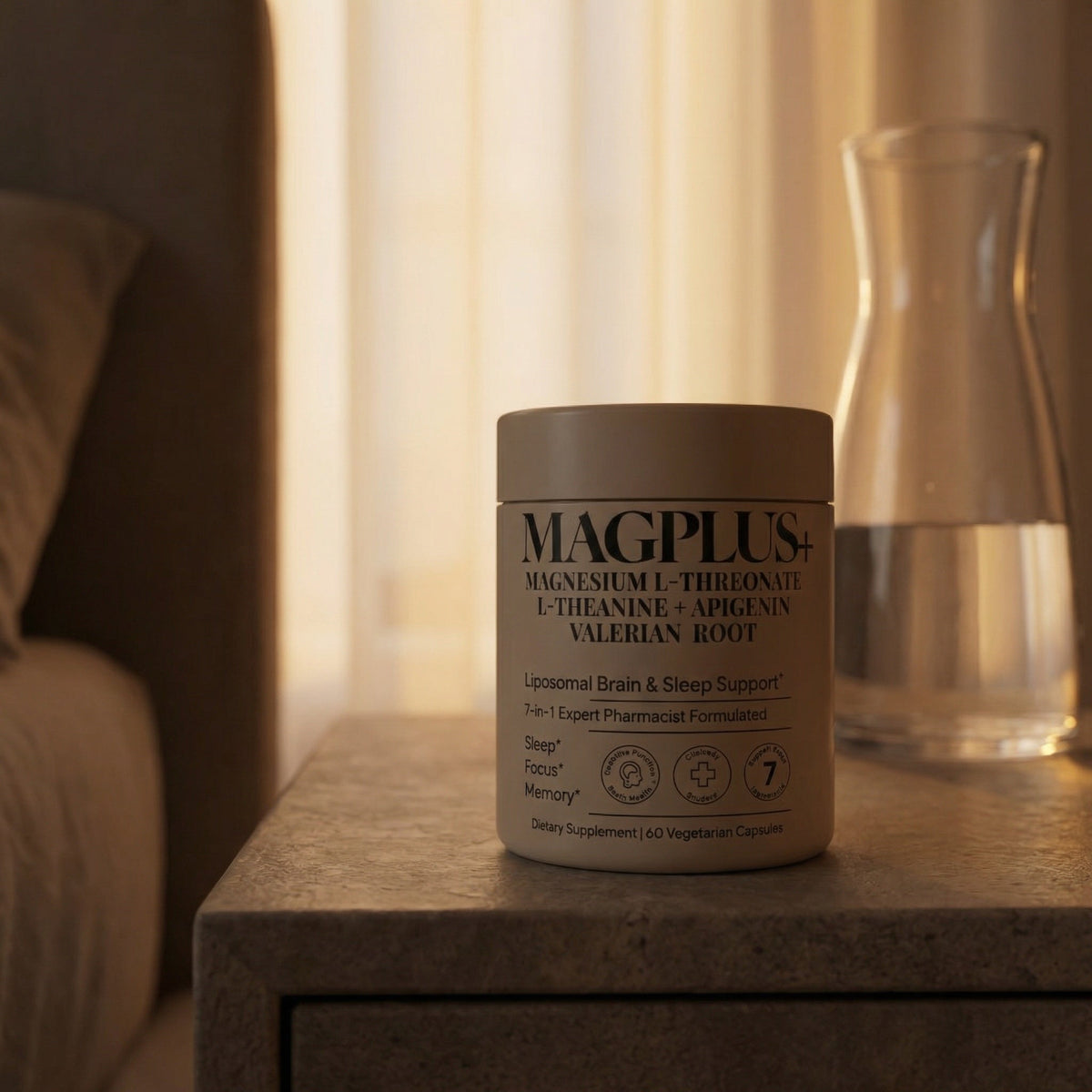
Which Form of Magnesium Actually Works for Sleep? A Problem-by-Problem Guide
Quick Answer: The best magnesium for sleep depends on your specific problem. Magnesium glycinate is best for racing mind, anxiety, and cortisol-driven sleep disruption — it combines magnesium's HP...
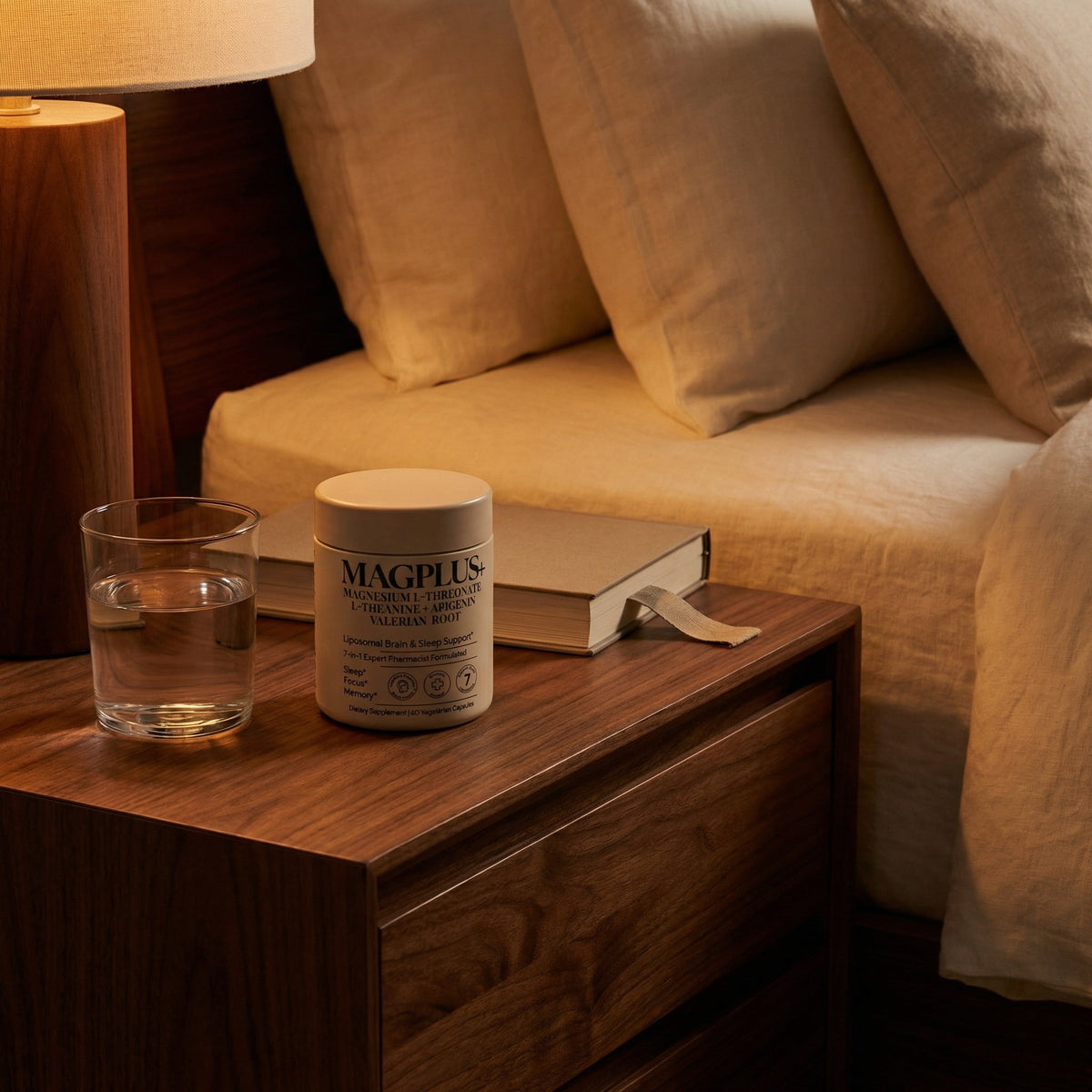
Magnesium Glycinate vs. L-Threonate: Which Form Should You Actually Take?
Quick Answer: Magnesium glycinate and magnesium L-threonate serve different purposes in different tissues. Glycinate is highly bioavailable and ideal for whole-body magnesium repletion — sleep ...
Magnesium for Anxiety: The GABA Connection That Actually Explains Why It Works
Quick Answer: Magnesium reduces anxiety through three distinct neurological mechanisms: it enhances GABA-A receptor activity (the same pathway as benzodiazepines, without the dependency risk), blo...
Magnesium and Sleep After 50: Why Your Sleep Changed — and What to Do About It
Quick Answer: Sleep commonly deteriorates in your 40s and 50s due to five compounding biological changes: declining magnesium absorption, collapse of deep slow-wave sleep, reduced melatonin produc...