Quick Answer: Magnesium glycinate and magnesium citrate are both well-absorbed forms, but they serve different purposes. Glycinate is the preferred choice for sleep and anxiety due to its calming glycine carrier and superior GI tolerance. Citrate is more effective for constipation and general absorption but carries a mild laxative effect at higher doses that makes it less ideal for nighttime use.
Walk into any supplement store and the magnesium section has become genuinely complicated. Oxide, citrate, glycinate, malate, threonate, taurate — each form has its advocates and its clinical reasoning. But for most people asking about magnesium, the real question is between two forms: glycinate and citrate.
These are the two most commonly recommended options by clinicians, dietitians, and functional medicine practitioners. They're both legitimately good. The difference isn't about quality — it's about what you're trying to accomplish.
1. Two Good Forms — Very Different Jobs
The core distinction is this: magnesium glycinate and magnesium citrate were not designed to do the same thing. Their different carrier molecules — glycine (an amino acid) versus citric acid — give them different absorption characteristics, different GI effects, and different tissue affinities.
Neither is universally better. The right answer depends entirely on your goal:
- Trouble sleeping? Glycinate.
- Constipation? Citrate.
- Anxiety? Glycinate.
- Muscle cramps? Citrate or malate.
- General magnesium repletion with good tolerance? Either, though glycinate has a GI edge.
Understanding why requires a closer look at each form.
2. What Makes Magnesium Citrate Effective
Magnesium citrate is magnesium bound to citric acid. It's one of the most well-studied magnesium supplements available, with decades of clinical use in both medical settings and consumer health.
Bioavailability: Citric acid is a water-soluble organic acid, and its magnesium salt dissolves readily in the aqueous environment of the gut. This solubility is a significant advantage over poorly-absorbed inorganic forms like magnesium oxide. Walker et al. (2003) in Magnesium Research found that magnesium citrate was significantly better absorbed than magnesium oxide, making it a meaningful upgrade for people who've been using cheap supplement forms.
The laxative effect: This is citrate's defining characteristic and its double-edged sword. Magnesium draws water into the colon via osmotic action — this is the same mechanism exploited in high-dose magnesium citrate preparations that are used medically for bowel preparation before colonoscopies. At lower, supplemental doses (around 200–400mg elemental), the laxative effect is mild and often therapeutic for people with sluggish digestion. For people with normal GI function, higher doses may cause loose stools.
Medical uses: Magnesium citrate is the go-to form in clinical settings when the goal is bowel regularity or GI preparation. It's also used in kidney stone prevention for certain stone types, as citrate inhibits calcium oxalate crystal formation.
3. What Makes Magnesium Glycinate Different
Magnesium glycinate — also called magnesium bisglycinate — is magnesium chelated to glycine, a naturally occurring amino acid. The chelation process bonds the magnesium ion directly to two glycine molecules, creating a more complex, more stable molecule.
GI tolerance: The amino acid chelate structure is gentler on the digestive tract than organic acid salts. Because the magnesium is bound to glycine rather than an acid, it doesn't produce the osmotic laxative effect characteristic of citrate. This makes glycinate far better suited for evening use — taking it before bed won't risk GI disruption during the night.
The glycine contribution: This is what makes glycinate genuinely unique. Glycine is itself an inhibitory neurotransmitter with independent sleep-supporting research behind it. Bannai et al. (2012) in Sleep and Biological Rhythms demonstrated in a randomized controlled trial that 3g of glycine before bed significantly improved sleep quality, reduced sleep latency, and improved next-day alertness. When you take magnesium glycinate, you receive glycine as part of the delivery — and at meaningful doses, this contributes to the sleep effect.
Absorption: Magnesium glycinate is absorbed both through standard magnesium absorption pathways and through intestinal peptide transporters that recognize the glycine molecule. This dual absorption route gives it a bioavailability edge over forms that rely solely on the standard mineral absorption pathway.
4. The Sleep Use Case: Why Glycinate Wins
For sleep, magnesium glycinate is the clearly preferred form for three converging reasons:
-
Magnesium's own sleep mechanisms — GABA-A receptor potentiation, NMDA receptor dampening, cortisol regulation, and melatonin synthesis support all point toward magnesium as a legitimate sleep-supporting mineral.
-
Glycine's independent effect — the amino acid carrier has its own randomized trial data showing sleep quality improvements, including reduced core body temperature (one of the physiological triggers for sleep onset) and improved sleep architecture.
-
No GI disruption — taking citrate before bed carries the risk of nighttime GI effects that wake you up. Glycinate eliminates this variable.
Citrate's mild osmotic effect — useful for constipation during the day — becomes a liability when the goal is uninterrupted sleep. This is not a marginal distinction. Many people who try magnesium for sleep and stop because "it doesn't work" may have been using citrate and experiencing subtle GI interference.
5. The Constipation Use Case: Why Citrate Wins
For constipation, magnesium citrate is the clinical standard. The osmotic mechanism that works against citrate as a sleep aid works in its favor for GI health.
Water drawn into the colon softens stool and stimulates peristaltic movement. At therapeutic doses of 200–400mg elemental, citrate provides this effect reliably and gently. It's the reason magnesium citrate appears in pharmacies in both supplement capsule form and as a medical preparation for more acute bowel conditions.
Glycinate does not have this mechanism. It won't address constipation, and using glycinate when constipation is the goal is choosing the wrong tool.
6. Anxiety, Muscle Cramps, and Energy: Form-by-Form Guide
| Use Case | Recommended Form | Why |
|---|---|---|
| Sleep quality | Glycinate | Glycine effect + GABA support + no GI disruption |
| Anxiety / nervous system | Glycinate | Glycine inhibitory neurotransmitter effect |
| Constipation / GI regularity | Citrate | Osmotic mechanism, well-studied |
| Muscle cramps / recovery | Malate or citrate | Malate supports ATP/mitochondria; citrate for general Mg |
| Energy and fatigue | Malate | Malic acid is a citric acid cycle intermediate |
| Brain health / cognitive | Threonate | Only form shown to cross blood-brain barrier |
| Cardiovascular support | Taurate | Taurine has cardiac membrane-stabilizing effects |
| General absorption upgrade from oxide | Either glycinate or citrate | Both substantially better than oxide |
On anxiety: Multiple systematic reviews support magnesium's role in anxiety reduction, with the proposed mechanism centering on GABA-A receptor function. Magnesium is required for normal GABA receptor activity; deficiency reduces the inhibitory tone that keeps anxious nervous systems calm. Glycinate wins over citrate here because the glycine carrier adds its own inhibitory neurotransmitter effects on top of magnesium's GABA support.
On muscle cramps: Both citrate and malate are commonly used here. The malate form carries malic acid, a compound directly involved in the citric acid cycle (Krebs cycle) for energy production in muscle cells. While both are reasonable, malate has more direct mechanistic relevance to muscle energy and may be more appropriate for exercise-related cramping and fatigue.
7. Absorption Comparison: Is One Actually Better?
Both are meaningfully more bioavailable than magnesium oxide — that baseline comparison matters because oxide remains the most common form in low-cost multivitamins and many store-brand supplements.
Between glycinate and citrate directly, the data is limited in head-to-head trials. The existing evidence suggests:
- Both achieve substantially better fractional absorption than inorganic forms
- Glycinate may have a modest bioavailability edge due to its dual absorption pathway (standard mineral transporters + peptide transporters recognizing glycine)
- Citrate's advantage is not in absorption efficiency but in its specific GI effect, which is useful for constipation and general gut motility
From a pure tissue-magnesium-repletion standpoint, both forms will meaningfully raise serum and red blood cell magnesium levels with consistent use. The distinction for most purposes is not "which absorbs better" but "which serves your specific goal better."
8. Why Most People Need More Than One Form
The glycinate vs. citrate comparison is useful for understanding what each form does — but it also illustrates a broader limitation. Both forms are excellent at specific jobs, and neither covers the full spectrum of what magnesium does in the body.
Consider what's left out:
- Brain health: Neither glycinate nor citrate has meaningful clinical data for brain penetration or cognitive function. Threonate is the only form with animal-study evidence of crossing the blood-brain barrier and human trial data (Liu et al., 2016, Learning & Memory) suggesting cognitive benefits.
- Cardiovascular tissue: Taurate has more specific relevance to cardiac function and has been studied in the context of arrhythmia and blood pressure regulation.
- Energy production: Malate's role as a Krebs cycle intermediate gives it a direct connection to mitochondrial energy production that glycinate and citrate don't share.
This is why the "best magnesium" question doesn't have a single answer. Different tissues have different transporters, different affinities, and different functional needs. A single-form supplement, no matter how well-chosen, addresses one part of a complex picture.

9. Who This Is For
If you're choosing between glycinate and citrate:
- Choose glycinate if sleep, anxiety, or nervous system support is the goal. Take it 30–60 minutes before bed. Look for a product that specifies elemental magnesium content — you want 200–400mg elemental per day.
- Choose citrate if constipation or general GI regularity is the primary concern, or if you want a cost-effective general magnesium supplement during the day.
If your goals span sleep, energy, muscle recovery, brain health, and cardiovascular support — which for most adults they do — a multi-form strategy makes more clinical sense than picking one form and hoping it covers everything.
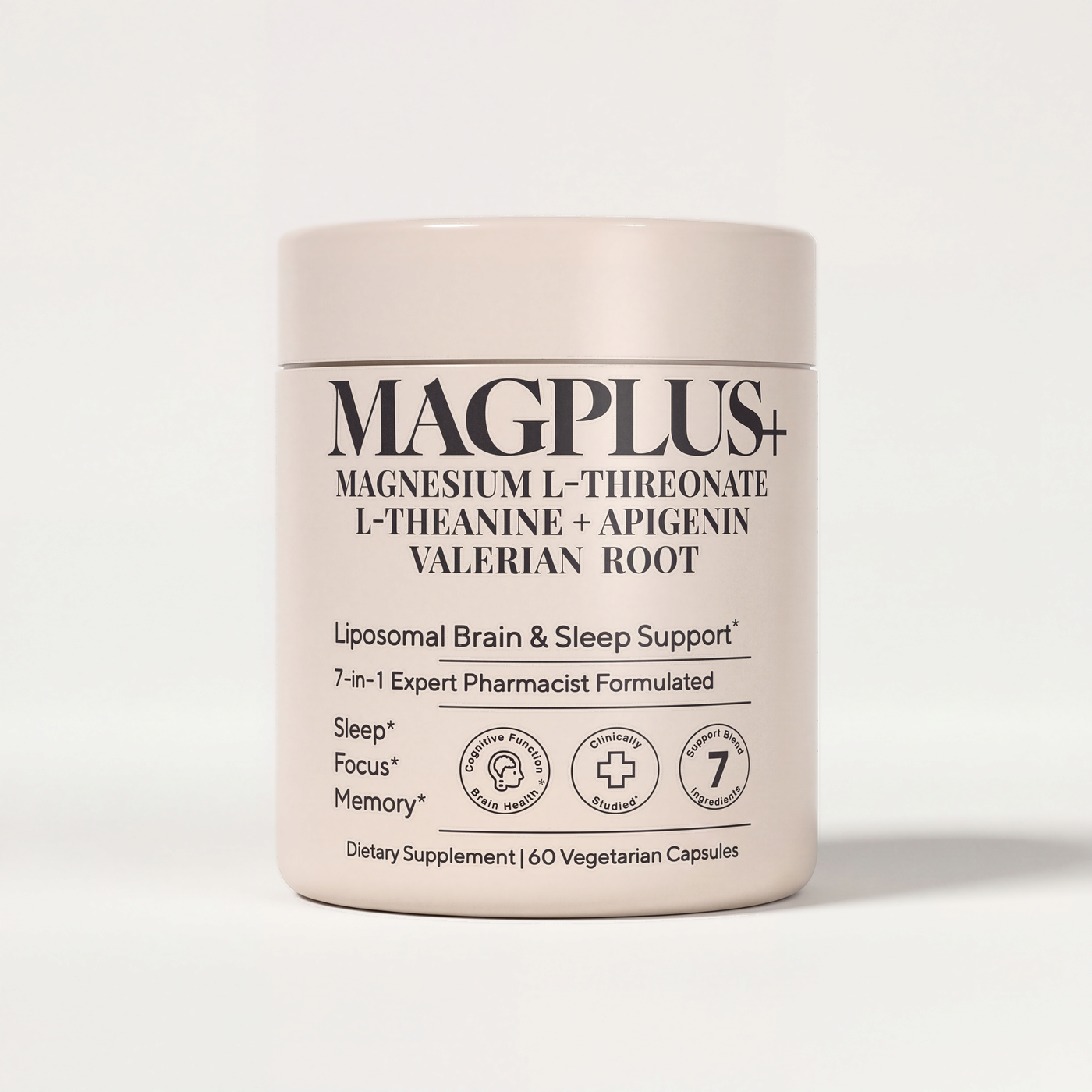
MAGPLUS+ was built on this premise. It contains 13 distinct magnesium forms — including both glycinate/bisglycinate and citrate — each selected for specific tissue affinity and functional role based on the research. Rather than asking one molecule to serve every system, it uses each form where the evidence supports it.
For people who've been cycling through single-form magnesium supplements without addressing all their goals, a comprehensive multi-form approach is worth understanding.
References: Walker et al. (2003), Magnesium Research. Bannai et al. (2012), Sleep and Biological Rhythms. Boyle et al. (2017), Nutrients. Liu et al. (2016), Learning & Memory.