Quick Answer: The timeline depends entirely on which metal you're asking about. Arsenic clears from the bloodstream in a few days, while cadmium can persist in the kidneys for 10–30 years. These half-lives describe natural clearance without medical intervention—medical chelation can accelerate removal, but it's a prescription-level treatment for clinical toxicity, not a routine supplement protocol.
Heavy metals are a topic that generates a lot of online confusion, partly because the term lumps together a diverse group of elements with very different behaviors in the human body. Lead behaves nothing like arsenic. Mercury has multiple chemical forms with different half-lives. Cadmium is quietly one of the most persistent toxic metals most people have never thought about.
If you've been wondering how long it takes for heavy metals to leave the body, the honest answer is: it depends on the metal, where it's stored, and whether you're using any medical intervention. This article lays out the actual numbers from the clinical literature, explains what drives those differences, and distinguishes between the two fundamentally different approaches to reducing heavy metal burden: medical chelation and dietary support.
1. The Answer Depends Entirely on Which Metal
The concept of "half-life" in toxicology refers to the time it takes for the concentration of a substance to drop by 50% in a given compartment—blood, urine, tissue, or bone. A single metal often has multiple half-lives because it distributes across different body compartments over time.
For example, lead has a blood half-life measured in weeks, but once it's deposited in bone, it has a half-life measured in decades. These are different processes happening simultaneously in the same person.
Understanding this distinction matters because popular detox protocols are often evaluated against the wrong benchmark. A supplement that reduces circulating metal levels is doing something meaningful, but it's not necessarily moving the metal stored in bone—and conflating the two overstates what any dietary intervention can accomplish.
2. Heavy Metal Half-Lives: A Metal-by-Metal Guide
| Metal | Primary Storage Site | Blood / Short-Term Half-Life | Long-Term (Tissue/Bone) Half-Life |
|---|---|---|---|
| Lead (Pb) | Bone (95% of body burden) | ~25–36 days (soft tissue) | 20–30 years (cortical bone) |
| Mercury (MeHg) | Brain, kidney, liver | ~70 days (methylmercury in blood) | Months to years (CNS) |
| Mercury (Hg²⁺) | Kidney | ~40 days (inorganic, blood) | Months (kidney cortex) |
| Arsenic (As) | Skin, hair, nails, bone | 3–4 days (inorganic, urine) | Weeks–months (organic forms) |
| Cadmium (Cd) | Kidney cortex | ~75–130 days (blood) | 10–30 years (kidney) |
| Aluminum (Al) | Bone, brain | ~24 hours (blood) | Decades (bone accumulation) |
These figures come from occupational medicine and environmental health research—they reflect what happens without chelation therapy in populations with documented exposures.
A few things to note about this table. First, "blood half-life" is not the same as "elimination from the body"—it reflects redistribution as much as true excretion. Second, arsenic's short urine half-life applies specifically to inorganic arsenic; certain organic arsenical compounds metabolize differently. Third, the cadmium numbers are particularly sobering: even modest ongoing dietary exposure can build kidney burden over a lifetime because the kidney has no efficient way to excrete cadmium once it's bound to metallothionein.
3. Where Metals Actually Accumulate in the Body
The storage site of a metal is what determines how difficult it is to clear. Metals that circulate freely in blood are relatively accessible; metals that incorporate into bone matrix or bind tightly to intracellular proteins are not.
Bone is the body's largest repository for lead and, to a lesser extent, cadmium and aluminum. Bone is not static—it turns over continuously through remodeling—but the rate of that turnover is slow, especially in cortical (compact) bone. Pregnancy, menopause, and osteoporosis all accelerate bone resorption, which can remobilize previously stored lead back into circulation.
The kidney cortex is the primary accumulation site for cadmium. Cadmium binds to metallothionein, a protective protein the kidney produces in response to cadmium exposure. This binding is largely irreversible under physiological conditions. Once kidney cadmium exceeds a critical threshold—typically around 200 µg/g kidney cortex in occupational exposures—tubular damage begins.
The central nervous system is the critical concern with methylmercury. The blood-brain barrier restricts many metals, but methylmercury crosses it efficiently. Once inside neural tissue, it binds to sulfhydryl groups and can persist for months to years, which is why developmental exposure during pregnancy and infancy is treated as a separate risk category by regulatory agencies worldwide.
Soft tissues generally clear metals faster than bone or the CNS. The liver and blood pool for most metals turn over within weeks to months, which is why blood tests are better for recent exposures and urine or hair testing may reflect longer-term patterns.
4. Why Some Metals Are So Hard to Clear
Several biological factors explain why some metals persist while others clear relatively quickly.
Protein binding affinity. Metals that form tight, stable bonds with biological molecules are slow to release. Cadmium's bond with metallothionein is exceptionally stable. Mercury's affinity for sulfhydryl (-SH) groups—found throughout intracellular proteins—makes it sticky to neural tissue.
Lack of dedicated excretion pathways. The human body has no efficient mechanism for excreting cadmium. Most cadmium that enters circulation is filtered by the kidney, reabsorbed, and bound to metallothionein—a protective cycle that also becomes the mechanism of accumulation. Urinary cadmium excretion is low under normal conditions. The body's excretion of cadmium is estimated at only 0.007–0.009% of the kidney burden per day.
Bone incorporation. Lead and aluminum can substitute for calcium in the hydroxyapatite crystal lattice of bone. Unlike calcium, they do not exchange freely. Clearance from bone depends on the rate of bone remodeling, which is tissue-specific and age-dependent.
Enterohepatic recirculation. Some metals (particularly mercury) undergo enterohepatic recirculation—excreted in bile, reabsorbed in the intestine, and returned to circulation. This cycle extends the effective half-life and is one reason that binders in the GI tract (which can interrupt this cycle) have a rationale beyond simply reducing dietary intake.
5. Medical Chelation vs Dietary Support: Two Different Approaches
Medical chelation is a pharmacological intervention using agents like DMSA (dimercaptosuccinic acid), DMPS (dimercaptopropane sulfonate), or EDTA (ethylenediaminetetraacetic acid). These are FDA-approved or physician-prescribed drugs used for documented heavy metal poisoning. They work by binding metals in the bloodstream and tissues, forming stable complexes that are excreted through urine or bile.
Chelation dramatically shortens the effective half-life of metals in blood and soft tissue. DMSA treatment for lead poisoning, for example, can reduce blood lead levels substantially within a single treatment course. DMPS is used for mercury. EDTA is used primarily for lead.
However, medical chelation is not without risk. It is non-selective—it will bind essential minerals (zinc, copper, selenium) along with toxic ones, potentially causing nutritional deficiencies if not managed carefully. It is also ineffective at removing metals from bone at clinically significant rates. Chelation is used under medical supervision for acute or severe chronic toxicity, not as a maintenance wellness practice.
Dietary supplement binders—zeolite, chlorella, activated charcoal, modified citrus pectin—operate at a fundamentally different level. They work primarily in the gastrointestinal tract, reducing the absorption of metals from food and water into the bloodstream in the first place. They also have some capacity to bind metals that are secreted into the gut via bile (interrupting enterohepatic recirculation). What they do not do, based on current evidence, is meaningfully chelate metals from bone, the CNS, or other systemic storage sites.
This is not a criticism of binders—it is a distinction that matters for honest expectations. The appropriate framing is: binders can reduce ongoing accumulation and may assist with GI-level clearance; they are not substitutes for medical chelation when chelation is clinically indicated.

6. What "Detox Supplements" Actually Do (and What They Don't)
The supplement category marketed around heavy metal "detox" is a broad one, and the quality of evidence behind different ingredients varies considerably.
Clinoptilolite zeolite has published research showing it binds heavy metals—including lead, cadmium, and mercury—in the gastrointestinal tract, reducing their absorption. A 2018 study in Food and Chemical Toxicology found that micronized clinoptilolite zeolite significantly reduced blood lead levels in children compared to placebo over a 30-day period. Mechanistically, zeolite's negatively charged tetrahedral lattice structure has a high cation-exchange capacity, which means it binds positively charged metal ions preferentially. The research base here is more substantive than for most supplement-category binders.
Chlorella has some published data suggesting it may reduce methylmercury absorption in animal models and limited human studies. The evidence is less robust than for zeolite, but the proposed mechanism (binding in the gut) is plausible.
Activated charcoal is a well-established non-selective adsorbent used medically for acute poisoning (non-selective being the operative word—it will bind nutrients along with toxins). Its use as a daily supplement is less clearly supported for chronic low-level metal reduction specifically.
None of these supplements have peer-reviewed evidence showing they reduce long-term bone lead burden, CNS mercury accumulation, or kidney cadmium stores in humans. That research simply does not exist in the published literature for supplement-level interventions.
7. Supporting Your Body's Natural Clearance Systems
Short of medical chelation, a few evidence-based approaches support the body's natural capacity to handle heavy metals:
Adequate dietary calcium and iron reduce lead absorption in the GI tract. Lead competes with calcium for transport receptors—adequate calcium intake consistently reduces lead uptake. Iron deficiency increases lead absorption, which is one reason children with iron deficiency are at disproportionately higher risk.
Fiber and regular bowel transit support excretion by reducing the contact time metals have with the intestinal wall and by limiting enterohepatic recirculation. Constipation meaningfully extends the opportunity for reabsorption.
Zinc and selenium support metallothionein production, which is the body's primary intracellular defense against cadmium and to some extent mercury. Adequate zinc status is particularly important for this pathway.
Hydration supports renal excretion of water-soluble metal forms, particularly arsenic and inorganic mercury.
Avoiding ongoing exposure is, mathematically, the most impactful intervention available. The body is always working toward elimination; every additional exposure extends the timeline. For most people, the highest-leverage actions are dietary: limiting high-mercury fish, varying grain sources to reduce rice-specific arsenic exposure, and being aware of older plumbing that may contribute lead.
8. Who This Is For
If you're actively thinking about ongoing dietary metal exposure—whether from fish consumption, rice-heavy diets, processed foods, or occupational contact—a GI-level binder protocol is worth understanding.
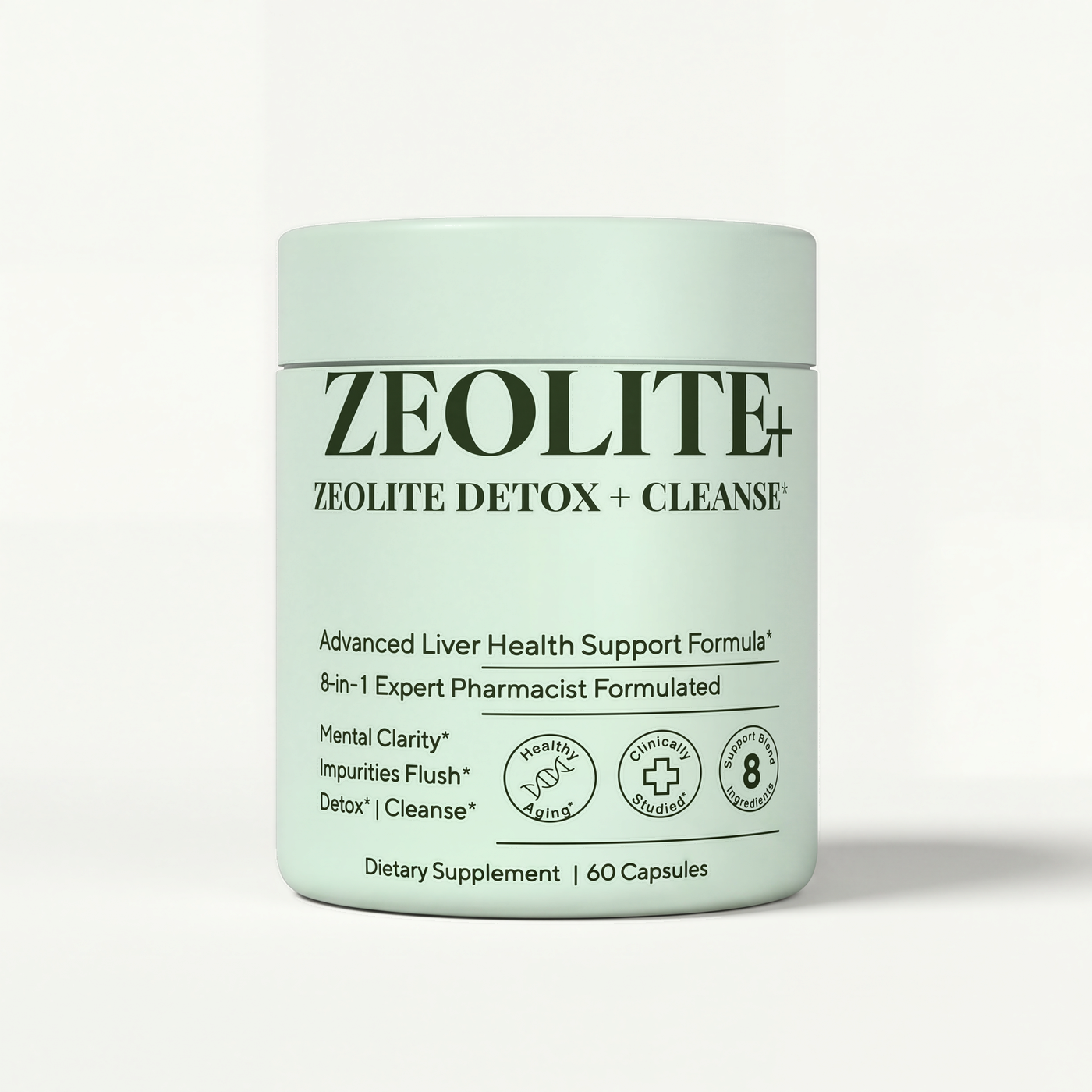
ZEOLITE+ combines activated, micronized clinoptilolite zeolite with chlorella and activated charcoal. The zeolite in the formula has the published cation-exchange mechanism that makes it specifically useful for binding heavy metal cations in the GI tract. It's not a chelation drug, and it won't clear what's already in your bones—but for ongoing daily support to reduce what gets absorbed in the first place, it addresses a real biological mechanism with a more substantive evidence base than most products in this category.
As with any supplement, the goal is consistent, long-term support—not a short-term "cleanse." Given what the half-life data shows about how long metals persist in the body, a sustained approach to reducing ongoing burden makes more sense than a 10-day protocol.