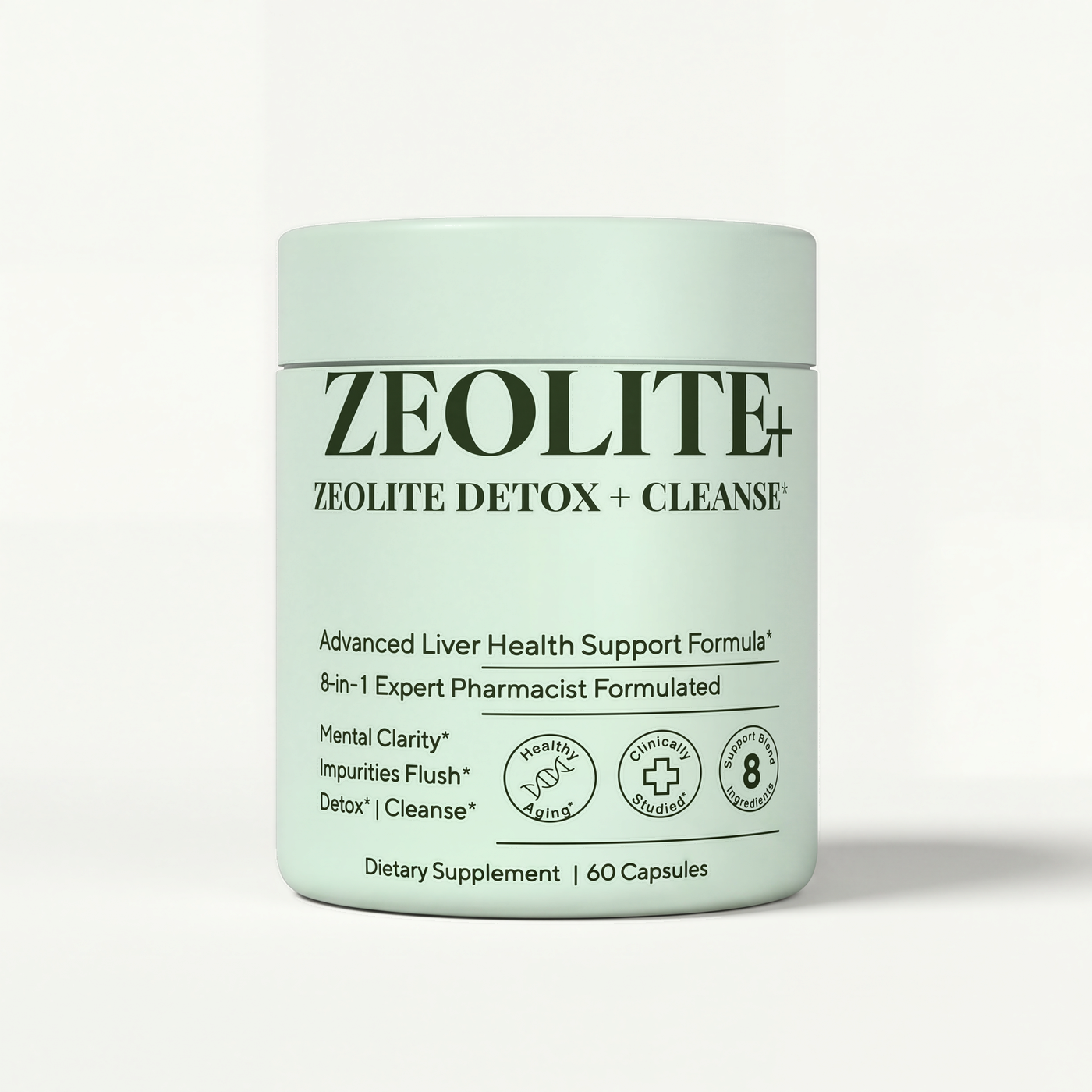
Quick Answer: You are exposed to low levels of heavy metals — lead, mercury, cadmium, arsenic — through food, water, and environment on an ongoing basis. Your body has built-in clearance mechanisms: the liver conjugates metals to glutathione for export, the kidneys excrete them in urine, and bile carries them to the gut for fecal removal. These systems work well under normal conditions. Where they can be supplemented: supporting glutathione production (NAC), supporting liver Phase II enzymes (milk thistle), and using GI-tract binders like zeolite clinoptilolite and activated charcoal to intercept metals in the gut — particularly during bile excretion — before they can be reabsorbed.

The Honest Starting Point
Let's not open with fear. Heavy metal exposure is not a fringe topic invented by the wellness industry. It is documented, peer-reviewed, and tracked by regulatory agencies including the CDC, EPA, and WHO. But it's also not the apocalyptic hidden threat that drives much of the supplement marketing around it.
The reality is somewhere in the middle, and it's worth understanding precisely.
You are being exposed to low levels of heavy metals. This is not a question. The question is: at what level, what metals, and whether your body's clearance mechanisms are adequate to handle your specific exposure profile. In most people with normal physiology and average exposure, the body handles this well. In people with higher exposure, compromised clearance pathways, or both — the burden can accumulate and produce documented health effects.
Understanding the mechanism clearly is what lets you make a rational decision about whether and how to support your own clearance. Here's the biology.
What Heavy Metals Are and Where They Actually Come From
"Heavy metals" is a loosely defined category — in chemistry, it generally refers to metallic elements with high atomic density and atomic weights greater than roughly 5 g/cm³. In biological and toxicological contexts, the relevant heavy metals are those that accumulate in biological tissue and interfere with physiological function.
The four with the most documented chronic low-level exposure risk in the general population:
Lead (Pb) Lead exposure routes are well-documented but not always top of mind. Pre-1978 housing paint is the most commonly cited source, particularly relevant when it deteriorates or when renovation disturbs painted surfaces. More pervasive and less visible: lead service lines and lead solder in plumbing systems. The EPA estimates that approximately 9.2 million U.S. homes still receive water through lead service lines, and lead can leach from internal plumbing fittings even in newer buildings. Certain imported herbal supplements and spices have repeatedly been found to contain elevated lead levels in FDA testing. A 2021 CDC update lowered the blood lead reference value from 5 μg/dL to 3.5 μg/dL — reflecting the finding that there is no identified safe blood lead level. Even low levels are associated with cognitive effects, particularly in children, and cardiovascular effects in adults.
Mercury (Hg) The most relevant route for most people is methylmercury from fish consumption. Methylmercury is the organic form produced when inorganic mercury from industrial pollution enters aquatic systems and is methylated by bacteria in sediment. It bioaccumulates and biomagnifies up the food chain, which is why large predatory fish — tuna (particularly albacore and bigeye), swordfish, king mackerel, shark, and tilefish — contain the highest concentrations. A 2019 analysis published in Environmental Health Perspectives confirmed that regular consumption of high-mercury fish is the dominant route of mercury exposure in non-occupationally exposed adults. Dental amalgam fillings also contribute elemental mercury vapor exposure, though the clinical significance at typical exposure levels is debated.
Cadmium (Cd) Tobacco smoke is the primary cadmium source for smokers — cigarettes contain cadmium accumulated by the tobacco plant, and it's inhaled directly. For non-smokers, the primary route is dietary: cadmium is present in phosphate fertilizers used in conventional agriculture, and it accumulates in soil and is taken up by crops, particularly leafy vegetables, grains, and root vegetables. Cadmium is notable for its extremely long biological half-life in the kidney — up to 30 years. It accumulates over a lifetime and kidney damage from cadmium is a function of cumulative lifetime burden, not acute exposure.
Arsenic (As) Arsenic in well water is a geological phenomenon — it occurs naturally in rock formations throughout large parts of the United States (New England, the West, parts of the Midwest), and it dissolves into groundwater. The United States Geological Survey estimates that approximately 2 million Americans are exposed to arsenic in well water above EPA action levels. Rice is a dietary concern: rice plants are efficient at absorbing arsenic from soil and water, and inorganic arsenic concentrates particularly in rice bran and brown rice. This doesn't make rice a dangerous food for most people, but it's relevant for people consuming large quantities daily.
A note on aluminum: Aluminum is not technically a heavy metal (it's a post-transition metal), but it behaves similarly in biological tissue and is worth brief mention. Cooking in uncoated aluminum cookware, some antacid formulations (aluminum hydroxide), and residuals from water treatment processes all contribute to aluminum exposure. Its neurotoxicity at high levels is documented; the debate is at what cumulative level it becomes a concern for typical exposure patterns.
How the Body Normally Handles Heavy Metals
The body is not passive against heavy metals. It has evolved mechanisms specifically to process and eliminate them — and for most people at typical exposure levels, these mechanisms work.
The liver: Phase I and Phase II processing
When heavy metals reach the liver (via the portal circulation after GI absorption, or via systemic circulation), the liver engages two processing phases.
Phase I involves cytochrome P450 enzymes, which begin modifying metal compounds for export. Phase II is where the primary detoxification work happens. Two key mechanisms:
Metallothionein is a metal-binding protein that the liver (and other tissues) produce specifically in response to heavy metal exposure. Metallothionein is rich in cysteine residues, which bind metal ions with high affinity. It acts as a sequestration molecule — binding metals and temporarily holding them in tissue until they can be exported.
Glutathione conjugation is the other primary Phase II route. Glutathione (GSH) is a tripeptide (glycine, cysteine, glutamate) that conjugates to heavy metal compounds, making them water-soluble for export. Metal-GSH conjugates are then transported into bile for fecal excretion, or into the bloodstream for renal excretion.
The kidneys
Water-soluble metal-glutathione conjugates circulate to the kidneys and are filtered into urine for excretion. The kidney is the primary route for many metals. Cadmium preferentially accumulates in the kidney because it binds to metallothionein there — the kidney's metallothionein capacity is its protection, but it's finite. When cadmium-metallothionein complexes exceed renal tubular reabsorption capacity, direct tubular damage follows.
Fecal excretion via bile
The liver excretes many metal-GSH conjugates into bile, which is delivered to the small intestine. From there, they should travel through the intestine and be eliminated in stool. The complication — described in the next section — is that bile excretion is not always one-way.
Minor routes: hair and sweat
Hair and sweat contain measurable heavy metal concentrations and contribute to elimination, particularly for mercury and arsenic. These are minor routes quantitatively but are why hair mineral analysis (despite its methodological limitations) can sometimes reflect body burden.
When the System Gets Overwhelmed: The Two Key Scenarios
For most people at typical exposure levels, the clearance system described above handles the load. Two scenarios increase the risk that it won't:
Scenario 1: Exposure exceeds glutathione and metallothionein production.
Both of these protective molecules require substrate to produce. Glutathione production requires glycine, glutamate, and cysteine — the last being rate-limiting. Metallothionein production requires adequate zinc (zinc induces metallothionein expression) and is impaired by malnutrition, chronic oxidative stress, and aging.
People with poor dietary cysteine intake, sedentary lifestyles (exercise upregulates antioxidant enzymes), high ongoing oxidative stress, or simply older age may have compromised production of these protective molecules. The result is that metals arriving at the liver are processed more slowly — they stay in tissue longer and the accumulated burden rises over time.
Scenario 2: Enterohepatic recirculation.
This is the mechanism most people haven't heard of, and it's arguably the most important one for understanding why GI-tract binders matter even for people who aren't dealing with acute metal poisoning.
After the liver processes metals and packages them into bile for fecal excretion, the bile is delivered to the small intestine. In a healthy system, these metal conjugates pass through the intestine and are excreted. But the small intestine — specifically the ileum — is highly efficient at reabsorbing compounds from bile. This is how the body recycles bile acids (an energy-efficient design). The problem is that heavy metals and other fat-soluble compounds that are excreted via bile can get caught in the same reabsorption process. They are reabsorbed in the ileum, returned to the portal circulation, and delivered back to the liver — only to go through the entire process again.
This is enterohepatic recirculation. It's a feedback loop that can significantly extend the time a metal stays in the body beyond what the initial exposure would predict. Breaking this loop is a mechanistically specific use case for GI-tract binders.

The GI Binder Mechanism: What It Is and What It Isn't
GI-tract binders intercept metals and other compounds in the intestinal lumen and carry them through to fecal excretion. They do not enter the bloodstream. They do not chelate metals from tissue. This distinction is critical.
Zeolite clinoptilolite operates through ion exchange. Its crystalline aluminosilicate lattice contains pores of uniform size (~0.4 nm) that are occupied by structural cations — calcium, magnesium, potassium — which sit loosely in the lattice. When zeolite reaches the intestine and encounters heavy metal cations (lead, cadmium, mercury, arsenic), those metals displace the structural cations because they have higher binding affinity for the lattice. The metal becomes trapped in the crystalline structure and is excreted in stool along with the zeolite.
This is selective for metal cations — zeolite doesn't adsorb organic compounds indiscriminately the way activated charcoal does. Lamprecht et al. (2015), published in the Journal of the International Society of Sports Nutrition, demonstrated that clinoptilolite supplementation improved gut barrier integrity markers and reduced systemic markers of intestinal permeability — suggesting that in addition to binding metals, it may help protect the gut wall.
Activated charcoal operates through adsorption — compounds adhere to its enormous surface area (1,000-3,000 m² per gram of charcoal) via van der Waals forces. It binds a broad spectrum of organic compounds, bacterial toxins, some metal complexes, and drug molecules. Activated charcoal has been a clinical standard for acute oral poisoning since the 1960s and has a robust evidence base in that context. Its limitation is the same as its strength: it's non-selective. It binds toxins, but it also binds nutrients and medications with equal indifference. Strict timing rules apply.
Together in the intestine, these two binders cover different chemical classes: zeolite for metal cations via ion exchange, activated charcoal for organic compounds and broader adsorption. They're complementary rather than redundant.
Symptoms of Chronic Low-Level Heavy Metal Burden
There is no clean threshold below which heavy metals produce zero effect and above which effects appear suddenly. Effects exist on a spectrum, and the research — particularly on lead and mercury — documents effects at levels below what was previously considered concerning.
Documented patterns in people with higher heavy metal burdens: cognitive fog and difficulty concentrating, unexplained fatigue that doesn't respond to sleep improvement, joint and muscle pain without inflammatory diagnosis, mood dysregulation (irritability, low-grade anxiety or depression), GI irregularity, headaches, and immune irregularity.
These symptoms are non-specific. They overlap with dozens of other conditions. Heavy metal burden should be considered as one of many possible contributors in a person with unexplained chronic symptoms — not assumed to be the answer, and not dismissed as irrelevant.
The only way to assess heavy metal body burden objectively is through testing. Urine metal testing (particularly after a provocation agent like DMSA in clinical chelation contexts, or non-provoked for some metals) provides systemic excretion data. Hair mineral analysis provides evidence of longer-term exposure patterns (with significant methodology caveats — lab quality varies widely). Blood testing is most reliable for recent acute exposure rather than chronic accumulation. Serum mercury testing after recent fish consumption is a reasonable starting point.
Supporting Your Body's Clearance Mechanisms
For people who want to support their natural clearance pathways without undergoing clinical chelation (which is a medical procedure for confirmed heavy metal poisoning and carries real risks), the evidence-supported options are:
Glutathione support via NAC or GlyNAC. N-Acetyl Cysteine (NAC) is the rate-limiting precursor to glutathione. Supporting cysteine availability directly supports metal-glutathione conjugation in the liver. GlyNAC (glycine + NAC combined) has shown stronger effects on glutathione status in older adults in recent research, addressing the dual substrate limitation.
Milk thistle / silymarin for liver Phase I/II support. Silymarin, the active flavonolignan complex in milk thistle, has documented effects on liver enzyme activity and liver protective effects in toxic exposure contexts. A review by Abenavoli et al. (2018) in Phytotherapy Research documents silymarin's hepatoprotective mechanisms including anti-inflammatory, antioxidant, and Phase II enzyme induction effects.
Selenium. Selenium is a cofactor for glutathione peroxidase — one of the primary antioxidant enzymes that works alongside glutathione in Phase II detoxification. It also forms stable complexes with mercury (seleno-bisGS-Hg) that are significantly less biologically active than free methylmercury — a natural sequestration mechanism that's been studied in the context of fish-eating populations who consume high selenium alongside high mercury.
Zinc. Zinc and cadmium compete for intestinal absorption via the same transporter (ZIP8, primarily). Adequate dietary zinc can reduce cadmium absorption from the GI tract. Zinc also induces metallothionein expression in the liver and kidneys, upregulating the protective sequestration protein.
Fiber and psyllium. Dietary fiber, particularly gel-forming fibers like psyllium, increases the viscosity of intestinal contents and slows transit. This reduces the contact time available for bile-excreted metal conjugates to be reabsorbed — a low-tech but meaningful contribution to clearance efficiency.
GI binders during higher-exposure periods. Zeolite clinoptilolite and activated charcoal are not daily indefinite supplements — they can interfere with nutrient absorption if used continuously. They're most rationally used in targeted periods: when dietary metal exposure is higher (fish-heavy eating periods, travel to areas with known water quality issues), during gut cleanse protocols, or on a 2-4 week cycling basis.
Frequently Asked Questions
How do heavy metals enter the body? The primary routes are ingestion (contaminated food and water), inhalation (industrial air pollution, tobacco smoke), and in some cases dermal absorption (though this is a minor route for most metals). Once absorbed through the GI tract, metals enter the portal circulation and reach the liver, where processing begins.
What are signs of heavy metal toxicity? Acute high-level toxicity — from industrial accident or poisoning — produces clear, severe symptoms: nausea, vomiting, abdominal pain, neurological symptoms. Chronic low-level accumulation is much more subtle: cognitive fog, fatigue, mood changes, joint pain, GI irregularity, and immune dysregulation. These overlap extensively with other conditions. Testing is the only reliable way to assess.
Does everyone need a heavy metal detox? No. "Detox" as a concept is overused and often oversimplified. Most people with normal physiology and average exposure handle their metal load through normal clearance pathways. Supporting those pathways through good nutrition (selenium, zinc, adequate protein for glutathione synthesis) and avoiding unnecessary high-exposure sources (large predatory fish more than twice weekly, using water filters in areas with lead plumbing) is the appropriate level of intervention for most people.
Does zeolite remove heavy metals? Zeolite clinoptilolite binds heavy metal cations in the GI tract through ion exchange and carries them to fecal excretion. It works in the intestine — it does not enter the bloodstream or bind metals from tissue. This is meaningful for reducing new metals being absorbed from food and water, and for intercepting metals that the liver is excreting into bile before they can be reabsorbed (enterohepatic recirculation).
How can I test for heavy metals? Urine testing, blood testing, and hair mineral analysis each measure different things. Blood testing reflects recent acute exposure best. Urine testing (unprovoked) reflects ongoing excretion. Hair analysis reflects longer-term exposure patterns but has significant methodology variability. For a general assessment, a blood metals panel (including lead, mercury, cadmium, and arsenic) through a standard reference lab is a reasonable starting point. A functional medicine practitioner can help interpret results in context.
Do foods help with heavy metal removal? Some foods have documented metal-binding or detoxification-supporting properties. Cilantro has been studied in limited research for mercury effects. Chlorella and spirulina have some evidence for cadmium and mercury binding in the GI tract. Cruciferous vegetables (broccoli, cauliflower, Brussels sprouts) induce Nrf2 and upregulate Phase II liver enzymes. Garlic supports glutathione through its organosulfur compounds. These are supportive dietary additions, not replacements for the primary clearance pathways.