Quick Answer: Building muscle after 40 is harder because the biology genuinely changes — not because you're working out wrong. Anabolic resistance means your muscles respond less strongly to protein and training than they did at 25. Free testosterone declines. Satellite cells (muscle stem cells) activate less efficiently. Mitochondria supporting muscle function degrade. These are measurable, documented changes — not excuses. The good news: understanding the actual mechanisms tells you exactly what to address.
You're not half-assing it.
You show up. You lift heavy things. You eat your protein — probably more than most people you know. You've been consistent for months, maybe years. And you're looking at your younger gym partners making gains that seem almost effortless while you're grinding for every small increment, wondering if you're doing something wrong or if you just drew the short straw in some genetic lottery.
Neither of those things is true.
What's happening is that the biology — the actual cellular and hormonal machinery that governs muscle growth — has changed in ways that most fitness content doesn't acknowledge. The overwhelming majority of training and nutrition advice on the internet is calibrated for people in their mid-twenties. It was written for a physiology that, frankly, isn't yours anymore. Not because you've failed, but because time moves in one direction and it moves through the muscle differently than people acknowledge.
Here's what's actually going on — and it matters, because once you understand the real mechanisms, you can stop optimizing for the wrong variables.
Sarcopenia: The Clinical Name for What You're Experiencing
Sarcopenia is the medical term for age-related loss of skeletal muscle mass and strength. It's not a niche condition — it's a normal biological process that begins earlier than most people realize and accelerates significantly with age.
Muscle mass loss typically begins in the mid-to-late thirties. The average rate is approximately 3–8% loss per decade after age 30, but this isn't linear. The rate accelerates meaningfully after 50, and after 60, some individuals are losing muscle mass at rates exceeding 1–2% per year without intervention.
The numbers at the end of the trajectory are stark: by age 70, some individuals have lost 30% or more of their peak muscle mass. The associated consequences include reduced resting metabolic rate, impaired glucose disposal, increased fall and fracture risk, reduced functional independence, and worsened long-term health outcomes across nearly every chronic disease category studied.
This is why sarcopenia has moved from an obscure geriatric concern to one of the central targets in longevity medicine. The evidence is clear that muscle mass is one of the strongest predictors of healthspan — not just athletic performance, but functional independence and metabolic health across the lifespan.
Now, here's the part that's important for you specifically: training slows the curve. It does not stop the underlying biology.
People who train consistently throughout their forties and fifties have dramatically better muscle mass and strength outcomes than sedentary people. This is unambiguous and motivating. But the mechanisms driving muscle loss are still operating in background — which means the training approach, nutritional strategy, and supplementation logic that worked at 25 will not produce the same results at 45 without adjustment. The people who figure this out early are the ones who maintain their physique into their sixties while everyone else wonders what happened.
The Anabolic Resistance Problem
This is the central issue. If you understand nothing else from this article, understand this.
In a young adult, muscle protein synthesis responds robustly to two primary stimuli: resistance training and dietary protein. You lift heavy, you eat adequate protein, your muscles synthesize new protein at a meaningfully elevated rate, and over time you add muscle mass. The system is sensitive. The anabolic signal gets through clearly.
In older adults, this sensitivity is blunted. Anabolic resistance describes the reduced responsiveness of muscle protein synthesis to the same stimuli that would have produced a strong response at a younger age. The training signal is perceived as weaker. The dietary protein signal triggers less synthetic activity. The net result is that you're doing the same inputs — or more — and getting less output.
The mechanisms driving anabolic resistance are layered:
Reduced mTOR Sensitivity
mTOR (mechanistic target of rapamycin) is the primary intracellular signaling hub for muscle protein synthesis. In younger muscle tissue, mTOR activation in response to resistance training and leucine (a branched-chain amino acid) is robust and sustained. In older muscle, the same stimuli produce a blunted, shorter-duration mTOR activation signal. The construction crew shows up with fewer workers and leaves earlier.
Lower IGF-1
Insulin-like growth factor 1 is a downstream mediator of growth hormone that directly stimulates muscle protein synthesis and satellite cell activation. IGF-1 levels decline progressively with age. Lower IGF-1 means a weaker anabolic signaling environment at the tissue level, independent of training stimulus.
Satellite Cell Inefficiency
Satellite cells are the muscle stem cells responsible for repairing and growing muscle fibers after training-induced damage. They are the reason progressive overload produces muscle growth. In older adults, satellite cells are still present and functional — but their activation efficiency is reduced. They respond more slowly, proliferate less abundantly, and differentiate with less precision than in younger tissue. The repair crew is there, but at reduced capacity.
The practical implication of anabolic resistance is one of the most important things you can change about your approach: the protein intake recommendations written for general populations are not adequate for building or preserving muscle in active adults over 40.
Research consistently supports a minimum of 1.6–2.2 grams of protein per kilogram of bodyweight per day for adults over 40 who are actively training. Many popular recommendations — 0.8g/kg, or "one gram per pound of bodyweight" — are either set too low or derived from studies in younger adults. If you're eating 150 grams of protein and you weigh 200 pounds (91 kg), you're sitting at about 1.65g/kg — which is in range but on the lower end. Leucine content matters independently: leucine triggers mTOR activation on its own, which is why high-leucine protein sources (whey, egg, meat) outperform equivalent gram-for-gram intakes of lower-leucine proteins for muscle protein synthesis.
The Testosterone Factor
It would be impossible to have an honest conversation about muscle building after 40 without addressing testosterone — and equally important to be precise about it, because most of this conversation is confused by the difference between total testosterone and free testosterone.
Here's what the research actually shows:
Total testosterone — the number your doctor reports from a standard blood panel — declines at approximately 1–2% per year after age 30 in most men. By 50, many men have total testosterone levels that are "within normal range" on standard reference intervals while being meaningfully lower than they were at 25.
Free testosterone — the biologically active fraction not bound to carrier proteins — declines faster. The reason: SHBG (sex hormone binding globulin) increases with age. SHBG binds testosterone with high affinity, rendering it biologically inert. As SHBG rises, a larger proportion of your total testosterone pool is bound and unavailable. Your total testosterone can look normal on paper while your free testosterone — the fraction that actually interacts with androgen receptors and drives anabolic effects — has declined substantially.
Why does this matter for muscle?
Testosterone is directly anabolic. It upregulates muscle protein synthesis, increases satellite cell proliferation, and stimulates IGF-1 production at the muscle tissue level. When androgen receptor signaling is robust, the anabolic machinery runs at higher capacity. When free testosterone declines — even with "normal" total levels — the anabolic signaling environment weakens. Training hard with low free testosterone is like pressing the accelerator on a car with the parking brake engaged. The effort is there. The results are muted.
The standard clinical threshold for "low testosterone" (hypogonadism) is set conservatively — you can be well below your own personal optimal without crossing into clinically defined deficiency territory. This is a gap that many men over 40 fall into: not hypogonadal by definition, but operating with free testosterone levels that meaningfully impair their anabolic response to training and nutrition.
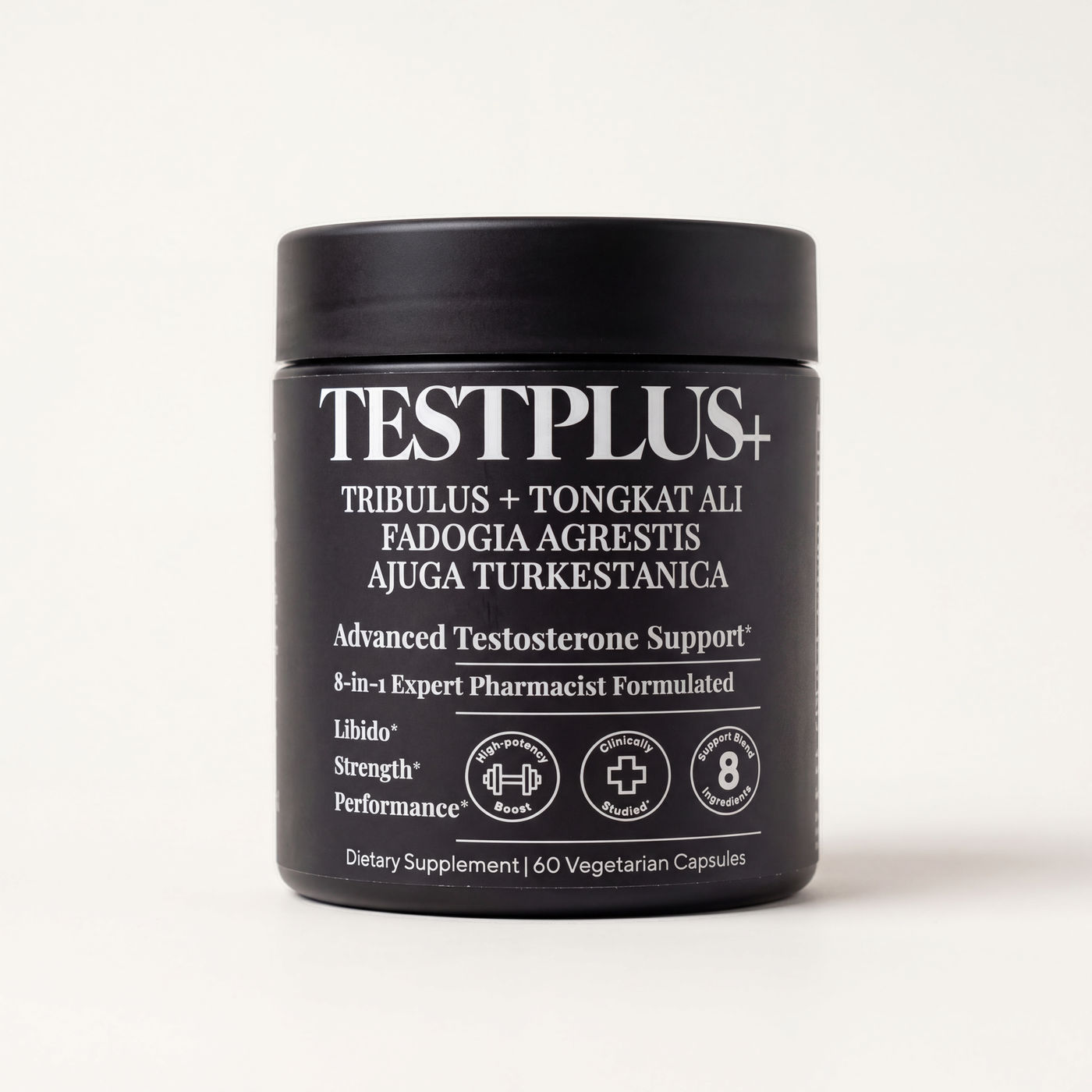
For men experiencing this pattern, the most evidence-supported botanical intervention is Tongkat Ali (Eurycoma longifolia). Tambi et al. (2012) demonstrated statistically significant improvements in serum testosterone in men supplementing with a standardized Tongkat Ali extract. A 2021 meta-analysis by Smith et al. reviewing multiple RCTs found consistent evidence for Tongkat Ali's effect on free testosterone — the primary proposed mechanism being reduction of SHBG and inhibition of the aromatase enzyme (which converts testosterone to estrogen). This isn't TRT. It's not going to produce pharmaceutical-level shifts. But for men whose free testosterone has drifted down over years, supporting the hormonal environment with well-researched botanical interventions can meaningfully shift the anabolic baseline.
The Mitochondrial Layer
Muscle is not purely a structural tissue. It's a highly metabolic one — and sustained force production, particularly in slow-twitch (type I) muscle fibers, depends almost entirely on mitochondrial ATP output.
This matters because slow-twitch fibers are the endurance base of every athletic movement. They're what allow you to complete your sets without gassing out early, to maintain form through the back half of a heavy session, and to recover adequately between sessions. Slow-twitch muscle fibers are packed with mitochondria — their capacity is literally determined by mitochondrial density and function.
As mitochondria accumulate damage and mitophagy (the cellular process that clears dysfunctional mitochondria) declines with age, the result is:
- Reduced sustainable power output per unit of muscle tissue
- Faster fatigue within sets and sessions
- Slower post-exercise recovery
- Reduced training volume capacity before diminishing returns kick in
This is why the 45-year-old who trained as hard as the 25-year-old feels like they hit a wall somewhere in the second half of the session that the younger person doesn't hit. The conditioning is there. The muscle is there. The mitochondria are the bottleneck.
The connection between mitophagy and muscle performance was validated directly in human trials by Singh et al. (2022, Cell Reports Medicine). Older adults supplementing with Urolithin A — a compound that directly activates mitophagy, clearing damaged mitochondria and stimulating renewal of the mitochondrial pool — showed statistically significant improvements in muscle endurance and walking performance compared to placebo over a 4-month trial. The mechanism isn't training adaptation or protein synthesis. It's mitochondrial quality improvement.
For anyone over 40 noticing that their muscular endurance has degraded faster than their strength, or that recovery between sessions takes noticeably longer than it used to, the mitochondrial layer is worth addressing directly.
The Recovery Timeline Shift
One of the most common mistakes made by motivated people over 40 is training with the same frequency and recovery windows they used in their twenties — and then interpreting the results as a strength or effort problem.
In younger muscle tissue, the acute inflammatory response to training resolves and protein synthesis peaks and returns to baseline within approximately 24–48 hours. You can train the same muscle group again in that window and continue to benefit.
In older muscle tissue, this timeline is reliably extended. The inflammatory resolution takes longer. Protein synthesis peaks later and comes down more slowly. The structural repair process — the actual laying down of new protein in damaged fiber regions — takes longer. For many people over 40 doing hard training, 48–96+ hours of recovery is normal and appropriate, not a sign of weakness.
Training through incomplete recovery generates more cumulative damage than adaptation. You're tearing down faster than you're building up, the muscle protein synthesis signal from the previous session hasn't fully expressed, and you're setting up a cycle where consistent effort produces inconsistent or stagnating results.
Adjusting training frequency to reflect your actual recovery capacity is not accommodation of decline. It's working with the biology instead of against it. Many people over 40 make their best gains when they reduce training frequency while increasing session quality — more recovery, heavier loads, better sleep in between.

What the Evidence Actually Supports
Protein Intake
Target 1.6–2.2g of protein per kilogram of bodyweight per day, distributed across 3–4 meals to maximize muscle protein synthesis signaling. Prioritize high-leucine sources: whey protein, eggs, beef, chicken, salmon. Leucine threshold for mTOR activation is approximately 2–3 grams per meal, which translates to roughly 25–40 grams of quality protein per sitting. Timing around training (within 2 hours post-workout) provides modest additional benefit on top of total daily intake.
Testosterone Support
For men experiencing the blunted anabolic response pattern described above, addressing free testosterone through lifestyle (sleep, body fat reduction, resistance training itself, alcohol reduction) and evidence-backed botanical intervention (Tongkat Ali at standardized extract doses) can shift the hormonal environment toward one more supportive of anabolic signaling. This is a baseline optimization, not a replacement for fundamental training and nutrition.
Mitophagy Support (Urolithin A)
Urolithin A is produced by gut bacteria from ellagic acid in certain foods, but fewer than 40% of people produce meaningful amounts due to microbiome variation. Direct Urolithin A supplementation bypasses this variability. Singh 2022 provides the clearest human clinical evidence: 500mg/day for 4 months improved muscle endurance outcomes in older adults. The mitochondrial quality improvement this represents has downstream effects on training capacity and recovery.
Creatine
Creatine monohydrate is the most evidence-supported ergogenic supplement in existence, with a particularly compelling body of evidence in older adults. It works by increasing phosphocreatine stores in muscle, which accelerates ATP resynthesis during high-intensity efforts — directly increasing available energy for training. Beyond acute performance, creatine has been shown in multiple meta-analyses to enhance muscle protein synthesis signaling and produce greater lean mass gains than resistance training alone in older populations. 3–5 grams per day of creatine monohydrate is the consensus dose, no loading phase required.
Resistance Training Prescription
Compound movements (squat, deadlift, press, row, pull) should form the foundation because they produce the greatest hormonal and mechanical anabolic stimulus per unit of time. Progressive overload remains the primary driver of adaptation. Volume recommendations for older adults should account for the extended recovery timeline — quality over quantity, with full recovery between sessions targeting the same muscle group. 2–3 times per week per muscle group with full recovery between is a better starting framework than daily high-frequency training.
What Doesn't Work
This is equally important, because the supplement and fitness industries are not above promising things the evidence doesn't support.
Massive protein intake above 2.2g/kg produces no additional muscle protein synthesis benefit over adequately high intake. Protein above this threshold is oxidized for energy, not incorporated into muscle tissue. More is not meaningfully more past a well-established threshold.
High-rep, light-weight "toning" training does not preserve muscle mass effectively. Muscle responds to mechanical tension. The load must be challenging relative to the capacity of the muscle. "Toning" as a concept is physiologically incoherent — there is no mechanism by which light loads produce a qualitatively different type of muscle tissue. If the load doesn't challenge the muscle, the stimulus for adaptation is insufficient.
Most "testosterone booster" marketing vastly overstates the effects of ingredients with limited or mixed evidence. The majority of products in this category contain ingredients at sub-effective doses, use studies on animals or small populations, or conflate statistical significance with clinical meaningfulness. Tongkat Ali and a small number of other botanicals have genuine human trial data. Most of the category does not. Read the actual research before spending money.
Frequently Asked Questions
Is it too late to build muscle after 40?
No, definitively not. Multiple large-scale studies confirm that adults in their forties, fifties, sixties, and beyond respond to resistance training with measurable muscle hypertrophy. The rate is slower and the approach requires adjustment, but the capacity is real. People who begin training seriously in their forties often achieve physiques better than they had at 30.
How much protein do I need after 40?
Research supports 1.6–2.2 grams per kilogram of bodyweight per day as a target range for active adults over 40 seeking to build or preserve muscle. This is meaningfully higher than the general RDA (0.8g/kg), which was established to prevent deficiency, not support active muscle building. Prioritize leucine-rich sources across 3–4 meals.
Does low testosterone cause muscle loss?
Yes, through multiple mechanisms. Testosterone directly stimulates muscle protein synthesis, satellite cell proliferation, and IGF-1 production. Low free testosterone — even with "normal" total testosterone labs — reduces the anabolic signaling environment in muscle tissue. This is clinically and functionally significant, and it's the reason free testosterone (and SHBG) matters as much or more than total testosterone as a marker.
What is the best supplement for muscle after 40?
The most evidence-supported choices targeting the specific biological changes of muscle after 40 are: creatine monohydrate (phosphocreatine resynthesis and anabolic signaling), Urolithin A (mitochondrial quality and muscle endurance, Singh 2022), Tongkat Ali standardized extract (free testosterone support), and adequate dietary protein with leucine-rich sources. These work on different nodes of the problem and are complementary rather than redundant.
How often should I lift weights over 40?
The optimal frequency depends on your recovery, training intensity, and muscle group. A general framework: train each major muscle group 2–3 times per week with full recovery between sessions targeting the same muscles. If you're experiencing persistent soreness, stagnating progress, or chronic fatigue from training, reduced frequency with higher session quality often produces better results than increased frequency.
Can you reverse sarcopenia?
Yes, in meaningful terms. Resistance training reliably produces muscle hypertrophy and strength increases in older adults across virtually all studies that have examined it. Reversal of substantial sarcopenia takes time and consistent effort, but the biological capacity for muscle growth never disappears. Nutritional optimization, hormonal support, and mitochondrial health interventions compound the training response. The trajectory is not fixed.
Key Takeaways
- Sarcopenia begins in the thirties and accelerates after fifty. Training slows the curve but doesn't stop the underlying biology — which is why the approach needs to change.
- Anabolic resistance is the core problem: older muscle responds less sensitively to the same protein and training stimuli that built muscle at 25. Protein requirements are higher than general recommendations suggest.
- Free testosterone — not total testosterone — is the relevant hormonal marker. SHBG increases with age, reducing the biologically active fraction. This impairs anabolic signaling regardless of how hard you train.
- Mitochondrial decline reduces muscle endurance, training capacity, and recovery speed. Urolithin A's effects on mitophagy and muscle performance are validated in human clinical trials.
- Recovery timelines are genuinely longer in older adults. Training with inadequate recovery generates damage faster than adaptation.
- Evidence-supported interventions: creatine, Urolithin A, Tongkat Ali standardized extract, leucine-rich protein at 1.6–2.2g/kg/day, compound resistance training with progressive overload.
- Most "testosterone booster" products and high-rep "toning" approaches are not supported by the evidence at the level their marketing implies.
Related Reading
- The Mitochondrial Explanation for Why You're Always Tired
- What the Research Actually Says About Creatine (and Why It Matters Even More After 40)
- Free Testosterone vs. Total Testosterone: Why the Distinction Matters
- Urolithin A: The Mitophagy Molecule Backed by Human Clinical Data
Evidence References
-
Singh, A., et al. (2022). Urolithin A improves muscle strength, exercise performance, and biomarkers of mitochondrial health in a randomized trial in middle-aged adults. Cell Reports Medicine, 3(5), 100633.
-
Tambi, M. I., Imran, M. K., & Henkel, R. R. (2012). Standardised water-soluble extract of Eurycoma longifolia, Tongkat Ali, as testosterone booster for managing men with late-onset hypogonadism. Andrologia, 44(Suppl 1), 226–230.
-
Smith, S. J., et al. (2021). The effects of Eurycoma longifolia on testosterone levels and muscle health: A systematic review and meta-analysis. Journal of the International Society of Sports Nutrition, 18(1), 1–14.
-
Volpi, E., Mittendorfer, B., Rasmussen, B. B., & Wolfe, R. R. (2000). The response of muscle protein anabolism to combined hyperaminoacidemia and glucose-induced hyperinsulinemia is impaired in the elderly. Journal of Clinical Endocrinology & Metabolism, 85(12), 4481–4490.
-
Bhasin, S., et al. (2001). Testosterone dose-response relationships in healthy young men. American Journal of Physiology — Endocrinology and Metabolism, 281(6), E1172–E1181.
-
Lanza, I. R., & Nair, K. S. (2009). Muscle mitochondrial changes with aging and exercise. American Journal of Clinical Nutrition, 89(1), 467S–471S.
-
Churchward-Venne, T. A., Burd, N. A., & Phillips, S. M. (2012). Nutritional regulation of muscle protein synthesis with resistance exercise: Strategies to enhance anabolism. Nutrition & Metabolism, 9(1), 40.
-
Morton, R. W., et al. (2018). A systematic review, meta-analysis and meta-regression of the effect of protein supplementation on resistance training-induced gains in muscle mass and strength in healthy adults. British Journal of Sports Medicine, 52(6), 376–384.
-
Candow, D. G., et al. (2019). Strategic creatine supplementation and resistance training in healthy older adults. Applied Physiology, Nutrition, and Metabolism, 44(12), 1285–1292.
-
Harridge, S. D. R., & Lazarus, N. R. (2017). Physical activity, aging, and physiological function. Physiology, 32(2), 152–161.
-
Morley, J. E., et al. (2011). Sarcopenia with limited mobility: An international consensus. Journal of the American Medical Directors Association, 12(6), 403–409.
-
Antonio, J., & Ciccone, V. (2013). The effects of pre versus post workout supplementation of creatine monohydrate on body composition and strength. Journal of the International Society of Sports Nutrition, 10(1), 36.