Quick Answer: Tongkat Ali (Eurycoma longifolia) is a Southeast Asian root plant with three documented testosterone-supporting mechanisms: it frees bound testosterone by displacing it from SHBG (sex hormone binding globulin), stimulates LH production to signal increased testosterone synthesis, and inhibits aromatase to reduce testosterone-to-estrogen conversion. Human clinical trials using standardized extracts show consistent improvements in free and total testosterone. The critical variable is extract quality — most commercial products use inadequate concentrations that do not replicate clinical study conditions.
One of the Few That Actually Makes Physiological Sense
Tongkat Ali is one of the few testosterone-supporting compounds in the supplement space with a documented mechanism that actually makes physiological sense — and human trials to back it up.
It is also one of the most misunderstood, misrepresented, and poorly formulated compounds in the category. Most Tongkat Ali products on the market are sold in doses too low to produce the effects documented in clinical studies, in extract concentrations too diluted to deliver meaningful amounts of the active compounds, and with marketing claims that overstate what the compound actually does.
This article presents the mechanism, the clinical evidence, and the quality standards that distinguish products that work from those that don't. It also presents an honest accounting of what Tongkat Ali can and cannot do — because the nuance matters.
What Tongkat Ali Is
Eurycoma longifolia is a tall, slender, flowering plant native to the rainforests of Southeast Asia — primarily Malaysia, Indonesia, Thailand, and the island of Borneo. In its natural habitat, it grows as an understory tree in lowland and hilly terrain, reaching heights of up to 15 meters.
The root is the medicinal part. It is bitter, dense, and has been used in traditional medicine throughout Southeast Asia for centuries. In Malaysia it is known as Tongkat Ali (literally "Ali's walking stick" — a reference to male virility). In Indonesia it is called Pasak Bumi ("earth peg"). In Western markets it is sometimes sold as Long Jack.
The traditional uses align specifically with what the modern research has confirmed: male energy, vitality, libido, and reproductive function. Unlike many traditional medicine claims that fail to hold up under scientific investigation, the traditional indication for Tongkat Ali turns out to be mechanistically accurate.
The root is harvested, dried, and extracted. The extraction method and concentration ratio determine how potent the resulting supplement is — a distinction that turns out to be the central variable in whether a Tongkat Ali product will produce measurable effects.
The Bioactive Compounds
Tongkat Ali root contains several classes of bioactive compounds. The most studied and physiologically significant are:
Quassinoids — bitter compounds specific to plants in the Simaroubaceae family. Eurycomanone is the primary and most studied quassinoid in Tongkat Ali, and is the compound with the most direct testosterone-related mechanisms. Other quassinoids include eurycomalactone, eurycomanol, and pasakbumin compounds.
Alkaloids — including canthin-6-one alkaloids, which have documented effects on testosterone biosynthesis pathways separate from quassinoid mechanisms.
Glycopeptides (eurypeptides) — peptide fractions studied specifically for their effects on ATP and energy metabolism in testosterone-producing cells.
Terpenoids — including tirucallane-type triterpenes, which contribute to the overall bioactivity profile.
The key point: the bioactivity of Tongkat Ali is distributed across multiple compound classes, not a single molecule. This is why standardization to the full quassinoid spectrum — rather than a single isolated compound — is important for supplement formulations that aim to replicate clinical results.
The Mechanism: Three Testosterone Pathways
Most testosterone-supporting supplements work through a single mechanism, if they work at all. Tongkat Ali's research profile documents three distinct and complementary pathways.
Pathway 1: SHBG Displacement
Sex hormone binding globulin (SHBG) is a blood protein that binds testosterone in circulation. Testosterone bound to SHBG is biologically inactive — it cannot enter cells, cannot activate androgen receptors, and cannot produce any of the effects attributed to testosterone (muscle protein synthesis, libido, mood, energy, bone density).
Free testosterone — the fraction not bound to SHBG — is what matters biologically. And here is the problem: standard testosterone blood tests measure total testosterone (bound + free), not free testosterone specifically. A man can have a total testosterone level in the "normal" range while having significantly reduced free testosterone if SHBG is elevated. He will be told his testosterone is "normal" while experiencing symptomatic low testosterone.
SHBG increases with age. The average 50-year-old man has substantially higher SHBG than the average 25-year-old, meaning his total testosterone produces a progressively lower biological effect over time even if production doesn't decline dramatically.
The Tongkat Ali mechanism: Eurycomanone has been shown to bind competitively to SHBG — the same binding sites where testosterone attaches. By occupying these sites, eurycomanone effectively displaces testosterone from SHBG, converting bound (inactive) testosterone to free (active) testosterone. This is a meaningful effect because it raises free testosterone without requiring increased testosterone production.
Pathway 2: LH Stimulation (Upstream Production)
LH (luteinizing hormone) is produced by the pituitary gland and travels to the testes, where it signals Leydig cells to produce testosterone. LH is the upstream hormonal signal that drives testosterone synthesis. Higher LH signal = stronger production stimulus to the testes.
Tongkat Ali alkaloids and glycopeptides have been shown to stimulate LH production and enhance pituitary signaling. Multiple clinical trials have documented increased serum LH alongside increased testosterone in Tongkat Ali subjects. This addresses the upstream production side of the testosterone equation — not just what happens to testosterone once it's in circulation.
Pathway 3: Aromatase Inhibition (Downstream Conversion)
Aromatase is the enzyme that converts testosterone into estradiol (estrogen). This conversion happens naturally — some estrogen is necessary for male health — but excessive aromatase activity accelerates testosterone loss and raises estrogen levels. Aromatase activity increases with age and body fat percentage.
Eurycomanone has demonstrated aromatase-inhibiting properties in research. By reducing the rate at which testosterone is converted to estrogen, Tongkat Ali preserves more of the testosterone produced (and freed from SHBG) in its active androgen form.
The three-pathway picture: Tongkat Ali addresses the testosterone equation from multiple directions simultaneously — increasing production via LH stimulation, increasing active concentration via SHBG displacement, and reducing testosterone loss via aromatase inhibition. This multi-pathway profile is unusual in natural compounds and is the central reason the clinical evidence is more consistent than for most single-mechanism testosterone supplements.
The Clinical Evidence
Tambi et al. 2012 — Late-Onset Hypogonadism
The Tambi et al. 2012 trial is the most cited Tongkat Ali clinical study. It enrolled 76 men with late-onset hypogonadism (LOH) — clinically established low testosterone with associated symptoms. Subjects received 200mg of standardized Tongkat Ali water extract (Physta) daily for one month.
Results were striking: significant improvements in total testosterone, free testosterone, and LH were documented. At study end, 90% of subjects showed normalized testosterone levels based on predefined clinical criteria. Importantly, the subjects in this trial had diagnosed hypogonadism — a clinical population, not healthy young men with normal testosterone.
The implication: for men with measurably low testosterone, even a 30-day protocol at 200mg produced clinically meaningful normalization in the majority of subjects.
Hamzah & Yusof 2003 — Physical Performance
The Hamzah & Yusof 2003 British Journal of Sports Medicine study enrolled physically active men and compared Tongkat Ali supplementation to placebo over a training period. Results showed significantly greater improvements in muscle strength and lean mass in the Tongkat Ali group versus placebo.
The mechanism is partly direct (testosterone's anabolic signaling) and partly indirect: testosterone supports protein synthesis, recovery speed, and the hormonal environment for muscle adaptation during resistance training.
Smith et al. 2021 — Systematic Review and Meta-Analysis
The Smith et al. 2021 systematic review and meta-analysis pooled data from multiple Tongkat Ali randomized controlled trials to assess the consistency of testosterone effects across studies. The pooled analysis confirmed consistent testosterone-elevating effects across trials, with a standardized mean difference (SMD) of 1.352 — a large effect size by conventional benchmarks (anything above 0.8 is considered large in meta-analytic terms).
The meta-analysis is significant because it addresses a common limitation of individual trials: each trial enrolls a specific population (hypogonadal men, healthy men, athletes) in a specific context. The consistent direction and magnitude of effect across multiple distinct trials strengthens the overall evidence base beyond what any single study can demonstrate.
Henkel et al. 2014 — Stress and Cortisol
The Henkel et al. 2014 study examined Tongkat Ali in a stressed male population — subjects with elevated cortisol (confirmed by salivary cortisol testing) who were recruited specifically for high-stress load. Subjects received Tongkat Ali for 4 weeks.
Results showed significant reductions in cortisol alongside testosterone improvements — a finding that connects Tongkat Ali to the stress-hormone axis. Cortisol and testosterone have an inverse relationship: chronic high cortisol suppresses testosterone production via multiple mechanisms, including HPT axis suppression and direct Leydig cell inhibition. An intervention that simultaneously reduces cortisol and raises testosterone addresses this relationship directly.
This is the research basis for the Tongkat Ali + ashwagandha combination — covered below.
Physta: The Clinically Studied Extract Standard
Understanding why extract quality is the central variable in Tongkat Ali supplementation requires understanding what Physta is.
Physta is a patented, standardized water-soluble Tongkat Ali root extract developed in Malaysia by Biotropics Malaysia. It is produced using a water extraction process at a 200:1 concentration ratio — meaning 200 grams of whole root are concentrated into 1 gram of extract. This produces a standardized, highly concentrated extract with defined quassinoid content.
The majority of high-quality clinical research on Tongkat Ali — including the Tambi and Henkel studies — uses Physta or an equivalently produced extract. When these studies document testosterone improvements, they are studying a compound at a specific potency, not generic Tongkat Ali root powder.
The supplement market failure: Most Tongkat Ali products sold commercially are: - Low-ratio extracts (5:1 to 20:1 concentration, not 200:1) - Inadequately standardized (variable active compound content) - Under-dosed (below the 200mg threshold used in clinical trials)
A product containing 100mg of a 10:1 Tongkat Ali extract is not the same thing as 100mg of a 200:1 extract. The quassinoid and eurycomanone content — the active compounds producing documented effects — may be 20× lower. This is why most Tongkat Ali products fail to produce the results documented in clinical research, and why the category has a poor reputation among informed consumers despite having legitimate science behind the compound.
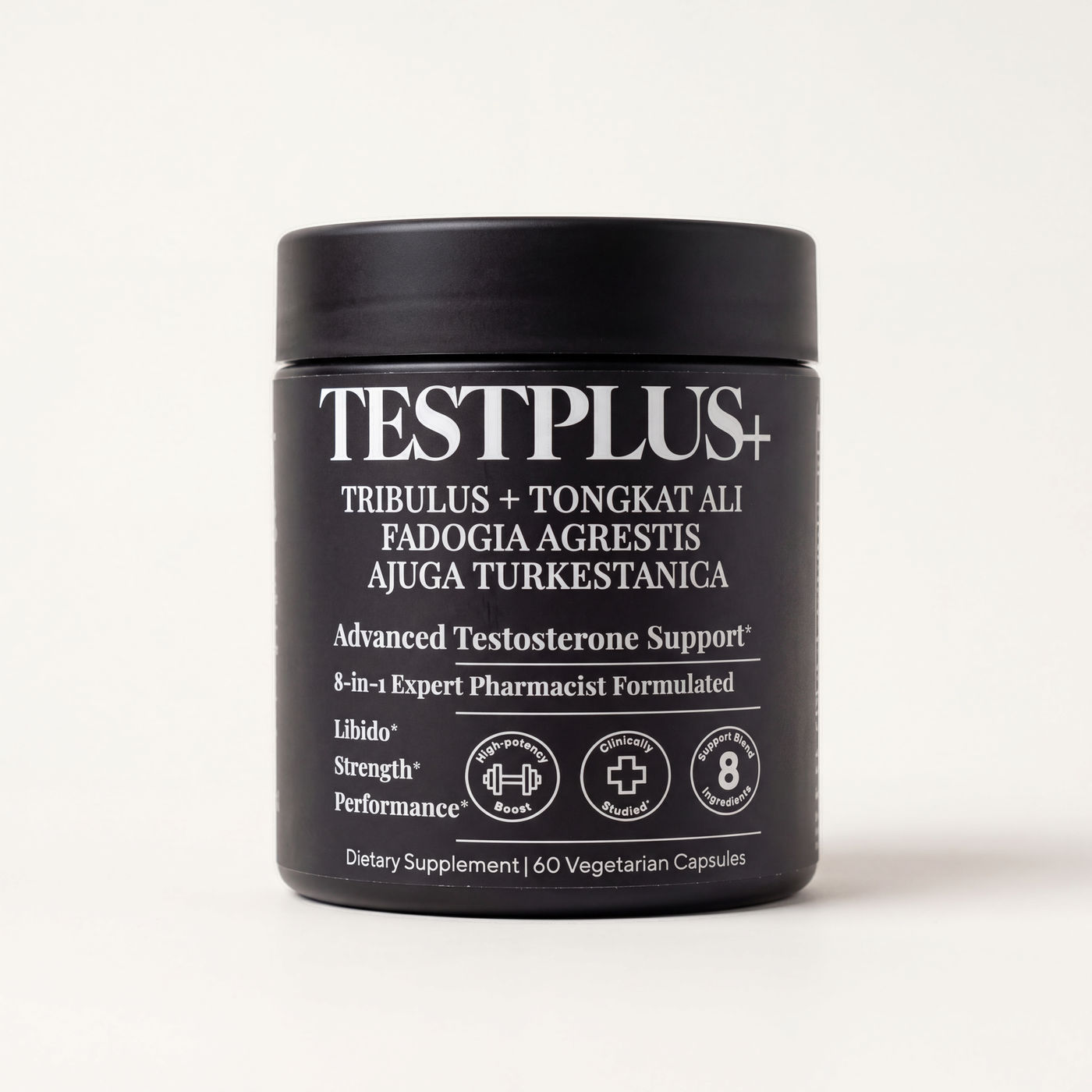
Plus+Ultra TESTPLUS uses 700mg of Tongkat Ali — 3.5× the minimum clinically studied effective dose — using high-concentration extract standardized to match Physta specifications. The higher dose addresses individual variation in absorption and bioavailability, providing a meaningful margin above the threshold demonstrated effective in clinical trials.

Tongkat Ali vs. TRT: An Honest Comparison

Testosterone replacement therapy (TRT) — administered as injections, gels, or pellets — delivers exogenous testosterone directly. It can produce supraphysiological testosterone levels in a matter of days and represents the highest-magnitude testosterone intervention available.
Tongkat Ali does not do this. It is important to be direct about the difference.
Tongkat Ali works within your body's existing production capacity. It stimulates LH to signal stronger testosterone production, frees bound testosterone by competing with SHBG, and reduces conversion losses through aromatase inhibition. The result is optimized testosterone within the range your testes are capable of producing — it does not override that range.
For a man with clinically diagnosed hypogonadism (testosterone below 300 ng/dL with symptoms, confirmed by multiple tests), TRT is the appropriate medical intervention and Tongkat Ali is not a substitute. The symptomatic and metabolic consequences of clinically low testosterone require medical-grade intervention.
For men in the low-normal to normal range who are experiencing symptoms associated with suboptimal testosterone — reduced energy, slower recovery, declining libido, reduced lean mass relative to body fat — Tongkat Ali operates in exactly the right physiological space. It optimizes the system without bypassing it.
This distinction — optimization vs. replacement — is not a limitation that should be apologized for. It is the appropriate framing.
Stacking: Tongkat Ali + Ashwagandha
The testosterone system has two primary failure modes that respond to two different interventions:
The production/binding axis: Testosterone isn't being produced in sufficient quantity, or too much of what is produced is bound to SHBG or converted to estrogen. Tongkat Ali addresses this directly — LH stimulation increases production, SHBG displacement increases free testosterone, aromatase inhibition reduces conversion.
The suppressor axis: Cortisol — the primary catabolic hormone — suppresses testosterone production via the HPT axis. Chronically elevated cortisol creates a physiological environment in which testosterone production is actively suppressed regardless of LH signaling. Ashwagandha (KSM-66 or Sensoril) is the most clinically validated cortisol-reducing adaptogen, with multiple RCTs demonstrating significant reductions in serum cortisol alongside improvements in testosterone, particularly in stressed populations.
These two mechanisms are additive, not redundant. Tongkat Ali addresses what your testosterone production system can do at its best; ashwagandha removes the cortisol-driven suppression that prevents it from getting there.
This is the rationale behind TESTPLUS's dual-adaptogen design — addressing the hormonal environment from both sides of the equation rather than optimizing one pathway in isolation.
Frequently Asked Questions
What does tongkat ali do? Tongkat Ali frees bound testosterone by competing with SHBG binding sites, stimulates the pituitary to increase LH production (the upstream signal for testosterone synthesis), and inhibits aromatase (reducing testosterone-to-estrogen conversion). The net effect is increased free and total testosterone through physiological optimization mechanisms.
Does tongkat ali increase testosterone? Yes — the evidence is consistent. The Smith et al. 2021 meta-analysis pooling multiple RCTs found a large standardized mean difference (SMD = 1.352) in testosterone effects. The Tambi et al. 2012 trial showed testosterone normalization in 90% of hypogonadal men after one month. Effects are documented in both hypogonadal and healthy populations, though magnitude varies by baseline testosterone status.
How long does tongkat ali take to work? Clinical studies showing testosterone effects have used protocols ranging from 4 weeks (Henkel et al. 2014) to 12 weeks (Hamzah & Yusof 2003). Measurable testosterone changes can begin within 2–4 weeks, but for physically meaningful outcomes like changes in body composition, recovery, or libido, a minimum of 6–8 weeks of consistent use is a more realistic assessment window.
What is the correct dose of tongkat ali? The clinical evidence base uses 200mg of standardized 200:1 concentrated extract (Physta) as the primary reference dose. Lower doses of inadequately concentrated extract will not replicate these results. Higher doses — up to 400–600mg of equivalent standardized extract — have been studied without safety concerns and may benefit individuals with lower absorption or higher baseline SHBG.
Can women take tongkat ali? The clinical research on testosterone and SHBG effects has been conducted in male populations, so the hormonal data applies specifically to men. Some traditional use in women exists for energy and general vitality, and the quassinoid compounds are not sex-hormone-specific in all their mechanisms. Women who are pregnant or breastfeeding should not take Tongkat Ali, and women with hormone-sensitive conditions should consult a healthcare provider.
Is tongkat ali the same as maca? No — they are entirely different plants from different continents with different mechanisms. Maca (Lepidium meyenii) is a Peruvian root vegetable that does not directly alter testosterone or SHBG; it works through adaptogenic and nutritional mechanisms. Tongkat Ali is a Southeast Asian tree root with documented direct effects on LH, SHBG, and aromatase. They address different aspects of male hormonal health and are sometimes used together as complementary approaches.
Key Takeaways
- Tongkat Ali (Eurycoma longifolia) is a Southeast Asian root plant with three documented testosterone-supporting mechanisms: SHBG displacement (freeing bound testosterone), LH stimulation (increasing upstream production), and aromatase inhibition (reducing testosterone-to-estrogen conversion).
- The free testosterone / SHBG problem is underappreciated: many men with "normal" total testosterone have significantly reduced free testosterone due to elevated SHBG — the fraction that actually drives androgen effects. Tongkat Ali addresses this directly.
- Meta-analytic evidence (Smith et al. 2021) confirms consistent testosterone-elevating effects across multiple RCTs, with a large effect size (SMD = 1.352).
- Extract quality is the central variable: 200:1 concentration ratio (Physta-equivalent) at 200mg or higher is the clinically validated standard. Most commercial products fail to meet this threshold.
- Tongkat Ali optimizes within your body's natural testosterone production capacity. It is an optimization tool, not a replacement — the appropriate intervention for men in the low-normal to normal testosterone range seeking to maximize their natural hormonal environment.
- The Tongkat Ali + ashwagandha stack addresses hormonal health from two complementary angles: production optimization and cortisol suppression.
Related Reading
- What Is Shilajit? The Ancient Resin With a Surprisingly Modern Evidence Base
- What Is Ashwagandha? The Clinical Evidence Behind the World's Most Studied Adaptogen
- TESTPLUS: How Plus+Ultra Designed a Testosterone Stack Around the Dual-Axis Problem
- Free Testosterone vs. Total Testosterone: Why the Distinction Matters More Than Your Lab Results Suggest
Evidence References
-
Tambi MI, Imran MK, Henkel RR. Standardised water-soluble extract of Eurycoma longifolia, Tongkat ali, as testosterone booster for managing men with late-onset hypogonadism? Andrologia. 2012;44(Suppl 1):226–230. doi:10.1111/j.1439-0272.2011.01168.x
-
Hamzah S, Yusof A. The ergogenic effects of Eurycoma longifolia Jack: a pilot study. British Journal of Sports Medicine. 2003;37:464–470. doi:10.1136/bjsm.37.5.464
-
Smith SJ, Lopresti AL, Teschke R. The Effectiveness and Safety of Eurycoma longifolia (Tongkat Ali) in Men: A Systematic Review and Meta-Analysis. Phytotherapy Research. 2021;35(9):4971–4987. doi:10.1002/ptr.7143
-
Henkel RR, Wang R, Bassett SH, et al. Tongkat Ali as a potential herbal supplement for physically active male and female seniors—a pilot study. Phytotherapy Research. 2014;28(4):544–550. doi:10.1002/ptr.5017
-
Zanoli P, Zavatti M, Montanari C, Baraldi M. Influence of Eurycoma longifolia on the copulatory activity of sexually sluggish and impotent male rats. Journal of Ethnopharmacology. 2009;126(2):308–313. doi:10.1016/j.jep.2009.08.021
-
Talbott SM, Talbott JA, George A, Pugh M. Effect of Tongkat Ali on stress hormones and psychological mood state in moderately stressed subjects. Journal of the International Society of Sports Nutrition. 2013;10(1):28. doi:10.1186/1550-2783-10-28
-
George A, Henkel R. Phytoandrogenic properties of Eurycoma longifolia as a natural alternative to testosterone replacement therapy. Andrologia. 2014;46(7):708–721. doi:10.1111/and.12214
-
Rehman SU, Choe K, Yoo HH. Review on a Traditional Herbal Medicine, Eurycoma longifolia Jack (Tongkat Ali): Its Traditional Uses, Chemistry, Evidence-Based Pharmacology and Toxicology. Molecules. 2016;21(3):331. doi:10.3390/molecules21030331