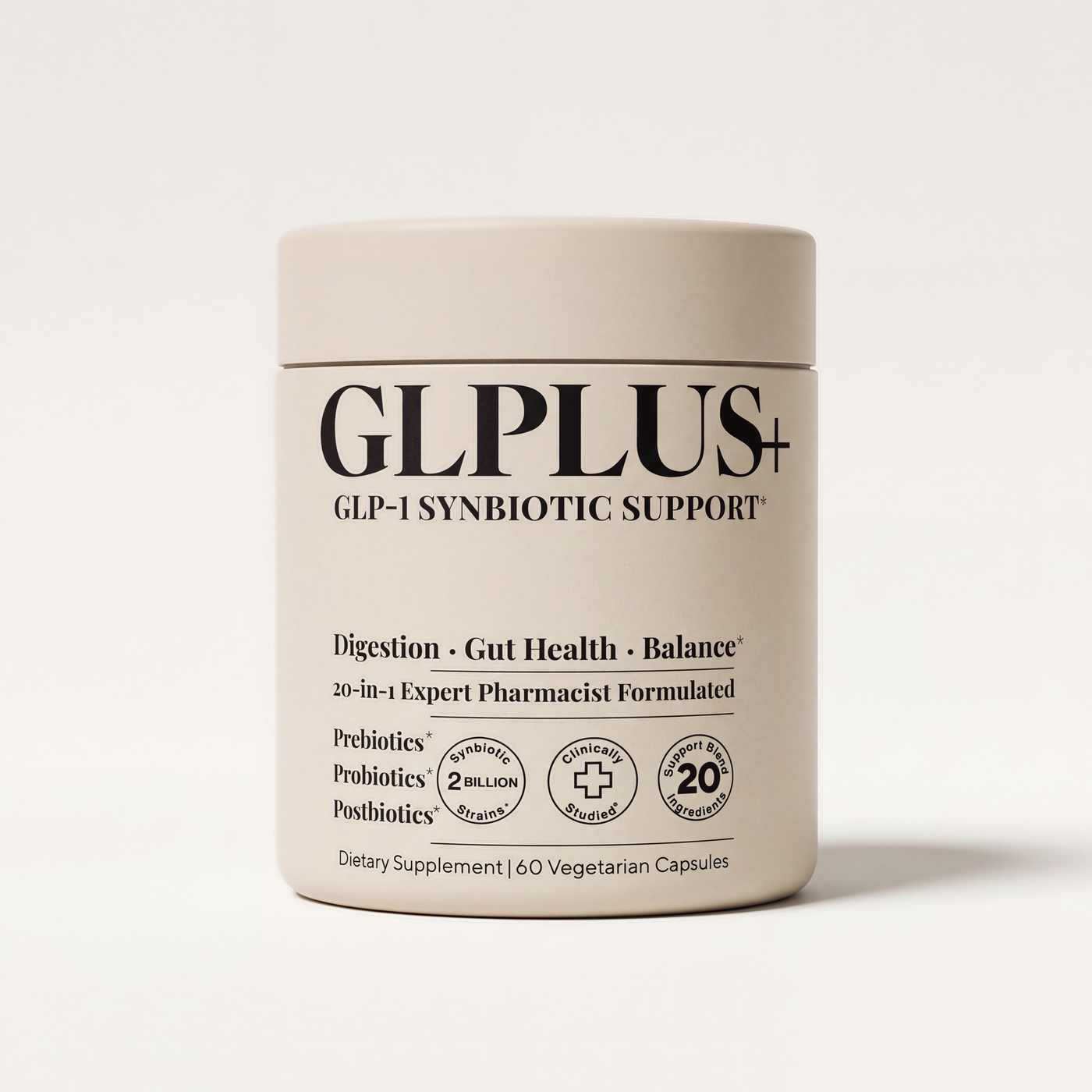
Three Distinct Stages of a Gut Ecosystem
Your gut microbiome is not a static population of bacteria waiting to be topped up. It's a dynamic ecosystem with inputs, active processes, and outputs — and all three stages matter.
Prebiotics are the inputs. They are specific types of dietary fiber and plant compounds that your own digestive enzymes cannot break down. Instead, they pass intact to your lower intestine, where your gut bacteria ferment them. Without prebiotics, your probiotic bacteria have nothing to eat. They colonize less effectively, produce fewer beneficial metabolites, and have a smaller impact on gut function. You can take the most researched probiotic strains in the world — and if your prebiotic substrate is inadequate, the result is underwhelming.
Probiotics are the workers. Specific bacterial strains with documented health effects. Not a generic bacterium. Not just any fermented food. Strains — distinct lineages with distinct mechanisms, distinct tissue targets, and distinct clinical evidence. The difference between Lactobacillus rhamnosus and Lactobacillus casei is not cosmetic. Each strain colonizes differently, interacts with gut-associated immune tissue differently, and produces different metabolic outputs.
Postbiotics are the outputs. When your gut bacteria ferment prebiotics and process nutrients, they produce signaling molecules — short-chain fatty acids, bioactive peptides, bacterial cell wall fragments — that directly interact with your immune system, your intestinal barrier, and your systemic metabolism. These are not byproducts. They are the mechanism. Short-chain fatty acids like butyrate literally fuel colonocytes — the cells lining your intestinal wall. Butyrate insufficiency is associated with impaired gut barrier function, increased intestinal permeability, and dysregulated immune response.
A synbiotic is a formula that addresses all three simultaneously. The prebiotic feeds the probiotic. The probiotic produces the postbiotic. And the inclusion of ready-made postbiotic compounds ensures the signaling pipeline is active regardless of fermentation status on any given day.
Why Most "Gut Health" Products Miss the Architecture
Most gut supplements do one of two things: they deliver a high-CFU probiotic and stop there, or they add a fiber blend without specifying which fibers, at what dose, for what bacterial population.
The Plus+Ultra GLP-1 Synbiotic is built around a different logic — five distinct blends that function as an integrated system rather than a single-ingredient play.
The Prebiotic Blend (600mg)
The prebiotic blend combines oat fiber, inulin, psyllium husk, and acacia fiber — four distinct fiber types with different solubility profiles, different fermentation kinetics, and different effects on the gut ecosystem.
Inulin is a fructooligosaccharide — a selectively fermented fiber that research has consistently shown to support Bifidobacterium populations, including the strains in this formula's probiotic blend. It's one of the most-studied prebiotics for microbiome composition.
Psyllium husk provides soluble, gel-forming fiber that slows gastric emptying and modulates post-meal glucose response — consistent with the GLP-1 system's broader metabolic support goals. Clinical trials at 10–15g/day show consistent effects on LDL cholesterol and glycemic control.
Acacia fiber is notable for its exceptionally high tolerance profile — clinical trials have used it at doses up to 30g/day with minimal GI side effects, making it an ideal base fiber for formulas targeting diverse gut populations.
Oat fiber provides beta-glucan content that independently supports immune function through gut-associated lymphoid tissue. The same fiber structure that stimulates GLP-1 production from intestinal L-cells.
The blend total is 600mg — a meaningful daily contribution to the prebiotic substrate, working in concert with dietary fiber intake.
The Probiotic Blend (1 Billion CFU)
Seven specific strains, each selected for distinct mechanisms:
Lactobacillus acidophilus — the most-studied lactobacillus strain for gut colonization and vaginal microbiome health. Produces lactic acid that maintains the low pH environment unfavorable to pathogenic bacteria.
Lactobacillus rhamnosus — has the most robust clinical evidence of any probiotic strain for gastrointestinal health. Meta-analyses across multiple indications confirm consistent benefits on gut barrier function and immune modulation.
Lactobacillus casei — documented to survive gastric transit effectively; associated with improved tolerance of lactose and reduced intestinal inflammation in clinical studies.
Lactobacillus plantarum — a versatile colonizer that has demonstrated effects on intestinal permeability markers (including zonulin) and inflammatory cytokine profiles in human trials.
Bifidobacterium bifidum — particularly active in the large intestine, where it competes with and displaces opportunistic bacteria; associated with short-chain fatty acid production.
Lactobacillus reuteri — produces reuterin, a broad-spectrum antimicrobial compound that creates a more favorable microbiome environment. Also associated with effects on oxytocin signaling and immune regulation.
Lactobacillus fermentum — antioxidant-producing strain; research has shown it to reduce markers of oxidative stress in the gut environment.
The CFU total — 1 billion — is the amount that reaches the gut daily when taken as directed. Not the amount on the label at time of manufacture. Actual viable delivery.
The Postbiotic Blend (100mg / 1 Billion)
Postbiotics ensure the signaling pipeline functions regardless of any individual day's fermentation output. This blend includes beta-glucan postbiotic and butyrate-producing postbiotic compounds — the short-chain fatty acid that most directly supports intestinal barrier cells. Including postbiotics in a synbiotic formula means the gut signaling pathway is active from day one, not only after weeks of microbiome colonization.

The Enzyme Blend (350mg)
Digestive enzymes address what probiotics and prebiotics can't: the upstream breakdown of food into absorbable substrates. Six enzymes covering the major macronutrient categories:
- Amylase — starch and complex carbohydrate digestion
- Protease — protein breakdown
- Lipase — fat emulsification
- Lactase — lactose digestion (critical for dairy-consuming populations with reduced lactase expression)
- Cellulase — plant cell wall fiber breakdown
- Bromelain — proteolytic enzyme from pineapple with additional anti-inflammatory properties
Enzymatic adequacy is foundational. Undigested food in the lower intestine creates fermentation imbalance — gas, bloating, and fuel for dysbiotic bacterial populations rather than beneficial ones. A synbiotic that addresses enzymatic digestion upstream creates a more favorable environment for everything that follows downstream.
The Herb Blend (75mg)
A botanical support layer — including ginger root and peppermint extract — with well-documented effects on GI motility, nausea reduction, and digestive comfort. These compounds support the mechanical and muscular aspects of digestion that enzymes and bacteria alone don't address.
The GLP-1 Connection
This is a GLP-1 system product for a specific reason. The L-cells that produce GLP-1 — the satiety and metabolic hormone — are concentrated in the lower intestine and colon, precisely where gut bacteria do most of their work. Short-chain fatty acids produced by probiotic fermentation of prebiotic fiber directly stimulate GLP-1 secretion from L-cells via FFAR2 receptors.
This is not a marketing connection. It's the documented mechanism. The gut microbiome is a GLP-1 production system — and a synbiotic that optimizes the microbiome is, in a functional sense, supporting GLP-1 signaling at its source.
What to Expect
The synbiotic timeline is different from supplement categories where effects are immediate. Gut microbiome remodeling is a gradual process:
- Days 1–14: Enzymatic changes are the most immediate — improved nutrient breakdown, reduced post-meal bloating, better digestive comfort. These effects are often the first thing people notice.
- Weeks 2–6: As probiotic colonization stabilizes, some users report changes in digestive regularity, reduced GI discomfort, and improved energy after meals — consistent with improved nutrient absorption.
- Months 1–3: Microbiome composition changes are measured in weeks and months. This is the timeline where the gut ecosystem impact compounds. Consistent daily use drives cumulative benefit.
The most important variable is consistency. Gut microbiome support is not an acute intervention — it's infrastructure maintenance. The same way physical training requires consistency to produce lasting adaptation, gut ecosystem support requires daily investment.
Who This Is For
Anyone who wants to build the gut foundation that metabolic and immune health depend on. The GLP-1 Synbiotic is particularly relevant for:
- People who eat well but still experience digestive discomfort, bloating, or inconsistent energy after meals
- Those building a complete GLP-1 system and wanting the gut ecosystem component
- Anyone who has taken antibiotics in the past year and hasn't actively supported microbiome recovery
- People focused on metabolic health who understand that the gut is where a meaningful part of that system lives
As part of the GLP-1 system: The Synbiotic builds the gut foundation. The GLP-1 Capsules add the metabolic signaling layer (berberine for AMPK, zinc for insulin). The GLP-1 Gummies add the next-generation Akkermansia layer. Used together, the three products address the gut ecosystem, the metabolic pathways, and the specific bacterial populations most associated with healthy GLP-1 function.