Quick Answer: Testosterone declines roughly 1–2% per year after age 30. But total testosterone is only half the picture — SHBG (sex hormone binding globulin) increases with age, binding more testosterone and leaving less biologically active free testosterone than the number on your lab report suggests. Symptoms like reduced drive, slower recovery, lower libido, and flat mood often appear before a lab panel flags anything abnormal. Natural interventions — including tongkat ali, ashwagandha, shilajit, sleep optimization, and body composition changes — have meaningful evidence and are worth understanding before escalating to medical intervention.
The Gradual Slide Nobody Names Until Later
It doesn't happen all at once. That's why most men miss it for years.
It starts with the small things. The drive that used to feel automatic — to compete, to build, to go after things — feels like it requires more effort. You're still doing everything you're supposed to do, but the internal engine that used to run hot seems to be idling. You notice it at work. You notice it in conversations. You used to have a baseline hunger for things. Now you have to manufacture the momentum.
In the gym, recovery is slower. You're training similarly to how you were training a few years ago, but the results don't come as easily. Soreness lasts longer. Muscle seems harder to hold onto. The body composition is shifting in ways you don't love — more around the midsection, less in the shoulders.
Libido is lower than it was. Not absent, but quieter. You notice it, your partner may notice it, and there's a low-grade unease around it that you haven't said out loud to anyone.
Some days, the mental clarity isn't there. Brain fog that shouldn't be there given how much you slept. A flatness to the mood that isn't depression exactly — just a lower baseline. Less sharpness. Less confidence than you used to carry without thinking about it.
Most men file all of this under "getting older" and leave it there. Sometimes that's accurate. But sometimes — more often than most men realize — it's also addressable. And the difference between those two things matters.
The Testosterone Decline Timeline
Testosterone production begins declining in men's late 20s to early 30s — roughly 1–2% per year in total testosterone. This rate is gradual enough that it's easy to miss in any given year, but it compounds. By the mid-40s, the average man has approximately 20% less testosterone than he had at 25. By the 50s and 60s, the gap is larger.
But here's where it gets more complicated, and where most conversations about testosterone fall short: total testosterone is only part of what's circulating in your body.
Testosterone in the bloodstream doesn't all have the same biological effect. Most circulating testosterone is bound to proteins — primarily SHBG (sex hormone binding globulin) and, to a lesser extent, albumin. Only the free testosterone — the fraction not bound to SHBG — is biologically active. Free testosterone is what enters cells, binds to androgen receptors, and produces the downstream effects: muscle protein synthesis, libido, mood, cognitive function, energy.
Here's the problem with aging: SHBG increases with age. As SHBG rises, it binds more testosterone, removing it from the free, active pool. This means free testosterone declines faster than total testosterone — often significantly faster.
A man at 45 can have a total testosterone measurement that falls within the "normal range" on a lab panel while his free testosterone is meaningfully low — low enough to cause symptomatic hypogonadism. His doctor looks at the total T number, says it looks fine, and sends him home. He still feels off. Both things are true.
This is why understanding the difference between these numbers matters — and why knowing what to ask for when you get bloodwork done can change what you learn from it.
Total T vs. Free T: Why Most Lab Tests Miss the Real Picture
Standard testosterone blood testing measures total testosterone — bound plus free. The reference range is typically listed as approximately 300–1,000 ng/dL, which is a remarkably wide band. The range covers both a healthy 25-year-old and a symptomatic 55-year-old, without distinguishing between them.
This creates a clinical blind spot.
A 40-year-old man with a total testosterone of 360 ng/dL is technically "normal" by standard reference ranges. But a 25-year-old at 360 ng/dL would almost certainly have symptoms. The reference range doesn't adjust for age. And it doesn't tell you what percentage of that testosterone is free and active.
What to ask for when you get bloodwork done:
- Free testosterone (direct measurement, not calculated) — this is the number that tells you how much testosterone is actually available to your cells
- SHBG — knowing your SHBG level helps explain why free T may be lower than total T suggests
- LH (luteinizing hormone) — the pituitary hormone that signals the testes to produce testosterone. If LH is high and testosterone is low, your body is trying to produce testosterone but can't. If both are low, the signal from the pituitary may be the issue. This distinction matters for diagnosis and treatment.
- Estradiol (E2) — testosterone aromatizes (converts) to estrogen. In men with excess body fat, this conversion is elevated, which both lowers available testosterone and raises estrogen. Knowing your estradiol helps complete the picture.
This is not about becoming your own doctor — it's about being an informed participant in a conversation that your doctor may not initiate. Many primary care physicians don't routinely order free testosterone or SHBG unless specifically asked. You can ask.
The Symptoms Matrix: What Low Testosterone Actually Feels Like and Why
Understanding the mechanism behind each symptom is useful — not just because it's interesting, but because it helps you recognize when a symptom has a physiological basis rather than a purely psychological one.
Low Libido Testosterone directly drives sexual desire in men. Androgen receptors in the brain's limbic system — the region governing motivation and pleasure — respond to testosterone. When testosterone is low, the motivational signal toward sexual interest weakens. This is biological, not psychological.
Erectile Dysfunction Testosterone supports smooth muscle function in penile tissue and potentiates nitric oxide signaling — the mechanism that allows blood vessels to dilate and produce an erection. Low testosterone is one of multiple contributors to erectile dysfunction (vascular health, neurological function, and psychological factors also play roles), but it is a real and documented contributor that is worth ruling in or out.
Reduced Muscle Mass and Strength Testosterone is directly anabolic. It binds to androgen receptors in muscle cells, stimulating the protein synthesis pathways that build and maintain muscle tissue. It also inhibits the action of catabolic hormones. When testosterone is low, the balance shifts toward catabolism — muscle breaks down more easily and rebuilds more slowly. This is why training harder doesn't fully compensate: the hormonal environment that translates training stimulus into adaptation has changed.
Increased Body Fat, Particularly Visceral Low testosterone creates a cascade that favors fat accumulation. Testosterone normally supports metabolism and insulin sensitivity. As testosterone drops, the body shifts toward fat storage — particularly visceral (abdominal) fat. This becomes self-reinforcing: visceral adipose tissue expresses the enzyme aromatase, which converts testosterone to estrogen. More fat means more aromatization, which means lower testosterone, which means more fat. This cycle is a meaningful driver of the body composition changes men experience in their 40s.
Brain Fog and Low Motivation Androgen receptors are expressed throughout the brain, including the prefrontal cortex — the region governing executive function, focus, planning, and decision-making. Testosterone modulates dopamine signaling in the brain's reward circuitry, which is directly connected to motivation, drive, and the reward of accomplishment. Low testosterone doesn't just affect the body. It affects how you think and how you feel about things.
Poor Sleep and Lower Deep Sleep This one runs both directions. Testosterone is primarily synthesized during sleep — particularly during REM sleep. Low testosterone can reduce sleep quality. Poor sleep reduces testosterone. The relationship is bidirectional: addressing one helps the other, and neglecting one undermines the other. The practical implication: sleep optimization is testosterone optimization, and vice versa.
Mood, Irritability, and Lower Baseline Confidence Testosterone modulates mood through multiple mechanisms — including its influence on serotonin receptor expression and dopamine pathway activity. Men with documented low testosterone report higher rates of irritability, sadness, and reduced confidence. This is not "weakness" or "attitude" — it's the downstream effect of a hormonal shift affecting the neurochemical environment of the brain.
What Causes Low Testosterone Beyond Normal Aging
Aging is the primary driver, but it doesn't operate in isolation. Several lifestyle and environmental factors suppress testosterone production on top of age-related decline — and many of them are addressable.
Chronic Stress and Cortisol Elevation The HPA (hypothalamic-pituitary-adrenal) axis and HPG (hypothalamic-pituitary-gonadal) axis are in competition. When the body is under chronic stress, the HPA axis is activated continuously and cortisol production is elevated. Cortisol and testosterone are both steroid hormones synthesized from cholesterol, and cortisol production takes priority. Elevated cortisol directly suppresses gonadotropin-releasing hormone (GnRH) from the hypothalamus, which reduces LH signaling to the testes, which reduces testosterone production.
Chronic stress doesn't just make you feel bad. It pharmacologically suppresses testosterone.
Obesity and Excess Body Fat As discussed above, visceral adipose tissue expresses aromatase, converting testosterone to estrogen. Men with significantly elevated body fat can have substantially lower free testosterone and elevated estradiol even at younger ages. Weight loss — particularly visceral fat reduction — can meaningfully improve testosterone levels without any other intervention.
Alcohol Alcohol is a direct testicular toxin. It impairs Leydig cell function (Leydig cells are the testosterone-producing cells in the testes), increases aromatase activity, and raises cortisol. Regular moderate-to-heavy drinking is associated with significantly lower testosterone in men. This is not a small or marginal effect.
Sleep Deprivation Testosterone synthesis requires sleep. A landmark study by Leproult and Van Cauter (2011, JAMA) showed that restricting healthy young men to 5 hours of sleep per night for one week reduced daytime testosterone levels by 10–15%. One week of bad sleep. In young men. The effect in older men with already declining testosterone and sleep architecture is likely compounding.
Chronic Inflammation Systemic inflammation — driven by poor diet, sedentary lifestyle, chronic stress, poor gut health — suppresses Leydig cell function via inflammatory cytokines. The same inflammatory environment that drives cardiovascular risk and metabolic syndrome is also suppressive to testosterone production.
Endocrine-Disrupting Chemicals BPA (bisphenol A) and phthalates — found in plastics, food packaging, personal care products, and synthetic fragrances — have documented effects on testosterone production in men. These compounds mimic estrogen, bind to androgen receptors as antagonists, and can suppress gonadotropin signaling. The evidence here is robust enough that multiple regulatory bodies have restricted BPA in food contact materials. Reducing exposure through glass and stainless storage, fragrance-free products, and limiting canned food consumption is a low-cost intervention with a reasonable evidence basis.

Natural Testosterone Optimization: What the Evidence Actually Shows
This is where a lot of supplement marketing oversells and a lot of medical advice undersells. The truth is in between. Natural approaches won't replicate TRT. But they can meaningfully support the hormonal environment for men who are in the low-normal range and experiencing symptoms — particularly when combined.
Tongkat Ali (Eurycoma longifolia)
Tongkat ali has two primary mechanisms relevant to testosterone: it displaces testosterone from SHBG (increasing free testosterone fraction) and stimulates LH secretion from the pituitary (signaling the testes to produce more testosterone).
The most rigorous clinical evidence uses a standardized water-soluble extract (Physta) at 200mg daily. A double-blind placebo-controlled study by Tambi et al. (2012) in men with late-onset hypogonadism showed meaningful increases in free testosterone and LH. A 2021 systematic review by Smith et al. analyzed the available human trials and concluded that tongkat ali supplementation consistently improved testosterone levels, with effect sizes that were statistically significant and clinically meaningful, though smaller in magnitude than TRT.
The honest characterization: tongkat ali is one of the more evidence-supported natural testosterone interventions available. It's not a substitute for TRT in men with clinically documented hypogonadism, but for men in the low-normal range experiencing symptoms, it can shift the balance in a measurable way.
Ashwagandha (Withania somnifera)
Ashwagandha's primary mechanism relevant to testosterone is cortisol reduction. As discussed above, chronically elevated cortisol suppresses GnRH, LH, and ultimately testosterone. By reducing cortisol output through HPA axis normalization, ashwagandha removes a pharmacological brake on testosterone production.
Chandrasekhar et al. (2012) demonstrated significant cortisol reduction in a well-designed RCT. Studies specifically measuring testosterone as an endpoint have shown secondary improvements in testosterone levels — attributable to cortisol reduction rather than direct androgenic action. Ashwagandha is also documented to reduce oxidative stress in testicular tissue, which supports Leydig cell function.
If chronic stress is a meaningful driver of your hormonal suppression — and for most men over 35 with demanding lives, it is — ashwagandha is addressing a real root cause.
Shilajit
Shilajit is a mineral-rich resin sourced from high-altitude rock formations, composed primarily of fulvic acid and dibenzo-alpha-pyrones (DBPs). Its mechanism for supporting testosterone is mitochondrial: Leydig cells — the testosterone-producing cells in the testes — require substantial mitochondrial energy to synthesize testosterone from cholesterol. Fulvic acid and DBPs support mitochondrial electron transport chain function, potentially enhancing the energy substrate available for testosterone synthesis.
A double-blind placebo-controlled study by Pandit et al. (2016) in men with low-normal testosterone (age 45–55) showed a 20.45% increase in total testosterone and a 19.9% increase in free testosterone after 90 days of purified shilajit supplementation (250mg twice daily) compared to placebo. This is a meaningful effect size in a population that matches the men most likely to be reading this article.
Shilajit also supports DHEA-S levels, a precursor hormone that contributes to the androgen pool.
Resistance Training
Resistance training acutely elevates testosterone — and the effect is well-documented. Compound movements engaging large muscle groups (squats, deadlifts, presses) produce the largest acute hormonal response. HIIT (high-intensity interval training) has also been shown to elevate testosterone acutely and positively affect hormonal profiles with regular practice.
The important caveat: overtraining is counterproductive. Chronically excessive training volume — particularly without adequate recovery — elevates cortisol and suppresses testosterone. The relationship is an inverted U: enough training is hormesis, stimulating adaptation and hormonal response; too much training without recovery becomes a chronic stressor that pharmacologically suppresses the system you're trying to support.
Sleep
Not a supplement, but it belongs here. As noted above: testosterone is primarily synthesized during sleep. Sleep restriction for one week in young men reduces testosterone by 10–15% (Leproult & Van Cauter, 2011). In men who are already experiencing age-related testosterone decline, layering on sleep deprivation compounds the problem significantly.
Sleep quality and testosterone have a bidirectional relationship. Improving sleep quality — through the mechanisms discussed in the companion article on sleep architecture — directly supports testosterone production. This is one of the most powerful and underutilized testosterone optimization tools available.
Body Composition
Reducing excess body fat — particularly visceral fat — reduces aromatase activity and breaks the fat-testosterone negative feedback cycle. The relationship is directly self-reinforcing in the right direction: more testosterone makes it easier to build muscle and reduce fat, which reduces aromatization, which supports more free testosterone. Getting this cycle moving in the right direction has compounding benefits.
When to Talk to a Doctor
Natural approaches have meaningful evidence. They also have limits.
If your free testosterone is clinically low — not just "lower than your 25-year-old self" but documented hypogonadism with symptomatic impact on quality of life — testosterone replacement therapy (TRT) is a legitimate medical treatment worth a real conversation with a physician who specializes in men's health or endocrinology.
This isn't fearmongering. TRT works. It's the most direct intervention for clinically low testosterone and can be life-changing for men with documented deficiency. But it carries real considerations that any honest discussion has to include:
TRT suppresses natural testosterone production. When exogenous testosterone is introduced, the HPG feedback loop detects adequate testosterone and reduces LH signaling. The testes stop receiving the signal to produce testosterone on their own. For most men on TRT, this means the intervention is indefinite — coming off requires a managed protocol to restart natural production, and in some cases natural production doesn't fully recover.
TRT suppresses sperm production. Men who want to maintain fertility should discuss this carefully with their physician. TRT is generally not compatible with fertility preservation without additional interventions (hCG co-administration, etc.).
Polycythemia risk. TRT can increase red blood cell count, which at elevated levels increases cardiovascular risk. This is monitored through regular bloodwork and managed through protocol adjustments or donation, but it's a real consideration.
None of this is a reason to avoid TRT if you genuinely need it. It's a reason to have the conversation with a doctor who has actually measured your free testosterone, SHBG, and LH — not just read your total T and told you it's fine.
The sequence that makes sense: get proper labs (free T, SHBG, LH, estradiol), optimize the lifestyle variables (sleep, stress, body composition, alcohol, training), try the evidence-based natural interventions for 90 days, and then reassess. If you're still symptomatic with documented low free testosterone after addressing the modifiable factors, TRT is a reasonable next step to discuss.
Frequently Asked Questions
What are the signs of low testosterone in men? The most common are reduced libido, slower gym recovery and harder-to-maintain muscle, increased abdominal body fat, lower energy and drive, brain fog or reduced mental sharpness, flat or irritable mood, and disrupted sleep. These symptoms are non-specific — they can have multiple causes — but when they appear together in a man over 35, low testosterone is worth evaluating.
What is a normal testosterone level for a 40-year-old man? Standard reference ranges (300–1,000 ng/dL) are population averages that don't account for age. A 40-year-old at 350 ng/dL is "in range" but may have substantially lower free testosterone than the total suggests, particularly if SHBG is elevated. Free testosterone levels of 9–30 pg/mL are often cited as reference ranges, but symptomatic men at the lower end of that range deserve a clinical conversation, not dismissal.
Can you increase testosterone naturally? Yes — meaningfully, within limits. Optimizing sleep, reducing chronic stress and cortisol, reducing excess body fat, resistance training, limiting alcohol, and reducing endocrine disruptor exposure all have evidence for supporting testosterone. Supplemental interventions with the strongest evidence include tongkat ali, ashwagandha, and shilajit. The realistic expectation: these interventions can shift testosterone meaningfully in men who are low-normal. They are not equivalent to TRT for men with clinically documented deficiency.
Does ashwagandha boost testosterone? Indirectly, yes. Ashwagandha reduces cortisol, which removes a primary brake on testosterone production. Studies measuring testosterone as a secondary endpoint have shown improvements attributable to cortisol reduction and reduction in oxidative stress at the testicular level. It's not directly androgenic — it works by reducing the hormonal suppression caused by chronic stress.
How long does it take to raise testosterone? Natural interventions typically take 8–12 weeks to show meaningful effect. The Pandit et al. (2016) shilajit study ran 90 days. Most tongkat ali studies showing results ran 8–12 weeks. Lifestyle changes (sleep, body composition, stress reduction) have a more variable timeline depending on the degree of change made. This is why the 90-day window is a reasonable minimum commitment before assessing results.
When should I consider TRT? When free testosterone is documented to be clinically low (not just low-normal), when symptomatic impact on quality of life is meaningful, and when lifestyle optimization and natural interventions have been genuinely trialed. The conversation should happen with a physician who orders a complete hormone panel — not just total testosterone — and who understands the fertility and production-suppression considerations.
Key Takeaways
- Testosterone declines roughly 1–2% per year after 30, but free testosterone declines faster because SHBG increases with age, binding more testosterone and reducing the biologically active fraction.
- A "normal" total testosterone result can mask meaningfully low free testosterone. Ask for free T, SHBG, and LH to get the full picture.
- Symptoms of low testosterone — reduced drive and libido, slower recovery, body composition changes, brain fog, flat mood — often appear before labs flag anything abnormal. The lived experience is real data.
- Chronic cortisol elevation pharmacologically suppresses testosterone via the HPA/HPG axis competition. Stress management is testosterone optimization.
- Sleep deprivation reduces testosterone by 10–15% in one week of restriction. Sleep is the most underused testosterone support tool.
- Excess body fat drives aromatization of testosterone to estrogen, creating a self-reinforcing cycle. Reducing visceral fat breaks it in the favorable direction.
- Evidence-based natural interventions: tongkat ali (free T via SHBG displacement and LH stimulation), ashwagandha (cortisol reduction), shilajit (Leydig cell mitochondrial support, +20.45% T in the Pandit 2016 RCT), resistance training, sleep quality, body composition.
- TRT is a legitimate medical intervention for clinically documented hypogonadism — but carries real considerations (production suppression, fertility impact, polycythemia) that deserve a real conversation before starting.
- The sensible sequence: proper labs, lifestyle optimization, natural interventions trialed for 90 days, then reassess with a physician who understands the full picture.
Related Reading
- Why Sleep Gets Worse With Age — And What To Do About It
- Tongkat Ali: What the Research Actually Shows
- Shilajit: The Mineral Resin That Supports Energy at the Cellular Level
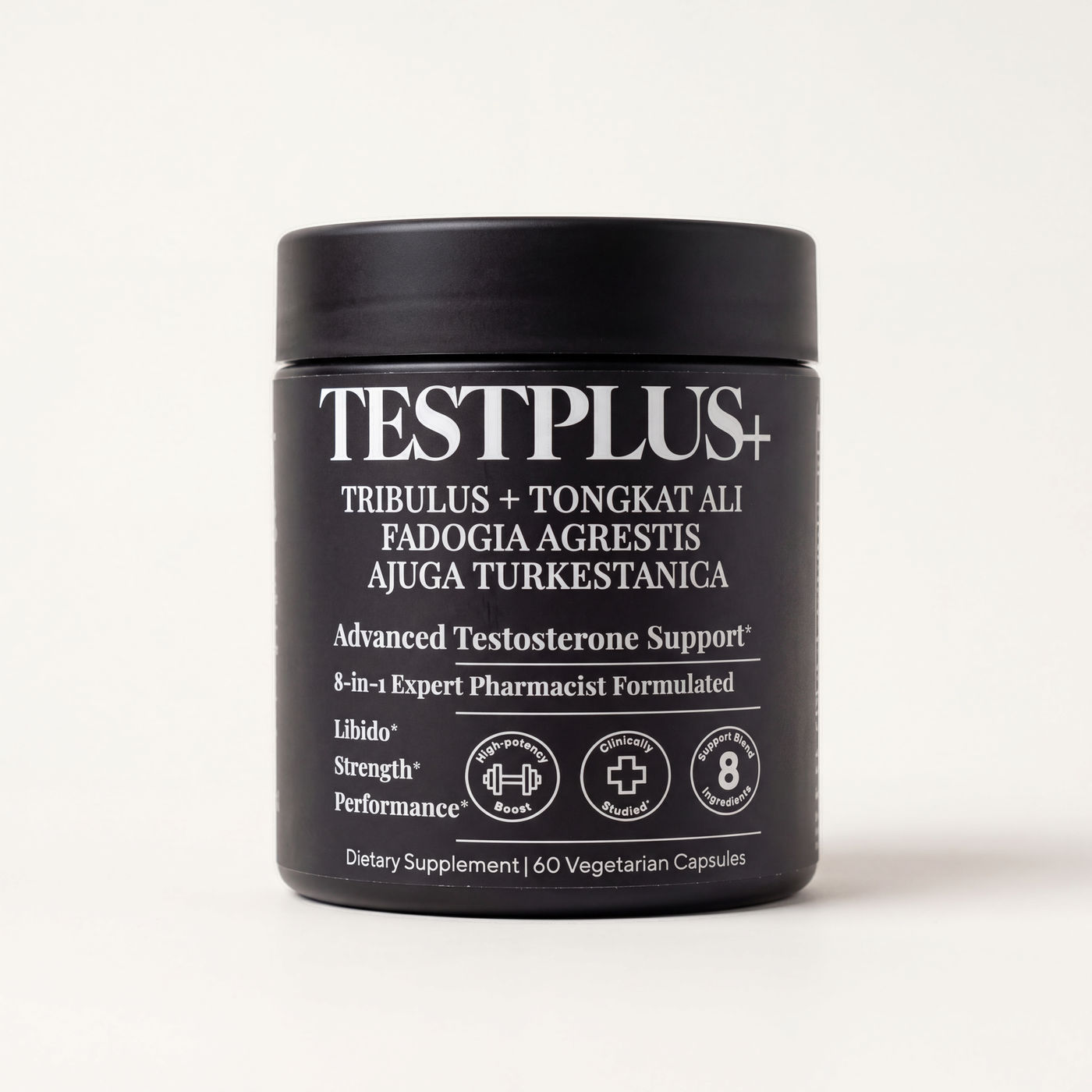
- TestPlus: A Clinically Grounded Stack for Testosterone Support
Evidence References
-
Feldman HA, Longcope C, Derby CA, et al. "Age trends in the level of serum testosterone and other hormones in middle-aged men: longitudinal results from the Massachusetts male aging study." Journal of Clinical Endocrinology & Metabolism. 2002;87(2):589–598.
-
Vermeulen A, Kaufman JM, Giagulli VA. "Influence of some biological indexes on sex hormone binding globulin and androgen levels in aging or obese males." Journal of Clinical Endocrinology & Metabolism. 1996;81(5):1821–1826.
-
Leproult R, Van Cauter E. "Effect of 1 week of sleep restriction on testosterone levels in young healthy men." JAMA. 2011;305(21):2173–2174.
-
Tambi MI, Imran MK, Henkel RR. "Standardised water-soluble extract of Eurycoma longifolia, Tongkat Ali, as testosterone booster for managing men with late-onset hypogonadism?" Andrologia. 2012;44(Suppl 1):226–230.
-
Smith SJ, Lopresti AL, Teo SY, Fairchild TJ. "Examining the effects of herbs on testosterone concentrations in men: a systematic review." Advances in Nutrition. 2021;12(3):744–765.
-
Chandrasekhar K, Kapoor J, Anishetty S. "A prospective, randomized double-blind, placebo-controlled study of safety and efficacy of a high-concentration full-spectrum extract of Ashwagandha root in reducing stress and anxiety in adults." Indian Journal of Psychological Medicine. 2012;34(3):255–262.
-
Pandit S, Biswas S, Jana U, De RK, Mukhopadhyay SC, Biswas TK. "Clinical evaluation of purified Shilajit on testosterone levels in healthy volunteers." Andrologia. 2016;48(5):570–575.
-
Grossmann M. "Low testosterone in men with type 2 diabetes: significance and treatment." Journal of Clinical Endocrinology & Metabolism. 2011;96(8):2341–2353.
-
Travison TG, Araujo AB, O'Donnell AB, Kupelian V, McKinlay JB. "A population-level decline in serum testosterone levels in American men." Journal of Clinical Endocrinology & Metabolism. 2007;92(1):196–202.
-
Segal NL. "Testosterone and behavior: a twin study." Behavioral Genetics. 1993;23(2):145–152.
-
Jensen TK, Andersson AM, Jørgensen N, et al. "Body mass index in relation to semen quality and reproductive hormones among 1,558 Danish men." Fertility and Sterility. 2004;82(4):863–870.
-
Rochira V, Balestrieri A, Madeo B, Baraldi E, Faustini-Fustini M, Carani C. "Congenital estrogen deficiency in men: a new syndrome with different phenotypes; clinical and therapeutic implications in men." Molecular and Cellular Endocrinology. 2001;178(1-2):19–28.