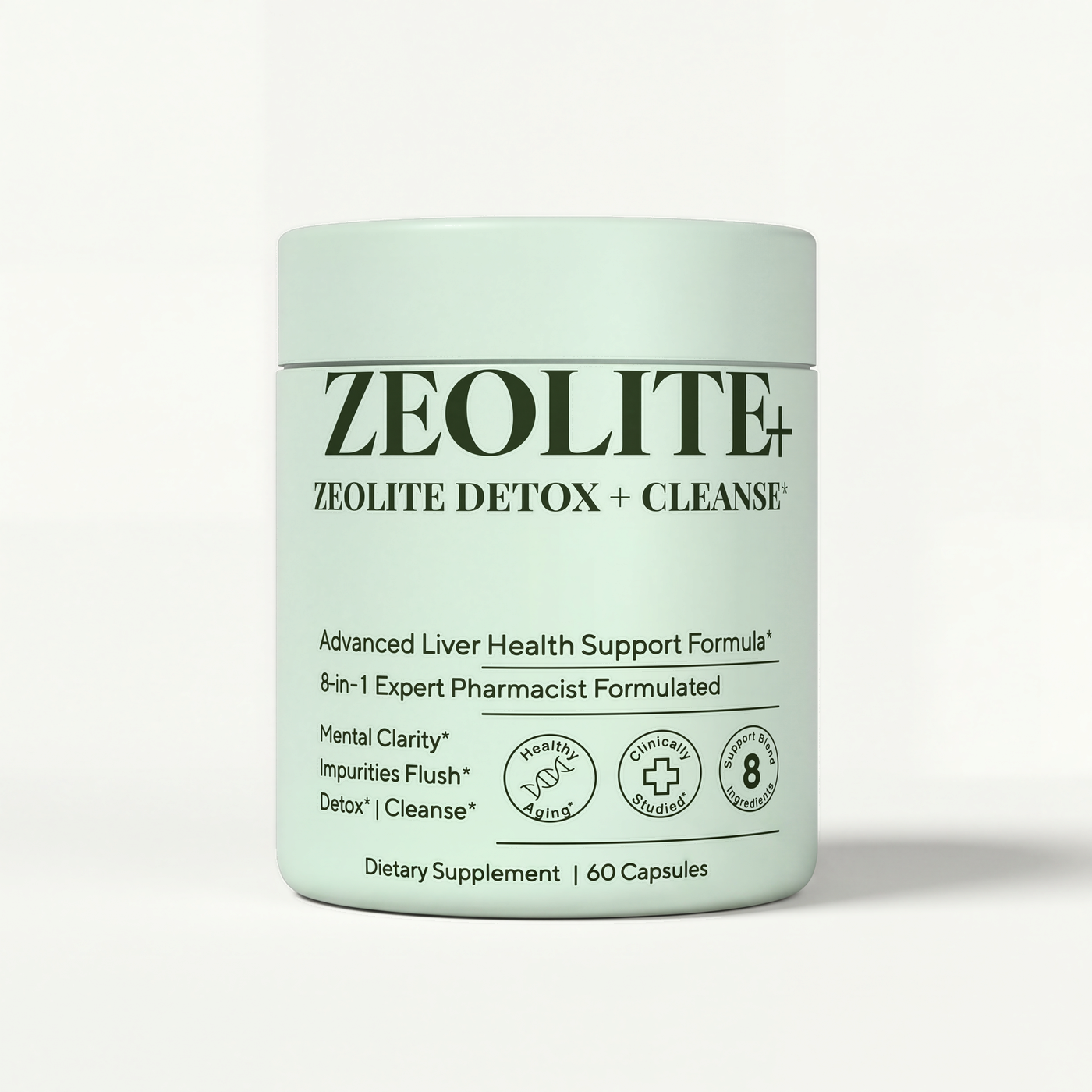
What Binders Are and How They Work
A binder is a compound that binds to substances in the GI tract — heavy metals, toxins, certain microbial byproducts — and carries them through to excretion rather than allowing them to be absorbed into systemic circulation.
Binders don't enter the bloodstream. They don't chelate metals already in tissue (that's a different, higher-risk intervention requiring medical supervision). They work in the GI tract: intercepting toxins ingested with food or water, or those secreted into the gut via enterohepatic circulation (the loop by which the liver excretes processed compounds into bile, which re-enters the intestine).
This is important to understand from a safety standpoint. Binding in the GI tract is a fundamentally different — and far gentler — mechanism than systemic chelation therapy.
The tradeoff: because binders work in the GI tract, they must be taken away from medications, supplements, and meals. Any binder capable of binding environmental toxins is also capable of binding therapeutics. This is a real and important consideration, not fine print.
IMPORTANT: Take zeolite-containing supplements at least 2 hours before or after any medication, and at least 1 hour before or after meals. The binding capacity that makes these products useful doesn't distinguish between heavy metals you want removed and a blood pressure medication you need absorbed.
The Three-Layer Formula
Layer 1: Zeolite Clinoptilolite (Ion Exchange)
Zeolites are aluminosilicate minerals with a crystalline lattice structure that contains uniformly sized pores and channels. Clinoptilolite is the specific zeolite variety that's been most studied for health applications.
The mechanism: ion exchange. The zeolite lattice contains cations — typically calcium, magnesium, and potassium — in its pore structure. Heavy metal ions (lead, mercury, cadmium, arsenic) have higher binding affinity for the zeolite lattice than these structural cations, so they displace them and become trapped within the crystalline structure. The zeolite then passes through the GI tract with the heavy metals bound inside — excreted rather than absorbed.
The clinical evidence for zeolite clinoptilolite includes a 2015 study published in the Journal of the International Society of Sports Nutrition (Lamprecht et al.) that found clinoptilolite supplementation significantly improved gut barrier integrity in athletes, reducing markers of intestinal permeability and oxidative stress. The proposed mechanism: by binding gut-luminal endotoxins and preventing their absorption, zeolite reduces the inflammatory signaling that compromises intestinal tight junction integrity.
Activated zeolite refers to processing that increases the surface area and binding capacity of the mineral — maximizing the number of active pore sites available for ion exchange.
Layer 2: Activated Charcoal (Broad-Spectrum Binding)
Activated charcoal is the most established binder in clinical use — it's the standard treatment for acute oral poisoning in emergency medicine. Its mechanism differs from zeolite: rather than ion exchange, activated charcoal works through adsorption — binding compounds to its enormous surface area (1,000–3,000 m²/g, depending on activation) through van der Waals forces.
Where zeolite selectively binds heavy metal cations through ion exchange, activated charcoal binds a much broader range of compounds — including organic toxins, bacterial endotoxins, and various synthetic chemicals. The two mechanisms together provide complementary coverage: targeted heavy metal binding (zeolite) plus broad-spectrum organic compound binding (charcoal).
The same broad-spectrum binding that makes charcoal an effective toxin binder is what makes the medication-separation requirement non-negotiable. Activated charcoal will bind pharmaceutical drugs. It does not discriminate.
The Supporting Layer
The formula includes additional compounds supporting the detoxification and gut health context:
Milk Thistle — contains silymarin, the primary hepatoprotective flavonoid complex in clinical research on liver health. Milk thistle supports Phase I and Phase II liver detoxification pathways, the enzymatic processes by which the liver converts fat-soluble toxins into water-soluble forms for excretion. When the gut binder layer reduces the amount of toxins reaching the liver, and the liver's enzymatic capacity is supported by silymarin, the two mechanisms work in the same direction.
Psyllium Husk — provides soluble fiber that supports gut motility and the physical movement of bound toxins through the GI tract before they can be re-absorbed. Constipation creates an environment where even bound toxins have more time to potentially re-enter circulation. Adequate fiber intake maintains the elimination pathway.
NAC (N-Acetyl Cysteine) — discussed in the GLO article for its role as a glutathione precursor. In the zeolite context, NAC supports the glutathione pathway that handles many of the same reactive compounds the GI binders are designed to intercept — providing both a gut-level defense and a cellular-level backup.
How to Use This Correctly
A few rules that matter.
Timing is everything. Take this product at least 2 hours away from any medication — prescription or over-the-counter. Take it 1 hour away from meals and other supplements. The morning, between meals, or before bed (well after your last supplement dose) are the natural windows. This is not overly cautious fine print — it's the mechanism that makes the product safe.
Cycles, not continuous use. Binders are not designed for indefinite daily supplementation. Continuous use can potentially bind essential minerals alongside environmental toxins, and the bowel-stimulant concern addressed below makes continuous use inadvisable. Typical protocols: 2–4 weeks on, with breaks. Or periodic use during higher-exposure periods (travel, post-course-of-antibiotics, following known environmental exposure).
Hydration. Both zeolite and activated charcoal bind water in the GI tract alongside the compounds they're targeting. Adequate hydration is essential during use.
Consult your physician if you take any prescription medications, have any kidney or bowel condition, or are pregnant or breastfeeding.
A Note on Senna, Aloe, and Cascara
Some zeolite-category products on the market include stimulant laxatives such as senna leaf, aloe leaf, or cascara sagrada. The FDA has removed these compounds from the Generally Recognized As Safe (GRAS) category for over-the-counter laxative use, citing insufficient evidence of safety with regular use. Chronic use of stimulant laxatives is associated with laxative dependence and potential electrolyte imbalances.
The Plus+Ultra Zeolite formula does not rely on stimulant laxatives for its mechanism. The combination of psyllium husk (fiber-based GI support), zeolite (ion exchange binding), and activated charcoal (adsorption binding) provides the detox function without stimulant laxative intervention.

What to Expect
Unlike supplements targeting energy or mood, zeolite products are not primarily felt — they're reducing a burden rather than producing a positive signal. Some users notice:
- Improved GI comfort and regularity during the cycle
- Reduced post-meal bloating (consistent with reduced endotoxin absorption)
- A sense of overall digestive clarity that's difficult to attribute to a single mechanism
Lab markers — heavy metal testing via urine or hair analysis — are the most objective way to assess impact over time, for those who choose to track systematically.
The most important thing: use it consistently during the cycle, correctly timed away from medications, with adequate hydration. The product works through physical binding that requires correct conditions to operate.
Who This Is For
Zeolite is a periodic-use, stack-layer product rather than a daily foundation supplement. It's most relevant for:
- People with known or suspected heavy metal exposure (well water, older plumbing, high-fish diets, occupational exposure)
- Those who travel frequently and want periodic GI support
- Individuals who've completed antibiotic courses and want to support GI clearance
- Health-conscious people building a comprehensive protocol who want a dedicated binder layer they cycle in periodically
Not a daily driver. This is the supplement you add to your stack at specific intervals — not the one you take alongside your morning coffee every day indefinitely.