Why Akkermansia Is Different From Every Probiotic You've Heard Of
To understand Akkermansia's significance, you need to understand the difference between first-generation and next-generation probiotics.
First-generation probiotics — Lactobacillus and Bifidobacterium strains — are the organisms that built the probiotic industry. They were characterized in the early 20th century, have decades of clinical research behind them, are relatively straightforward to culture and stabilize, and survive reasonably well in commercial supplements. They are genuinely useful. They colonize the small intestine and colon, produce short-chain fatty acids and lactic acid, compete with pathogenic bacteria, and support immune function at gut-associated lymphoid tissue.
Next-generation probiotics are a different category entirely. These are bacteria that scientists have identified — through modern microbiome sequencing that wasn't possible before the late 2000s — as having particularly significant relationships with human health outcomes. They're bacteria the human body evolved with, often in enormous abundance, but that had never been characterized or studied in isolation because the technology didn't exist.
Akkermansia muciniphila is the flagship of this category. It was identified in 2004, and over the following twenty years it accumulated more research linking it to human metabolic health than almost any other single bacterial species. Not because researchers went looking for it — but because when they compared the microbiomes of healthy individuals versus those with obesity, diabetes, and metabolic syndrome, Akkermansia kept appearing as one of the most dramatic differences.
Its name reveals its biology: it muciniphila — "mucin-loving." Akkermansia lives in the mucus layer that lines your intestinal wall. That location is not incidental. It's the mechanism.
What Akkermansia Actually Does
The Gut Barrier Mechanism
Your intestinal wall is not simply a passive absorption surface. It's an actively maintained barrier — a single cell layer separated from the rest of your body by tight junction proteins, protected by a mucus layer that serves as both physical protection and habitat for beneficial bacteria.
When gut barrier integrity degrades — through chronic stress, poor diet, certain medications, or microbiome imbalance — the tight junctions loosen. This increased intestinal permeability allows bacterial endotoxins (specifically lipopolysaccharides, or LPS) to enter systemic circulation, triggering chronic low-grade inflammation throughout the body. Researchers call this "metabolic endotoxemia," and it's been associated with insulin resistance, obesity, and the systemic inflammatory tone that underlies so much of age-related metabolic dysfunction.
Akkermansia's protein Amuc_1100 directly reinforces this barrier. Amuc_1100 interacts with toll-like receptor 2 (TLR2) on intestinal epithelial cells, triggering downstream signaling that strengthens tight junction expression — tightening the gut wall at the molecular level. Clinical research has shown that Akkermansia supplementation reduces circulating LPS and markers of gut permeability. The barrier improves. The inflammatory leak reduces.
The GLP-1 Pathway
Here is where the metabolic picture becomes genuinely remarkable.
Akkermansia produces a protein called P9, which has been shown to directly stimulate GLP-1 secretion from intestinal L-cells through a specific molecular pathway: P9 binds to ICAM-2 on enteroendocrine cells, triggering calcium signaling (Ca²⁺ influx) that activates GLP-1 release.
This is not an indirect effect. It is a documented molecular mechanism by which a specific bacterial protein triggers the satiety hormone that the entire GLP-1 pharmacological revolution is built around. A living bacterium — one that evolved in the human gut — producing a protein that activates your metabolic signaling system.
The GLP-1 connection is why Akkermansia sits at the center of the Plus+Ultra GLP-1 system. Not by analogy. By mechanism.
The 2019 Nature Medicine Landmark Trial
The Depommier et al. study published in Nature Medicine in 2019 was the first to administer Akkermansia muciniphila to humans in a controlled trial. The subjects: overweight and obese individuals with metabolic syndrome — exactly the population where Akkermansia abundance is typically lowest.
The results across twelve weeks of supplementation:
- Significant improvement in insulin sensitivity
- Reduction in plasma total cholesterol
- Reduction in body weight
- Reduced liver dysfunction markers
- Improved gut barrier function markers (reduced LPS binding protein)
Critically, the trial compared live Akkermansia versus pasteurized Akkermansia — and found that the pasteurized (heat-inactivated) form was actually equally or more effective on several measures. The Amuc_1100 protein remains biologically active even when the bacterium is not live — a finding that has significant implications for supplement stability and shelf life.
The dose studied was 10 billion colony-forming units. The GLP-1 Gummies deliver 1 billion CFU per serving — a meaningful daily dose for establishing and maintaining Akkermansia presence in the gut ecosystem, understanding that most adults harbor dramatically reduced Akkermansia levels compared to what research suggests is metabolically optimal.

Why a Gummy
The format is a deliberate decision, not a compromise.
Gut health supplementation has a compliance problem. Products that require mixing, measuring, refrigeration, or adding another step to a morning routine get skipped. Consistency — not any individual day's dose — is what drives microbiome outcomes. The bacteria you take reliably over three months matter far more than the bacteria you take at maximum dose twice and forget.
A daily gummy eliminates friction. It's a format people actually use, which means the Akkermansia is actually delivered, which means the outcome is actually possible. Optimal compliance with a good dose is clinically superior to occasional compliance with a theoretically better one.
The Plus+Ultra GLP-1 Gummies also include a supporting botanical blend — cinnamon, ginger, and fiber — that complements the Akkermansia core. Cinnamon extract's effects on post-meal glucose response support the metabolic signaling environment Akkermansia operates in. Ginger supports GI motility and the mucosal environment Akkermansia inhabits.
How Akkermansia Fits Into the Complete Picture
Akkermansia does not replace the rest of a complete gut health protocol. It's a specialized layer — the one focused specifically on gut barrier integrity, mucosal ecosystem, and GLP-1 signaling at the cellular level.
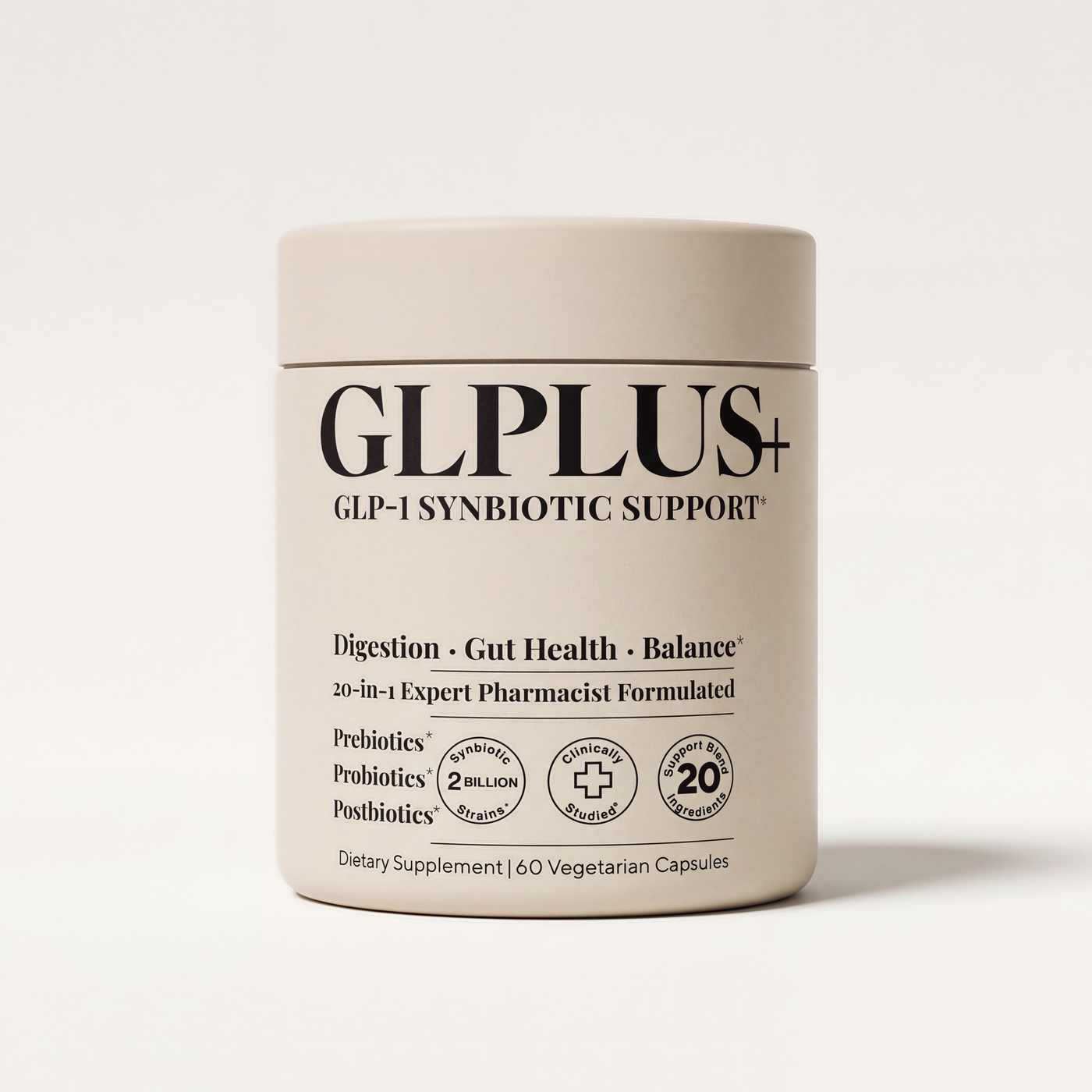
The GLP-1 Synbiotic provides the broad ecosystem foundation: seven probiotic strains, four prebiotic fibers, postbiotics, and digestive enzymes. That's the infrastructure.
The GLP-1 Capsules provide the metabolic signaling layer: berberine for AMPK activation and insulin sensitivity, zinc for glucose metabolism, beta-glucan for immune-gut interaction.
The GLP-1 Gummies add the Akkermansia layer — the next-generation organism that links gut barrier health, GLP-1 production, and metabolic function through mechanisms that weren't understood until the microbiome sequencing revolution of the last fifteen years.
These aren't redundant products. They're designed to address the same system from three distinct angles.
What to Expect
Akkermansia's timeline reflects the nature of microbiome ecology. The bacteria must establish a presence in the mucus layer — that's a process that takes weeks, not days.
- Weeks 1–3: Akkermansia is establishing its presence in the mucosal environment. Most people notice nothing directly during this phase, though digestive comfort is sometimes the first thing to shift.
- Weeks 4–8: For those tracking metabolic markers — fasting glucose, post-meal energy levels, waist circumference — this is when some users begin to notice changes.
- Months 2–3: This is the window of the Depommier trial. Consistent supplementation over this period is the pattern the clinical evidence supports.
The research on Akkermansia is early by pharmaceutical standards but substantial by microbiome standards. It is the best-studied next-generation probiotic strain in metabolic health, and its mechanisms are documented at the molecular level. That is an unusual level of scientific rigor for any probiotic organism, let alone a newly characterized one.
Who This Is For
Anyone building a serious, research-grounded approach to metabolic health. The GLP-1 Gummies are particularly relevant for:
- People focused on healthy body composition, blood sugar regulation, or gut barrier integrity
- Those who've used GLP-1 medications and want ongoing natural metabolic support
- Anyone who's interested in the microbiome-metabolism connection and wants to act on the most current science
- People who want a daily gut health habit that's actually easy to sustain